









In the modern age of outdoor exploration, travel, and remote work, staying connected to the outside world is not only a luxury but a necessity — particularly when you find yourself in dangerous or isolated environments. Whether you’re an adventurer, a hiker, a sailor, or a worker in a remote location, having access to reliable communication and emergency services is essential for ensuring safety and peace of mind. Satellite communication systems and emergency locator beacons (ELBs) have become indispensable tools for individuals who venture into regions where conventional communication infrastructure like mobile networks and radio signals are unavailable.
These technologies, powered by satellites orbiting Earth, provide users with a lifeline, enabling them to send distress signals, transmit messages, and obtain real-time communication from virtually anywhere on the planet. From extreme expeditions in the Arctic to remote desert exploration, satellite communication and ELBs have revolutionized how we stay connected and request help in emergencies.
In this article, we’ll explore the critical role of satellite communication and emergency locator beacons in modern-day exploration, focusing on their importance, functionality, and impact on global safety and adventure.
1. The Evolution of Satellite Communication
Communication via satellites has come a long way since its inception in the 1960s. The rapid evolution of satellite communication technology has dramatically transformed how people across the globe interact, share information, and stay connected — even in the most remote regions.
1.1 The Basics of Satellite Communication
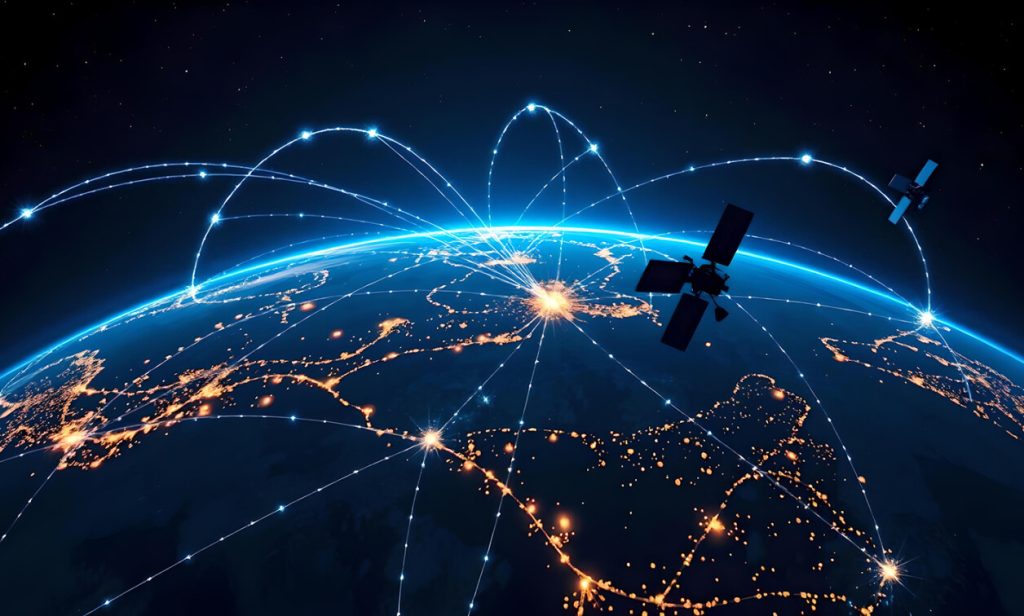
Satellite communication systems rely on a network of satellites in Earth’s orbit, which relay signals from one point on the planet to another. There are several types of satellites used for communication, each serving different purposes:
- Geostationary Satellites (GEO): Positioned at a fixed point 35,786 km (22,236 miles) above Earth, these satellites remain stationary relative to a specific location on Earth. They are typically used for broadcasting, weather monitoring, and communications.
- Low Earth Orbit Satellites (LEO): These satellites orbit at altitudes ranging from 160 km to 2,000 km (100 to 1,200 miles) above Earth. LEO satellites are ideal for real-time communication and are the preferred option for satellite phones and emergency locator devices because of their lower latency.
- Medium Earth Orbit Satellites (MEO): Positioned between GEO and LEO, MEO satellites are typically used for GPS services and some specialized communication applications.
The advent of LEO satellite networks like Iridium and Globalstar has brought affordable, reliable satellite communication to individuals across the globe. These systems allow users to send messages, make calls, and even access the internet, all via satellite relays.
1.2 Key Milestones in Satellite Communication
Some major developments in satellite communication technology include:
- The Launch of Sputnik (1957): The Soviet Union’s launch of Sputnik 1 marked the beginning of space exploration and paved the way for satellite technology. Although it was not designed for communication, it demonstrated the feasibility of artificial satellites.
- First Communication Satellites (1960s): The first communication satellites, like Telstar and Relay, revolutionized long-distance communication by allowing signals to be transmitted across vast distances without relying on terrestrial infrastructure.
- The Development of Satellite Phones (1980s–1990s): The commercialization of satellite phones in the 1980s brought the ability to make voice calls from virtually anywhere on Earth, a major milestone for global communication.
- The Rise of Constellations (2000s-Present): The development of satellite constellations, like SpaceX’s Starlink and OneWeb, promises to create networks of low-Earth orbit satellites that will provide internet and communication access to even the most remote corners of the planet.
2. How Satellite Communication Systems Work
To understand how satellite communication systems work, it’s important to break down the process into three key stages: sending, relaying, and receiving the signal.
2.1 Sending the Signal
Satellite communication begins when a device — such as a satellite phone, beacon, or terminal — sends a signal to a satellite. This signal can include voice data, text, location information, or other types of communication. Depending on the satellite network, the signal may travel via radio waves or microwaves.
2.2 Relaying the Signal
Once the satellite receives the signal, it processes and amplifies it before sending it back to Earth. Depending on the type of satellite network, the satellite may either:
- Relay the signal directly to another satellite, which passes it along to Earth (in the case of LEO constellations like Iridium), or
- Send the signal to a ground station, where it’s relayed to the recipient.
In the case of satellite phones, the signal is typically transmitted to a geostationary satellite before being relayed back to Earth to the appropriate ground station. This multi-step process allows communication to reach even the most remote parts of the world.
2.3 Receiving the Signal
On the receiving end, the signal is picked up by another device, whether it’s a satellite phone, a communication terminal, or a rescue team using a satellite-based emergency beacon. The signal can then be decoded and interpreted, allowing for communication or location tracking.
3. The Role of Emergency Locator Beacons (ELBs)
In addition to satellite phones, Emergency Locator Beacons (ELBs) are essential devices used for distress signaling and location tracking in remote locations. These beacons play a pivotal role in wilderness rescue operations, enabling stranded hikers, mountaineers, sailors, and other adventurers to alert rescue teams in case of emergency.
3.1 How Emergency Locator Beacons Work
ELBs are designed to transmit distress signals that can be detected by satellites. These signals are often accompanied by GPS coordinates, enabling rescuers to pinpoint the exact location of the person in need of help. There are two main types of emergency locator beacons:
- Personal Locator Beacons (PLBs): These are portable devices typically carried by individuals in remote areas. When activated, a PLB sends a distress signal that includes GPS coordinates to a satellite network. The information is then relayed to search and rescue (SAR) teams who can respond quickly.
- Emergency Position-Indicating Radio Beacons (EPIRBs): These are similar to PLBs but are specifically designed for use on boats and ships. EPIRBs are registered with maritime authorities, and when activated, they send distress signals to nearby satellites or rescue coordination centers.
3.2 The Global Satellite System for Emergency Beacons
The international Cospas-Sarsat system, established in 1982, is a collaboration between the U.S., Canada, Russia, and France, designed to provide global distress beacon detection services. The Cospas-Sarsat system relies on a network of satellites in both low Earth orbit (LEO) and geostationary orbit to detect distress signals from ELBs and relay them to rescue centers around the world.
- Signal Detection: The Cospas-Sarsat satellites scan for distress signals transmitted by ELBs. These satellites are capable of detecting signals from across the globe, making them invaluable for remote rescue operations.
- Accuracy and Speed: The inclusion of GPS technology in many modern ELBs enables rescuers to pinpoint the beacon’s location with incredible accuracy, often within a few meters. This allows SAR teams to respond faster and with greater precision.
3.3 Benefits of Emergency Locator Beacons
ELBs provide numerous advantages for outdoor adventurers and professionals working in remote areas:
- Reliability: ELBs function independently of mobile networks, making them reliable even in areas where cell phones don’t work. This is especially critical in places like deserts, mountains, and oceans.
- Quick Rescue Response: The inclusion of GPS coordinates allows SAR teams to locate individuals much faster than traditional search methods. In many cases, this can mean the difference between life and death.
- Peace of Mind: Having an ELB offers peace of mind to adventurers and their families, knowing that help is just a button press away in case of an emergency.
4. Choosing the Right Satellite Communication and Emergency Locator Device
When selecting a satellite communication system or emergency locator beacon, it’s important to consider factors like range, battery life, portability, and ease of use. Below are some key considerations when choosing the right device for your needs:
4.1 For Satellite Communication Systems
- Network Coverage: Different satellite networks offer different levels of coverage. LEO satellite systems like Iridium and Globalstar provide more comprehensive coverage in remote areas compared to traditional GEO satellite systems.
- Device Features: Many modern satellite phones and communication devices offer additional features like text messaging, email, and internet access. Consider what features you’ll need based on the nature of your trip.
- Battery Life: Extended battery life is essential for long-duration trips. Be sure to choose a device with a battery that can last for multiple days or weeks on a single charge.
4.2 For Emergency Locator Beacons
- Activation Process: Many ELBs feature simple, easy-to-use activation methods. Some devices include a manual activation button, while others can be automatically triggered if they are submerged in water or exposed to extreme conditions.
- Registration and Activation: Ensure that your ELB is properly registered with the appropriate authorities (e.g., for maritime use with EPIRBs) to ensure that your distress signal is routed to the right rescue center.
5. Conclusion: Satellite Communication and ELBs as Lifesaving Tools
As technology advances, satellite communication systems and emergency locator beacons continue to evolve, providing unparalleled access to help in some of the world’s most remote and hostile environments. Whether you’re a mountaineer attempting a challenging ascent, a solo hiker exploring unknown trails, or a sailor crossing the open ocean, these devices are critical to ensuring safety in the wilderness.