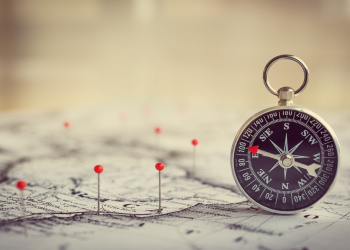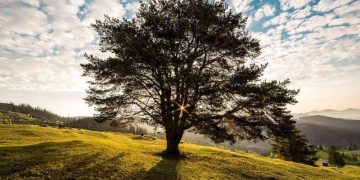









Navigating through the wilderness, far from the comfort of paved roads and modern technology, is one of the most ancient human skills. Long before GPS devices and digital maps, our ancestors relied on the elements, the stars, the sun, and other natural indicators to find their way across vast landscapes. This skill—natural navigation—was essential for survival and exploration, allowing people to cross deserts, forests, mountains, and oceans with nothing but the guidance of nature itself.
In the modern world, where technology often provides an easy path to our destinations, the art of natural navigation might seem obsolete to some. However, it is making a resurgence among adventurers, hikers, and survivalists who seek to reconnect with nature and master the age-old craft of orienting themselves using natural cues. Whether it’s finding your way through a dense forest, using the stars to navigate in the desert, or interpreting the wind direction, natural navigation teaches us to tune into the environment around us and use it as a guide.
This article explores the fascinating world of natural navigation, covering its history, principles, techniques, and how anyone can learn to navigate by the natural world. Whether you are a seasoned wilderness traveler or someone curious about the basics of wayfinding, this guide will introduce you to the essential skills and philosophies behind navigating using the elements.
1. Introduction: The Need for Natural Navigation in the Modern Age
Modern technology, particularly GPS and digital maps, has significantly reduced our reliance on traditional navigation methods. While these tools are incredibly useful and efficient, they have also disconnected many of us from the environment and its cues. As we become more reliant on technology, we lose touch with the ability to read the land, the weather, and the stars, which can leave us vulnerable in situations where technology fails, such as in remote areas with no signal or during an emergency.
Natural navigation not only helps us find our way in these situations, but it also fosters a deeper connection with the natural world. By learning to read the signs that nature provides, we gain insight into the subtle patterns that govern the Earth’s landscapes. Moreover, natural navigation is a vital skill in situations where technology is unavailable, like wilderness survival, outdoor expeditions, or simply hiking in the backcountry.
2. A Brief History of Navigation by Nature
Navigation by nature is an ancient skill that predates modern cartography. Early humans, sailors, and explorers relied on natural indicators to traverse vast distances, often without the aid of compasses or maps. The history of natural navigation is closely tied to human exploration, survival, and trade.
2.1 Early Human Navigation
For early humans, the basic knowledge of the sun’s path across the sky, the direction of prevailing winds, and the position of certain stars was crucial for survival. As early as 3000 BCE, ancient Egyptians and Polynesian voyagers used the stars and natural landmarks for navigation. The Egyptians, for instance, utilized the North Star, which remains stationary in the sky, to align their pyramids with true north.
In the Pacific Ocean, Polynesian navigators became legendary for their ability to navigate vast expanses of ocean using nothing but the stars, ocean swells, and wind patterns. These navigators mastered the art of wayfinding by memorizing complex patterns of the stars and interpreting the movement of the tides and currents.
2.2 The Golden Age of Exploration
The golden age of exploration, particularly during the Age of Sail (15th to 17th centuries), saw a huge leap in the sophistication of navigational methods. European explorers, such as Christopher Columbus, Vasco da Gama, and Ferdinand Magellan, relied heavily on celestial navigation, a method of determining position by measuring the angle of the sun and stars above the horizon.
Sailors also used dead reckoning, which involved estimating their position based on their speed and direction of travel over time, in combination with the observation of natural markers like the color of the water or the scent of land. These practices, though less accurate than modern GPS, allowed explorers to cross oceans and discover new lands.
2.3 The Decline of Natural Navigation
With the advent of more advanced navigation tools—compasses, sextants, and later, GPS—natural navigation began to fade into the background. The ability to navigate by the stars, the sun, or landmarks became less essential as technology provided more precise and reliable methods. However, the rediscovery and resurgence of natural navigation in the 21st century shows that, even in our modern age, there is still a profound value in reconnecting with these ancient skills.
3. The Principles of Natural Navigation
Natural navigation is based on a few key principles that, once understood, allow you to navigate effectively in the wild. These principles involve interpreting the natural elements around you: the position of the sun, the direction of the wind, the behavior of animals, and the features of the landscape. Here are the essential principles of natural navigation:
3.1 The Sun and Shadows: A Key to Direction
One of the most fundamental tools for natural navigation is the sun. As the sun rises in the east and sets in the west, it provides an essential tool for orienting yourself during the day. By observing the movement of shadows, you can quickly identify cardinal directions. For instance:
- In the Northern Hemisphere, at noon, shadows will point to the north.
- In the Southern Hemisphere, at noon, shadows will point to the south.
- Early morning and late afternoon shadows will indicate east and west, respectively.
This simple technique is invaluable for wilderness travelers, as it provides a basic framework for orienting yourself when you don’t have access to a compass.
3.2 The Stars: Navigation in the Night Sky
Navigating by the stars is one of the oldest and most reliable methods for finding direction at night. The two most famous stars used for navigation are the North Star (Polaris) in the Northern Hemisphere and the Southern Cross in the Southern Hemisphere.
- Polaris (North Star): Polaris is located directly above the North Pole and remains in a fixed position in the sky. By finding Polaris, you can easily determine true north in the Northern Hemisphere. To locate it, find the Big Dipper (or Ursa Major) constellation and use the two stars forming the outer edge of the bowl to draw an imaginary line that points directly to Polaris.
- The Southern Cross: In the Southern Hemisphere, the Southern Cross constellation serves a similar function. By extending the line formed by the long axis of the cross, you can determine the direction of the South Pole.
These stars provide reliable guides, even in vast, featureless landscapes like deserts or open oceans.
3.3 The Wind: A Natural Compass
Wind patterns are another useful tool for navigation. In many regions, wind direction is predictable, and understanding local weather patterns can help you orient yourself. For example:
- Winds in temperate regions tend to blow from the west, so the prevailing wind direction can give you a rough idea of your location.
- In the tropics, trade winds generally blow from the northeast, and monsoon winds change direction seasonally.
Wind direction is also a key indicator when navigating through forests, deserts, or coastlines, as it can reveal subtle shifts in weather patterns that influence the environment.
3.4 Animals and Wildlife: Nature’s Wayfinders
In the wild, animals often serve as excellent guides for navigating terrain. Birds, mammals, insects, and even plant life can provide vital clues about direction and proximity to water, shelter, or food sources. For example:
- Birds migrating south during winter can provide clues to the season and direction.
- Ants, particularly in tropical regions, tend to build their nests on the sunny side of trees or hills, which can indicate east or west.
- Certain types of plants, such as moss or lichen, tend to grow on the north-facing sides of trees in the Northern Hemisphere (due to the angle of sunlight). In the Southern Hemisphere, they grow on the south-facing side.
Animals, with their sharp instincts, often move according to natural rhythms and can lead you to water sources or safe zones.
3.5 Landmarks: Identifying and Using Natural Features
Natural landmarks, such as mountain peaks, rivers, coastlines, and distinctive rock formations, can serve as fixed points for navigation. Learning to identify specific landmarks in a given landscape is essential for wayfinding. Topographical features are often predictable and can help orient you during long journeys.
For instance, rivers typically flow downhill and follow predictable paths, so identifying a river’s source or mouth can help you follow its course in the right direction. Mountain ranges can also act as navigational tools, especially when they are visible from great distances.
4. Techniques and Methods for Natural Navigation
Mastering natural navigation involves combining several techniques and tools, including knowledge of the local terrain, natural indicators, and mental maps. Here are a few important techniques for navigating the wilderness:
4.1 The Shadow Stick Method
This technique involves using a simple stick to create a shadow on the ground and can be used to determine cardinal directions. Place a stick upright into the ground and mark the tip of its shadow. Wait for about 15 minutes, and the shadow will shift. Mark the new shadow tip. The line between the two points marks the east-west line, and the first mark will indicate west while the second will indicate east.
4.2 Orienteering: Using Natural Landmarks and Maps
Orienteering is a skill that combines natural navigation with map reading. Orienteers use topographic maps, compasses, and the environment to navigate across unfamiliar terrain. Orienteering teaches a valuable skill in understanding how to relate a map’s features to real-world landscapes, making it easier to use natural landmarks in your navigation.
4.3 Walking in the Dark Using the Stars
At night, using the stars to navigate can be incredibly effective. By learning to identify key constellations, you can keep your bearings even in complete darkness. The North Star, as mentioned, is crucial in the Northern Hemisphere, while the Southern Cross can be your guide in the Southern Hemisphere. Learning to read the night sky is a fundamental skill for wilderness explorers.
5. Applications and Benefits of Natural Navigation
Natural navigation isn’t just for professional adventurers; it offers benefits to anyone who enjoys hiking, backpacking, or exploring the outdoors. Here are some of the advantages of learning this skill:
5.1 Building Confidence and Self-Reliance
Mastering natural navigation increases your confidence in the wilderness. It helps reduce dependence on technology, which may fail or be unavailable in remote areas. Knowing that you can find your way without a map or GPS brings a sense of self-reliance and preparedness.
5.2 Enhancing Connection with Nature
Natural navigation forces you to slow down and pay attention to the world around you. As you learn to read the land, the weather, and the wildlife, you develop a deeper appreciation for nature’s patterns and rhythms. This awareness brings a sense of belonging and connectedness to the environment.
5.3 Survival Skills
In survival situations, knowing how to orient yourself using natural cues can be a lifesaver. If you are lost or injured, the ability to use the sun, stars, wind, and natural landmarks to find your way out can make all the difference. Natural navigation is a key component of wilderness survival training.
6. Conclusion: Navigating the Future with Nature’s Compass
Natural navigation is a timeless skill that has been essential for humanity’s survival and exploration for millennia. In an age dominated by technology, it serves as a powerful reminder of our connection to the natural world. Mastering the art of wayfinding through natural cues not only equips us with valuable survival skills but also enhances our ability to experience and appreciate the beauty of the world around us.
In a world where digital devices are often the primary means of navigation, learning to trust nature’s compass allows us to navigate through both the physical and metaphorical wildernesses of life. By paying attention to the natural signs that surround us, we can find our way with confidence, no matter where the journey takes us.