









Introduction: The Pinnacle of Human Adventure
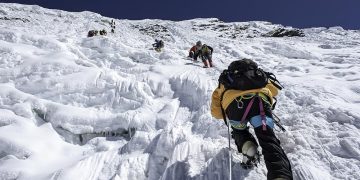
There are few challenges in the world of mountaineering more extreme, more demanding, and more dangerous than climbing the highest peaks on Earth without supplemental oxygen. Climbing 8000-meter peaks, often referred to as “death zones”, is already a grueling test of physical endurance, technical skill, and mental fortitude. Doing so without oxygen—a practice known as oxygen-free climbing or no-oxygen ascent—takes this challenge to a level few climbers ever dare to attempt.
Only a select few mountaineers have summited peaks like Everest, K2, Makalu, and Lhotse without the aid of supplemental oxygen, and this feat continues to push the limits of human endurance. For the climbers who attempt this, each step taken above 8000 meters is not only a battle against gravity but also against the body’s innate limitations in the thin air of the upper atmosphere. It is a test of mental resilience, physical capability, and an almost unparalleled drive to conquer one of the ultimate frontiers of mountaineering.
In this article, we will explore the science behind high-altitude climbing without oxygen, the physiological challenges involved, the history of 8000-meter climbs, and the risks and rewards associated with this form of extreme mountaineering.
1. Understanding the 8000-Meter Challenge
1.1 What Makes 8000 Meters So Difficult?
The 8000-meter mark, often referred to as the “death zone,” is a threshold above which the amount of oxygen in the air becomes dangerously insufficient for human survival without supplementary oxygen. At altitudes of 8000 meters (26,247 feet) or higher, the partial pressure of oxygen drops significantly, making it difficult for the body to extract enough oxygen from the air.
At sea level, the air is composed of approximately 21% oxygen, and this is sufficient for the body’s respiratory system to function normally. However, as you ascend, the amount of oxygen in the air decreases in proportion to the decreasing atmospheric pressure. At 8000 meters, the oxygen level drops to around one-third of what it is at sea level, making every breath increasingly ineffective. This is why mountaineers often rely on supplemental oxygen in order to survive and perform at these altitudes.
The primary challenges of climbing above 8000 meters include:
- Severe hypoxia (oxygen deficiency) due to the thin air.
- Extreme cold, which can cause frostbite and hypothermia.
- High winds, leading to added physical strain.
- Extreme fatigue from the body’s inability to properly oxygenate muscles.
- Risk of altitude sickness, which includes symptoms such as nausea, dizziness, and confusion.
Climbers who choose to ascend without supplemental oxygen must overcome all these challenges while their body is deprived of the oxygen it needs to function optimally.
1.2 Oxygen-Free Climbing: The Physiology Behind It
At altitudes higher than 8000 meters, human bodies are faced with significant physiological challenges, particularly due to the lack of oxygen. When mountaineers climb in this extreme altitude range without the aid of supplemental oxygen, their bodies are forced to adapt in ways that can be both taxing and dangerous. Let’s break down the key physiological factors involved:
- Hypoxia and Oxygen Deficiency: As you ascend, the lower oxygen levels in the atmosphere result in hypoxia—the condition where tissues are deprived of oxygen. Without oxygen, cells begin to shut down and the body’s basic systems struggle to function. The brain, which is highly sensitive to oxygen levels, becomes less efficient, leading to impaired decision-making and confusion.
- Acclimatization: To cope with low oxygen, climbers must undergo a process known as acclimatization, which involves spending time at intermediate altitudes to allow the body to adapt. This process triggers physiological changes such as an increase in red blood cell production and a higher hemoglobin concentration to improve oxygen transport. However, even with acclimatization, it’s nearly impossible for the body to function at full capacity at 8000 meters without supplemental oxygen.
- Physical Exhaustion: As oxygen levels continue to drop, the muscles and organs experience increasing difficulty in sustaining effort. A climber’s heart rate increases, but this is not enough to compensate for the decreased oxygen availability. The body enters a state of extreme fatigue, and even simple tasks, like tying shoelaces or adjusting gear, become monumental challenges.
- Cognitive Impairment: The lack of oxygen also impacts cognitive functions. At such high altitudes, mental fatigue sets in, and decision-making, focus, and coordination become compromised. This is why many climbers report experiencing hallucinations or a sense of confusion when attempting no-oxygen climbs.
2. Historical Perspective: Pioneers of Oxygen-Free Climbing
2.1 The First No-Oxygen Ascent of Mount Everest
The first successful ascent of Mount Everest without supplemental oxygen is considered one of the most extraordinary feats in mountaineering history. In 1978, Reinhold Messner, an Italian mountaineer of South Tyrolean origin, became the first person to summit Everest without oxygen. This landmark achievement stunned the mountaineering community because Everest, with its 8,848 meters (29,029 feet) height, had been known as an insurmountable challenge without supplemental oxygen.
Messner’s summit was a breakthrough for high-altitude mountaineering, and it solidified his reputation as one of the greatest climbers in history. His achievement was not simply a matter of physical strength—it required a remarkable combination of mental focus, acclimatization techniques, and sheer determination to withstand the brutal conditions at such high elevations.
2.2 Messner’s Subsequent Oxygen-Free Ascents
Following his groundbreaking ascent of Everest, Messner went on to conquer seven more 8000-meter peaks without supplemental oxygen. His approach was methodical and focused on acclimatization, often spending weeks on the mountains before attempting a summit. His later ascents of K2 (1986), Nanga Parbat (1970), and Makalu (1971) without oxygen helped to further establish the potential for oxygen-free climbing at the highest altitudes.
Messner’s ability to survive in these extreme environments, without the aid of artificial oxygen, opened the doors for other climbers to follow suit, though only a handful have managed to repeat his feats.
2.3 The Evolution of No-Oxygen Climbing
While Messner is the most famous figure associated with oxygen-free climbing, his success was built on a foundation laid by earlier climbers. The concept of summiting 8000-meter peaks without oxygen has a long history, but it wasn’t until the 1960s and 1970s that climbers began to seriously attempt these feats. Early pioneers like Tenzing Norgay and Sir Edmund Hillary, who summited Everest in 1953, used supplemental oxygen, as it was still considered a necessary tool for survival at such high altitudes.
Over time, climbers have continued to push the boundaries of what is possible in the death zone. As a result, today’s mountaineers face new challenges: not only is the competition for first ascents in the traditional sense diminishing, but the new frontier lies in oxygen-free ascents of the most challenging mountains on Earth.
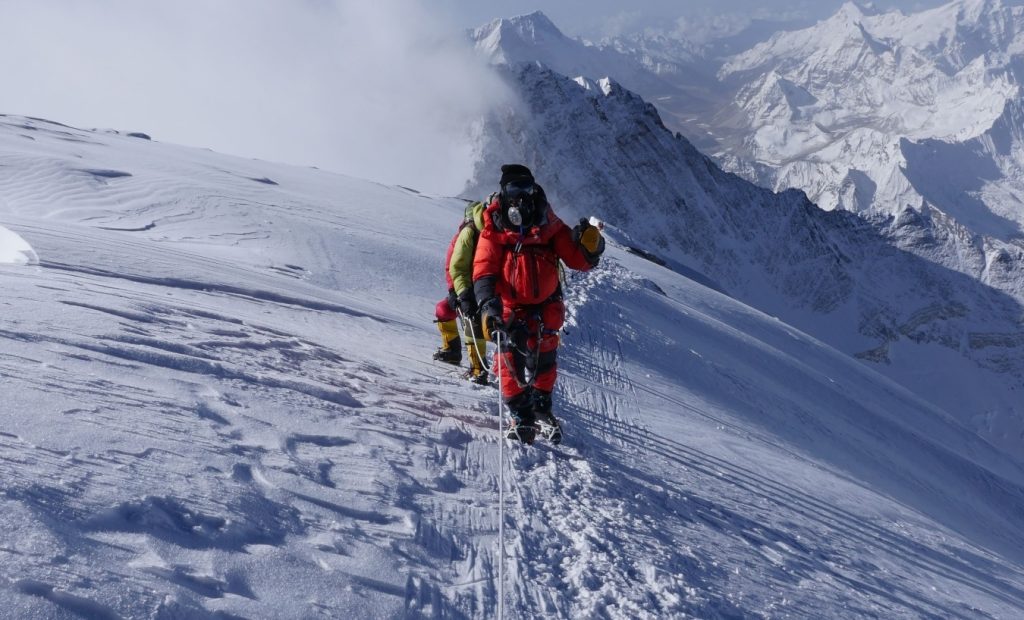
3. The Modern-Day Challenge: Climbing 8000-Meter Peaks Without Oxygen
3.1 Notable No-Oxygen Ascent Successes
As the mountaineering community has progressed, several notable climbers have successfully summited 8000-meter peaks without oxygen. Among them are Kami Rita Sherpa, a Nepali mountaineer, and Kilian Jornet, a Spanish ultrarunner and mountaineer. Kilian Jornet, in particular, has made headlines for his speed ascents of peaks like Mount Everest and Lhotse, all completed without supplemental oxygen.
The challenge is not only about summiting the peak; it’s about surviving in the extreme conditions. The climbers who attempt these ascents must train for years to develop the stamina, acclimatization strategies, and mental toughness required to summit without oxygen.
3.2 The Risks Involved
While the rewards of climbing without oxygen are immense, the risks are equally significant. The death zone is aptly named; at these extreme altitudes, the body is on the brink of collapse, and even the slightest mistake can lead to fatal consequences. Some of the primary risks involved in oxygen-free climbing include:
- Acute mountain sickness (AMS), which can lead to high-altitude pulmonary edema (HAPE) or high-altitude cerebral edema (HACE).
- Frostbite due to extreme cold, which can lead to gangrene and amputation in severe cases.
- Dehydration and malnutrition, which can further impair performance and survival at high altitudes.
- Exhaustion, leading to impaired decision-making and dangerous mistakes.
Despite these risks, climbers are often driven by the profound personal and philosophical challenges that come with conquering such extreme environments. The experience of summiting without supplemental oxygen is considered by many to be one of the ultimate tests of human endurance.
4. The Future of Oxygen-Free Climbing
As technology advances, so too does the possibility of achieving no-oxygen ascents of even more challenging peaks. With the development of better acclimatization techniques, improved gear, and deeper knowledge of the physiology of high-altitude survival, it is likely that more climbers will attempt—and potentially succeed—in climbing 8000-meter peaks without oxygen in the future.
The pursuit of these climbs is driven not just by competition but by a deeper desire to push the boundaries of human performance, to prove what is physically and mentally possible. As the world of extreme mountaineering continues to evolve, we may witness even more remarkable feats of oxygen-free ascents, expanding the limits of what it means to summit the highest peaks on Earth.
Conclusion: The Ultimate Test of Human Endurance
Climbing an 8000-meter peak without oxygen is the ultimate challenge for any mountaineer. It represents the pinnacle of human endurance and determination. The process is fraught with risks, yet the rewards—both physical and psychological—are unmatched. For those few climbers who manage to summit these towering giants without supplemental oxygen, the experience is one of transcendence, a true testament to the resilience of the human spirit.
As more climbers take on this formidable challenge, the legacy of oxygen-free ascents continues to inspire generations of mountaineers to dream bigger, climb higher, and test the very limits of what the human body can endure.