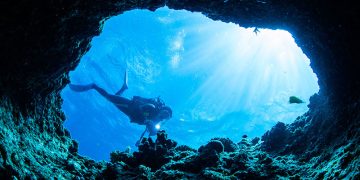










Underwater cave and wreck exploration represents one of the most challenging and captivating realms in diving. This discipline combines advanced technical diving, precise navigation, and comprehensive understanding of underwater geology, physics, and marine archaeology. Unlike conventional scuba diving, cave and wreck exploration requires specialized equipment, meticulous planning, and a high degree of risk management. Divers enter an environment where the margin for error is minimal, visibility can be limited, and every maneuver demands careful execution.
This article provides a professional and comprehensive guide to underwater cave and wreck exploration. It examines the physiological, technical, and environmental aspects critical for successful dives, while also highlighting the scientific, historical, and ecological significance of these submerged environments. Through a combination of technical instruction, research insights, and case studies, this discussion emphasizes the skill, preparation, and mindset required to explore the hidden realms beneath the water’s surface.
1. Introduction to Underwater Exploration
1.1 Historical Context
- Underwater exploration dates back centuries, with early diving bells and primitive breath-hold techniques allowing limited access to submerged sites.
- Modern technical diving and submersible technology have expanded human reach, enabling detailed exploration of caves, shipwrecks, and submerged archaeological sites.
- Exploration of shipwrecks has provided valuable historical insights, while cave diving has advanced understanding of hydrogeology, speleogenesis, and aquatic ecosystems.
1.2 Definitions and Key Concepts
- Cave diving: Diving into submerged natural or semi-natural cavities, including freshwater and saltwater systems, often involving complex passageways and vertical descents.
- Wreck diving: Diving to explore submerged ships, aircraft, or other man-made structures, sometimes at significant depth.
- Technical diving: Diving that exceeds recreational limits (depth, decompression, or environmental complexity), typically requiring specialized gases and equipment.
2. Physiological Challenges
2.1 Breath-Hold and Gas Management
- Cave and wreck divers often face extended bottom times at depths where nitrogen absorption and oxygen toxicity must be carefully managed.
- Use of enriched air nitrox, trimix, or other breathing gas mixtures reduces risks of narcosis and oxygen toxicity.
2.2 Pressure Effects and Decompression
- Every 10 meters of water increases pressure by 1 atmosphere, affecting lung function, gas solubility, and cardiovascular performance.
- Careful decompression planning using dive tables or dive computers is essential to avoid decompression sickness.
2.3 Cold Water and Hypothermia
- Many caves and deep wrecks are found in thermally challenging environments, including deep freshwater caves and temperate or polar seas.
- Wetsuits, drysuits, and thermal undergarments maintain core body temperature, enabling extended dives.
3. Technical Considerations
3.1 Equipment Essentials
- Full-face masks and redundant regulators improve safety and communication.
- Dive lights: Multiple primary and backup lights are critical in low-visibility environments.
- Reels and guideline systems: Provide orientation and safe return paths in complex caves.
- Buoyancy devices: Allow precise control in confined or vertical spaces.
3.2 Gas Management and Redundancy
- Dual tanks or sidemount configurations enhance safety and mobility.
- Spare regulators and cutting tools address emergencies such as entanglement or regulator failure.
- Planned gas consumption ratios ensure sufficient reserves for ascent and contingencies.
3.3 Navigation Techniques
- Line laying: Establishing continuous guidelines to ensure safe exit routes.
- Mapping and surveying: Sonar, depth gauges, and digital mapping tools document passageways and wreck structures.
- Environmental markers: Natural or artificial cues assist orientation in complex underwater systems.
4. Cave Exploration
4.1 Types of Caves
- Limestone caves: Formed by dissolution, often featuring stalactites, stalagmites, and narrow passageways.
- Lava tubes: Resulting from volcanic activity, these provide unique structural challenges and stable water conditions.
- Anchialine caves: Brackish water systems with distinct ecological characteristics and unique species.
4.2 Techniques and Strategies
- Progressive exploration from open cavern zones to restrictive passages.
- Establishing jump lines or secondary safety lines for complex networks.
- Continuous assessment of visibility, silting, and passage width to maintain safety.
4.3 Environmental and Biological Insights
- Cave ecosystems support unique fauna, including blind fish, shrimp, and microbial communities.
- Water chemistry, temperature gradients, and light penetration influence habitat distribution.
- Documentation contributes to speleology, hydrology, and conservation efforts.
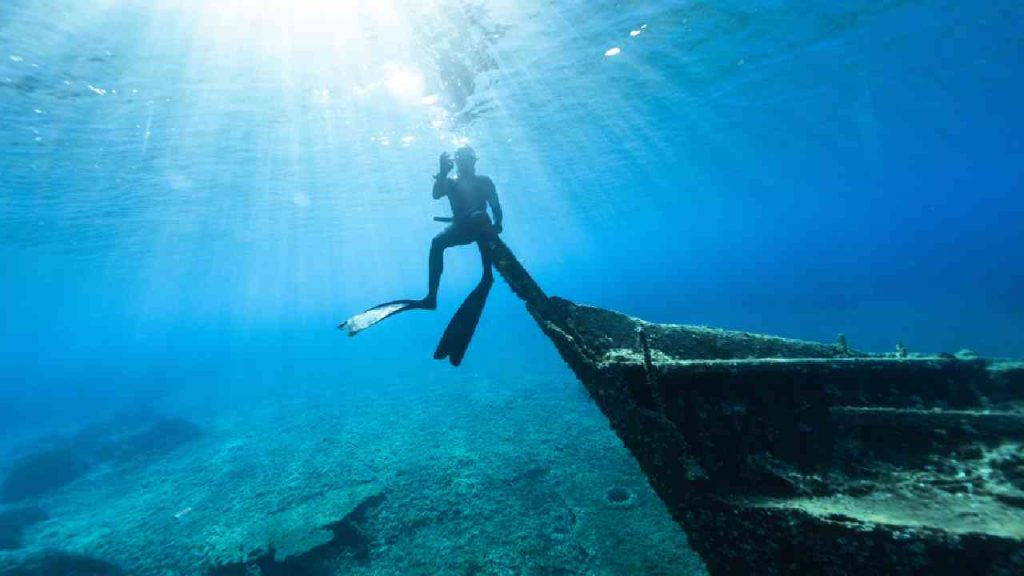
5. Wreck Exploration
5.1 Types of Wrecks
- Historical shipwrecks: Offer insights into maritime history, trade routes, and naval warfare.
- Modern wrecks: Sunken vessels from recent decades provide engineering and archaeological data.
- Aircraft and submarine wrecks: Specialized exploration requiring advanced penetration techniques and navigation.
5.2 Structural Considerations
- Assessing hull integrity, internal passages, and collapse risk.
- Identifying safe entry and exit points while maintaining emergency access.
- Avoiding fragile areas to prevent damage to artifacts and ensure diver safety.
5.3 Documentation and Archaeology
- Photogrammetry and 3D modeling recreate wreck sites for research and public education.
- Cataloging artifacts, mapping hull layouts, and monitoring corrosion provide scientific and historical insights.
- Coordination with authorities ensures compliance with cultural heritage protection laws.
6. Safety Protocols
6.1 Risk Assessment
- Evaluating depth, overhead environment, current, visibility, and temperature.
- Pre-dive planning includes contingency gas reserves, emergency exit routes, and team coordination.
6.2 Buddy Systems and Team Coordination
- Close communication with dive partners using light signals, touch codes, or full-face mask communication.
- Redundancy in gas supply, lights, and navigation equipment ensures resilience against equipment failure.
6.3 Dealing with Emergencies
- Handling entanglement with reels or nets.
- Responding to silt-outs or zero-visibility conditions.
- Managing panic, hypoxia, and decompression complications with practiced protocols.
7. Training and Skill Development
7.1 Progressive Learning
- Begin with open-water diving, followed by shallow cavern training.
- Gradually increase depth, complexity, and duration.
- Incorporate specialized techniques for buoyancy control, line handling, and emergency response.
7.2 Technical Courses and Certifications
- Cave Diver Certification (e.g., NSS-CDS, IANTD, GUE)
- Wreck Diver Certification emphasizing penetration, mapping, and preservation techniques.
- Rescue Diver and Advanced Technical Diving courses for emergency preparedness.
7.3 Physical and Mental Conditioning
- Cardiovascular and strength training improve endurance and control during extended dives.
- Mental resilience exercises reduce stress response and maintain situational awareness under pressure.
8. Environmental and Ethical Considerations
8.1 Conservation of Cave and Wreck Ecosystems
- Avoid contact with fragile speleothems, coral, or marine life.
- Implement “leave no trace” practices, including removal of litter and minimal disturbance.
8.2 Protection of Cultural Heritage
- Respect national and international regulations governing artifact removal and site interference.
- Collaboration with archaeologists ensures that exploration supports research rather than exploitation.
8.3 Sustainable Diving Practices
- Rotational dive scheduling to reduce impact on sensitive sites.
- Use of environmentally friendly equipment and techniques to minimize chemical or physical damage.
9. Technological Advances
9.1 Dive Computers and Monitoring Systems
- Advanced dive computers track depth, time, gas consumption, and decompression obligations.
- Integrated sensors provide real-time environmental data for adaptive dive planning.
9.2 Mapping and Imaging Technologies
- Side-scan sonar and photogrammetry map caves and wrecks in high resolution.
- 3D modeling allows detailed analysis without repeated site disturbance.
9.3 Underwater Propulsion Devices
- Diver propulsion vehicles (DPVs) reduce physical exertion during long or deep penetrations.
- DPVs enhance safety margins by enabling faster exit in emergencies.
10. Iconic Exploration Sites
10.1 Cenotes of Mexico
- Submerged limestone caves with crystal-clear waters and complex passageways.
- Renowned for both technical challenge and ecological significance.
10.2 Blue Hole, Dahab, Egypt
- Deep marine sinkhole offering vertical and horizontal cave systems.
- Requires precise buoyancy control and decompression planning.
10.3 SS Thistlegorm, Red Sea
- World War II cargo shipwreck, famous for intact cargo holds and structural complexity.
- Serves as a benchmark for deep wreck exploration.
10.4 Andrea Doria, Atlantic Ocean
- Iconic ocean liner wreck with challenging depth and strong currents.
- Penetration requires advanced planning, gas management, and teamwork.
11. Psychological and Cognitive Aspects
11.1 Spatial Awareness
- Maintaining orientation in dark, confined spaces demands advanced proprioception and memory.
- Mental mapping and line-following skills are essential.
11.2 Stress Management
- Anticipating risks and remaining calm under sudden changes in visibility, equipment, or water conditions.
- Techniques: controlled breathing, visualization, and task prioritization.
11.3 Decision-Making Under Pressure
- Rapid problem-solving is necessary when equipment malfunctions or unexpected hazards arise.
- Training in simulated emergencies enhances real-world response capabilities.
12. Future Directions
12.1 Exploration of Uncharted Sites
- Deep caves, submerged rivers, and ancient shipwrecks remain largely unexplored.
- Use of robotics, ROVs, and hybrid human-robot teams for initial surveys.
12.2 Environmental Research
- Cave and wreck sites serve as laboratories for marine biology, sedimentology, and climate research.
- Data collected supports conservation, archaeological documentation, and oceanography.
12.3 Enhanced Training and Safety Protocols
- Virtual reality and simulation-based training for complex navigation scenarios.
- AI-assisted planning tools for gas management, risk assessment, and trajectory optimization.
13. Conclusion
Underwater cave and wreck exploration represents the intersection of adventure, science, and human ingenuity. It demands mastery of technical skills, comprehensive understanding of physiology, and respect for fragile environments. Through rigorous training, precise planning, and adherence to safety protocols, divers can safely navigate submerged caves and historical wrecks, unlocking hidden worlds that remain inaccessible to the unprepared.
Beyond the thrill, these explorations contribute to science, conservation, and historical preservation, allowing humanity to document and understand ecosystems, shipwrecks, and geological formations in unprecedented detail. As technology and training continue to advance, underwater cave and wreck exploration will remain a frontier for those seeking to combine adventure with scientific discovery, while honoring the principles of safety, ethics, and environmental stewardship.