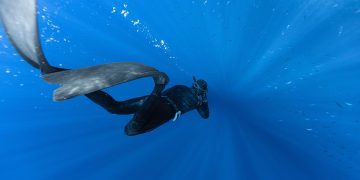










Fins-free freediving, also known as “no-fins freediving,” represents one of the purest and most demanding forms of underwater exploration. Unlike traditional freediving with fins or other propulsion devices, fins-free divers rely solely on body mechanics, streamlined posture, and breath-hold capacity to achieve depth and distance. This discipline tests the limits of human physiology, mental focus, and hydrodynamic efficiency, offering a profound connection to the aquatic environment while challenging conventional perceptions of human performance.
This article examines fins-free freediving from a professional and scientific perspective. It explores physiological adaptations, techniques, training regimens, safety protocols, equipment considerations, and the environmental context of deep apnea. Additionally, it reviews record-setting performances and the emerging technologies that enhance understanding of the human body in extreme underwater conditions.
1. Introduction to Fins-Free Freediving
1.1 History and Evolution
- Origins trace back to ancient coastal communities, where breath-hold diving was used for food collection, sponge harvesting, and pearl gathering.
- Modern fins-free freediving evolved in the 20th century as a competitive sport, popularized by pioneers such as Umberto Pelizzari, Guillaume Néry, and Alexey Molchanov.
- The discipline emphasizes minimal equipment, body control, and the mental mastery of breath-hold and pressure adaptation.
1.2 Definitions and Distinctions
- Fins-free diving: Freediving without any propulsion aids such as fins, monofins, or sleds.
- Static apnea: Holding the breath while remaining motionless at the surface.
- Dynamic apnea: Horizontal movement underwater, with or without fins.
- Constant weight no-fins (CNF): Descending and ascending using only body movement without changing ballast or pulling on ropes.
2. Physiological Challenges of Fins-Free Diving
2.1 Breath-Hold Capacity and Oxygen Management
- Humans must manage oxygen stores efficiently to prevent hypoxia.
- Key factors influencing breath-hold duration: lung capacity, hemoglobin levels, metabolic rate, and relaxation techniques.
- The mammalian dive reflex optimizes oxygen use by inducing bradycardia (slowed heart rate), peripheral vasoconstriction, and blood shunting to vital organs.
2.2 Pressure Adaptation
- Every 10 meters of seawater increases pressure by approximately 1 atmosphere.
- Lung compression follows Boyle’s law, necessitating adaptations in lung volume, diaphragm flexibility, and alveolar integrity.
- Barotrauma prevention is critical: equalization techniques, gradual descent, and body positioning mitigate injury risk.
2.3 Carbon Dioxide Tolerance
- CO₂ buildup triggers the urge to breathe; professional fins-free divers train to tolerate elevated CO₂ levels without compromising safety.
- Techniques include hypercapnic tables, CO₂ tolerance exercises, and mental conditioning to manage discomfort.
2.4 Mental and Neurological Factors
- Stress and anxiety increase oxygen consumption and reduce dive efficiency.
- Visualization, meditation, and controlled breathing are essential to mental control.
- Neuroplastic adaptations improve focus, proprioception, and underwater navigation.
3. Biomechanics of Fins-Free Propulsion
3.1 Undulation and Streamlining
- Fins-free propulsion relies primarily on dolphin-like body undulations, generating lift and forward momentum.
- Efficient technique minimizes drag and optimizes energy expenditure.
- Core muscles, glutes, and lats are critical for generating power from the hips and torso.
3.2 Arm and Leg Positioning
- Arms: streamlined overhead or alongside the body during descent; may assist in subtle steering.
- Legs: synchronized undulations or scissor-like movements provide propulsion while reducing resistance.
- Small adjustments in limb orientation correct trajectory without significant energy cost.
3.3 Hydrodynamic Considerations
- Reducing cross-sectional area minimizes turbulence and drag.
- Pointed head position, aligned spine, and relaxed shoulders improve glide efficiency.
- Smooth, continuous movement reduces oxygen expenditure compared to intermittent strokes.
4. Training Regimens for Fins-Free Diving
4.1 Dry Training
- Breath-hold exercises: static apnea, CO₂ tolerance tables, and hypoxic tables.
- Strength and flexibility: core stabilization, hip mobility, and shoulder conditioning.
- Cardiovascular endurance: swimming, running, and cycling improve oxygen efficiency.
4.2 In-Water Training
- Progressive depth adaptation: gradual exposure to increased pressure.
- Technique drills: undulation refinement, streamline optimization, and efficient turns.
- Safety drills: buddy systems, rescue simulations, and controlled blackout recovery.
4.3 Mental Conditioning
- Visualization of dive sequences, including descent, bottom phase, and ascent.
- Mindfulness and meditation practices reduce panic response and oxygen consumption.
- Hypoxic adaptation through controlled exposure trains both body and mind for low-oxygen environments.
5. Safety Protocols and Risk Management
5.1 Buddy Systems and Rescue Procedures
- Every dive should be monitored by a trained partner capable of immediate intervention.
- Rescue techniques include surface recovery, backboarding, and oxygen administration.
5.2 Pre-Dive Assessment
- Health screening for cardiovascular, pulmonary, and neurological conditions.
- Environmental assessment: currents, visibility, water temperature, and marine life hazards.
- Equipment check: wetsuits, masks, weights, and safety lines.
5.3 Recognizing and Preventing Blackouts
- Shallow water blackout occurs due to hypoxia during ascent.
- Prevention: controlled breathing, depth limits, and constant monitoring.
- Post-dive recovery protocols: slow resurfacing, oxygen supplementation, and mental debriefing.
6. Equipment Considerations
6.1 Wetsuits and Thermal Protection
- Streamlined wetsuits reduce drag while providing insulation for prolonged exposure.
- Material selection balances flexibility with thermal protection for deep or cold-water dives.
6.2 Weight Systems
- Minimal weights assist with buoyancy control during descent.
- Proper weight distribution prevents inefficient movement and excessive effort.
6.3 Masks and Vision Optimization
- Low-volume masks reduce air consumption for equalization.
- Clear lenses enhance underwater navigation and safety awareness.
6.4 Safety Gear
- Surface buoys or inflatable devices mark dive locations.
- Dive computers track depth, time, and ascent speed for monitoring physiological limits.
7. Environmental Factors Influencing Fins-Free Diving
7.1 Water Temperature
- Cold water increases metabolic rate, oxygen consumption, and hypothermia risk.
- Adaptive strategies: thermal layering, pre-dive acclimation, and efficient movement to conserve heat.
7.2 Currents and Water Flow
- Ocean currents can affect descent trajectory and energy expenditure.
- Site selection must consider tidal changes, rip currents, and underwater topography.
7.3 Visibility and Light Penetration
- Low-light conditions challenge navigation and depth perception.
- Use of natural light gradients, visibility markers, and buddy signals enhances safety.
7.4 Marine Life Interactions
- Awareness of local fauna, including predators, jellyfish, and stinging organisms.
- Maintaining neutral buoyancy and minimal disturbance reduces risks.
8. Record-Breaking Fins-Free Dives
8.1 Deepest Constant Weight No-Fins Dives
- Elite divers have exceeded 100 meters in depth using only body propulsion.
- Requires precise pacing, energy efficiency, and pressure adaptation.
8.2 Longest Horizontal Swims
- Dynamic fins-free divers achieve hundreds of meters horizontally on a single breath.
- Training emphasizes glide efficiency, minimal stroke frequency, and mental focus.
8.3 Notable Pioneers
- William Trubridge: multiple world records in CNF dives exceeding 100 meters.
- Alexey Molchanov: dynamic fins-free performances with exceptional efficiency.
- Guillaume Néry: known for long-distance fins-free descents and visual storytelling of underwater environments.
9. Physiological and Scientific Insights
9.1 Adaptations to Hypoxia
- Increased lung compliance and alveolar expansion in long-term practitioners.
- Elevated hemoglobin levels and enhanced oxygen delivery to vital organs.
9.2 Cardiovascular Adjustments
- Bradycardia and peripheral vasoconstriction reduce oxygen consumption during dives.
- Stroke volume optimization ensures adequate oxygen supply despite reduced heart rate.
9.3 Neurological Effects
- Hypoxia tolerance affects cognitive processing and reflexes.
- Controlled exposure enhances autonomic regulation and mental resilience.
9.4 Research Applications
- Fins-free diving provides insights into human extreme physiology, potential medical applications, and adaptive responses to low-oxygen environments.
10. Environmental and Ethical Considerations
10.1 Preservation of Marine Ecosystems
- Minimizing physical impact on reefs, benthic habitats, and fragile underwater ecosystems.
- Respecting local wildlife and avoiding disruptive interactions.
10.2 Sustainable Freediving Practices
- Avoiding overcrowding at dive sites.
- Supporting local conservation initiatives and marine protected areas.
10.3 Cultural Sensitivity
- Engagement with local communities when diving in traditional or sacred areas.
- Ethical storytelling and documentation of marine environments.
11. Conclusion
Fins-free freediving represents the ultimate synthesis of human physiology, biomechanics, mental focus, and environmental awareness. It is a discipline that demands precision, patience, and respect for the underwater world. Through careful training, adherence to safety protocols, and continuous refinement of technique, professional fins-free divers push the boundaries of human capability while maintaining a deep connection to the ocean environment.
From the biomechanical elegance of undulation to the physiological mastery of hypoxia tolerance, fins-free diving exemplifies the harmony between human potential and natural forces. By advancing our understanding of this extreme discipline, divers contribute not only to the evolution of underwater sports but also to broader scientific insights into the adaptability of the human body in challenging environments.
As technology, training methods, and scientific research progress, fins-free freediving will continue to inspire and redefine the limits of breath-hold performance, serving as a testament to the enduring human fascination with the depths of the sea.