









Introduction
Fractures and sprains are among the most common musculoskeletal injuries encountered in both emergency and clinical settings. They can occur across all age groups, resulting from traumatic events, sports injuries, falls, or even minor accidents. Effective management is crucial not only for immediate relief and stabilization but also for long-term functional recovery, prevention of complications, and reduction of chronic disability.
Fractures involve a break in the continuity of the bone, while sprains are injuries to ligaments, the fibrous tissues that connect bones at a joint. Although their mechanisms and anatomical structures differ, both injuries share overlapping principles in initial assessment, pain management, stabilization, and rehabilitation.
This article provides a comprehensive, professional overview of fracture and sprain management, addressing types of injuries, diagnostic procedures, emergency interventions, immobilization techniques, rehabilitation protocols, and prevention strategies. By combining current clinical guidelines and evidence-based practices, it serves as a thorough reference for medical professionals, first responders, and those interested in advanced musculoskeletal care.
1. Anatomy and Mechanisms of Injury
1.1 Fractures
A fracture is a structural disruption of a bone, which can range from a hairline crack to complete separation of bone fragments. Fractures are classified by several criteria:
- Based on Trauma:
- Traumatic fractures: Caused by high-energy impacts, such as falls, motor vehicle accidents, or sports injuries.
- Stress fractures: Small cracks resulting from repetitive mechanical stress.
- Pathological fractures: Occur in bones weakened by disease, such as osteoporosis or cancer.
- Based on Fracture Pattern:
- Transverse: A straight horizontal break.
- Oblique: A diagonal break across the bone.
- Spiral: A twisting injury causing a helical fracture line.
- Comminuted: The bone is fragmented into multiple pieces.
- Greenstick: Incomplete fracture common in children.
- Open (compound) vs Closed: Open fractures break the skin, increasing infection risk.
- Based on Location:
- Diaphyseal: Shaft of long bones.
- Metaphyseal: Near the ends of long bones.
- Epiphyseal: In the growth plate region of children.
- Articular: Involving the joint surface, critical for function.
Fracture mechanisms usually involve direct trauma, indirect forces, or repetitive stress. Understanding the mechanism aids in diagnosis, reduction, and stabilization.
1.2 Sprains
A sprain is an injury to a ligament, which connects bone to bone and stabilizes joints. Ligament injury occurs when forces exceed tissue tolerance, resulting in partial or complete tearing. Sprains are most common in ankles, wrists, knees, and thumbs.
Sprains are graded as follows:
- Grade I (Mild): Stretching of ligament fibers without significant tearing.
- Grade II (Moderate): Partial tear with joint instability.
- Grade III (Severe): Complete tear, significant instability, and often associated with hemorrhage and severe pain.
The mechanism of injury typically involves twisting, hyperextension, or direct impact. Accurate assessment of severity is critical for appropriate management.
2. Clinical Assessment
2.1 History Taking
For both fractures and sprains, history is essential to identify mechanism, severity, and associated injuries:
- Mechanism of injury: Direct blow, fall, twist, repetitive strain.
- Pain characteristics: Onset, intensity, location, and aggravating factors.
- Functional limitation: Inability to bear weight or move the joint.
- Previous injuries or conditions: Osteoporosis, ligament laxity, or prior fractures.
2.2 Physical Examination
Fractures:
- Deformity: Abnormal angulation, shortening, or rotation.
- Swelling and bruising: Often rapid due to hematoma formation.
- Tenderness: Localized to the fracture site.
- Crepitus: Grinding sensation during movement.
- Functional loss: Inability to bear weight or move the limb.
Sprains:
- Swelling and ecchymosis: Extent proportional to severity.
- Tenderness: Along ligament path, often near the joint line.
- Instability tests: Stress tests like anterior drawer (knee) or talar tilt (ankle).
- Range of motion limitations: Painful during active or passive movement.
2.3 Diagnostic Imaging
Accurate diagnosis relies heavily on imaging:
- X-ray: First-line for fractures; assesses fracture type, alignment, and joint involvement.
- CT Scan: Offers detailed bony anatomy for complex fractures, particularly intra-articular fractures.
- MRI: Gold standard for ligament injuries and soft tissue assessment.
- Ultrasound: Emerging tool for acute ligament assessment and hematoma detection.
Laboratory tests are rarely necessary but may be used to rule out pathological causes in atypical fractures.

3. Emergency Management
3.1 Immediate Care Principles
The initial approach follows ABCDE of trauma care:
- Airway, Breathing, Circulation: Ensure patient stability.
- Disability: Assess neurological status if extremity injury involves nerve compression.
- Exposure: Identify open wounds, bleeding, or additional injuries.
For musculoskeletal injuries:
- Control bleeding: Especially in open fractures.
- Pain management: Analgesics, NSAIDs, or opioids as needed.
- Immobilization: Essential to prevent further damage.
- Elevation and ice: Reduces swelling in sprains and minor fractures.
3.2 Immobilization Techniques
Fractures:
- Splints: Rigid or semi-rigid splints applied above and below the fracture site.
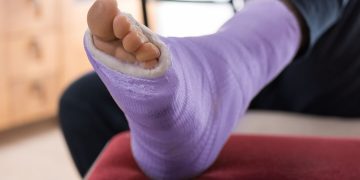
- Casts: For long-term stabilization, typically after reduction.
- Traction: Rarely used; maintains alignment in specific fractures.
- External fixation: Temporary stabilization in open or complex fractures.
Sprains:
- Elastic bandages or braces: Provide compression and support.
- Air casts or rigid supports: For moderate to severe ligament injuries.
- Taping techniques: Common in sports for mild sprains.
Correct immobilization reduces pain, swelling, and secondary tissue damage, and is essential before transport.
3.3 Reduction of Fractures
- Closed Reduction: Manual realignment under local or general anesthesia, followed by casting.
- Open Reduction: Surgical intervention for displaced or unstable fractures.
- Internal Fixation: Plates, screws, or rods to maintain alignment.
- External Fixation: Metal pins and rods external to the skin, particularly in high-energy trauma.
4. Pain Control and Pharmacologic Management
Pain management is integral:
- NSAIDs: Reduce pain and inflammation, especially in mild fractures and sprains.
- Acetaminophen: Alternative for patients contraindicated for NSAIDs.
- Opioids: Reserved for severe acute pain; monitor for adverse effects.
- Local anesthetic blocks: For procedural pain during reduction.
Pharmacologic management should be balanced with the risk of bleeding and tissue healing inhibition, particularly in bone repair.
5. Rehabilitation and Functional Recovery
5.1 Fractures
Rehabilitation begins once the fracture is stabilized and pain is controlled:
- Early mobilization: Prevents stiffness and promotes circulation.
- Physical therapy: Strengthening exercises and range-of-motion training.
- Weight-bearing progression: Based on fracture type and healing stage.
- Bone health optimization: Adequate nutrition, vitamin D, calcium, and lifestyle measures.
Healing time varies by bone and patient age:
- Children: 4–6 weeks.
- Adults: 6–12 weeks.
- Complex fractures: May require several months.
5.2 Sprains
Rehabilitation follows the RICE principle initially:
- Rest: Avoid activities that exacerbate injury.
- Ice: Reduces swelling for 24–48 hours.
- Compression: Elastic bandages to minimize edema.
- Elevation: Above heart level to reduce fluid accumulation.
After acute symptoms improve:
- Range-of-motion exercises: Restore flexibility.
- Strengthening exercises: Target surrounding muscles to stabilize the joint.
- Proprioceptive training: Improve balance and prevent recurrent injury.
- Functional drills: Gradual return to sports or occupational activity.
6. Prevention Strategies
Preventing fractures and sprains involves addressing risk factors:
- Protective equipment: Helmets, wrist guards, ankle braces during high-risk activities.
- Proper footwear: Reduces ankle sprains and impact-related fractures.
- Strength training: Increases ligament and bone resilience.
- Fall prevention: Environmental modifications, especially for elderly populations.
- Education: Awareness of safe movement techniques in sports and daily activities.
7. Complications and Follow-Up
Fractures:
- Malunion or nonunion.
- Infection (especially in open fractures).
- Neurovascular compromise.
- Joint stiffness or post-traumatic arthritis.
Sprains:
- Chronic instability.
- Ligament calcification or fibrosis.
- Recurrent sprains.
- Post-traumatic osteoarthritis in severe cases.
Regular follow-up with imaging and functional assessment ensures timely detection and management of complications.
Conclusion
Effective management of fractures and sprains is a multidimensional process encompassing initial stabilization, accurate diagnosis, appropriate immobilization, pain management, rehabilitation, and prevention. Understanding the anatomical, biomechanical, and physiological principles underlying these injuries is essential for clinicians, first responders, and therapists alike. With advances in diagnostic imaging, surgical techniques, and rehabilitation protocols, outcomes have significantly improved, allowing patients to achieve optimal functional recovery and return to their daily activities safely.
Through a combination of evidence-based medical interventions, patient education, and preventive strategies, fractures and sprains can be managed successfully, minimizing complications and enhancing quality of life for individuals across all age groups.