









Introduction: The Legend of Peʻahi
When it comes to big wave surfing, few locations hold as much prestige, excitement, and danger as Peʻahi, famously known as Jaws. Located on the North Shore of Maui, Hawaii, Peʻahi has become a mecca for surfers worldwide, particularly during the winter months, when the waves reach their most massive and menacing form.
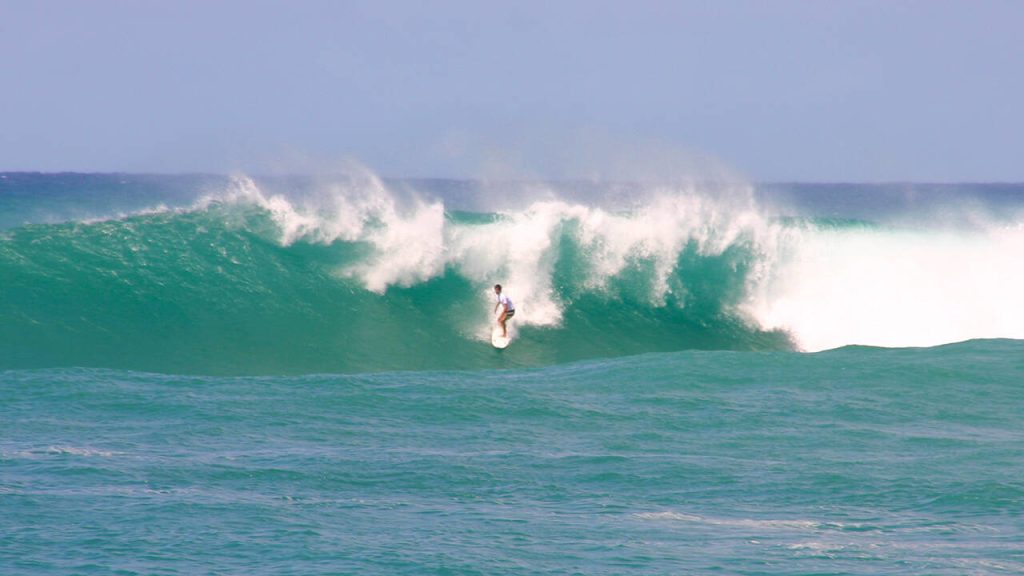
The name “Jaws” is fitting, as the waves at this surf break are colossal, often reaching heights of 60 feet (18 meters) or more, with some swells pushing even beyond that. Peʻahi’s waves are not only impressive in their size but also in their power, ferocity, and unpredictable nature. These towering walls of water can break violently onto the reef, creating a surfing experience that combines adrenaline, skill, and bravery in a way few other places in the world can match.
This article will explore Peʻahi’s reputation as the ultimate big wave surf spot, the conditions that make it unique, the surfers who have conquered it, and the challenges and thrills of surfing here during the winter season.
1. The Geographical and Meteorological Factors Behind Peʻahi’s Massive Waves
1.1 Understanding the Formation of Big Waves at Peʻahi
The waves at Peʻahi (Jaws) are not your average swell. To understand what makes this surf break so special, it’s crucial to look at the combination of geography, ocean currents, and weather patterns that contribute to the creation of these giant waves.
1.1.1 The Deep Ocean Trenches and Submerged Reefs
Peʻahi sits in a location that is particularly conducive to the creation of massive waves. The ocean surrounding Maui has deep trenches and submerged reefs that funnel and amplify incoming swells. As swells travel across the open ocean, they often lose power and height due to friction with the ocean floor. However, in Peʻahi’s case, the underwater topography plays a key role in concentrating energy from the swell.
When the ocean floor drops dramatically, it causes the waves to rise quickly, resulting in some of the largest waves in the world. The reef structure near Peʻahi’s coastline can also intensify the break, causing waves to collapse forcefully onto the shallow reef, which creates both the massive height and the extreme power surfers seek.
1.1.2 Winter Swells: The Season of Giants
Peʻahi’s peak wave season occurs during the winter months, from November to February. During this time, the North Pacific storms create long-distance swells that travel across the Pacific Ocean and hit the Hawaiian Islands. These storms generate some of the most powerful oceanic systems in the world, and when they reach Maui, they provide the waves surfers dream of—and fear.
Winter swells are particularly large due to the increased storm activity in the Pacific, combined with the fact that the Hawaiian Islands are positioned in the perfect spot for catching these swells as they break across the open ocean. Hurricane season, while creating high winds, is not the primary driver of the waves at Peʻahi; instead, it’s the powerful storms from the North Pacific that shape the surf conditions.
2. The History of Peʻahi and Its Status in Surf Culture
2.1 The Early Years of Surfing at Peʻahi
Although Peʻahi’s reputation as a big wave surfing destination only gained significant global recognition in recent decades, it has been a local secret for years. Hawaiian surfers have long known about the surf break, and many began riding the waves here in the mid-20th century, but it wasn’t until the early 1990s that the break earned worldwide fame.
In the early days, Peʻahi was mostly surfed by local Hawaiians who were familiar with the unpredictable nature of the break and the powerful swells that could arrive seemingly out of nowhere. Jon Mozo, a Hawaiian surfer and photographer, was among the first to document and popularize Peʻahi’s waves in the 1980s. However, the surf community began paying more attention to the location when big wave surf pioneers started venturing to the spot in search of extreme waves.
2.2 The Birth of Big Wave Surfing Competitions at Peʻahi
The official big wave surf contests at Peʻahi began in the late 1990s, with the first major competition being the Jaws Big Wave Invitational in 2001. This event helped solidify Peʻahi’s status as one of the premier big wave surf spots in the world. The popularity of these events drew attention from surfers, sponsors, and spectators alike, all eager to witness the jaw-dropping feats of skill performed on these towering waves.
In 2015, Peʻahi became the site of the first-ever Big Wave World Tour competition, which was the pinnacle of professional big wave surfing. This event elevated the break’s status even further, and it soon became a bucket-list destination for the world’s best surfers.
3. The Thrill and Danger of Surfing Peʻahi’s Giants
3.1 The Physical and Mental Demands of Surfing Peʻahi
Peʻahi’s waves are some of the most physically demanding waves to surf. The sheer size and power of the waves require surfers to have exceptional fitness, stamina, and strength. Surfers must be prepared to paddle into waves that can reach up to 60 feet (18 meters) high, with some swells pushing beyond this, creating conditions where the fear factor is palpable.
3.1.1 The Paddle Out: A Test of Endurance
Getting out to the lineup at Peʻahi is an exhausting and sometimes dangerous task. The current is incredibly strong, and the surf is constantly moving and shifting. Surfers need to paddle through powerful waves that crash down onto the reef, often being tossed back by the sheer force of the ocean.
Unlike some other big wave breaks where surfers are towed in by jet skis, Peʻahi’s waves are often surfed by paddling in, which means the surfers need to have both endurance and the ability to time their movements perfectly to avoid getting caught inside. Paddling out through Jaws is a challenge in itself and can take up to 30 minutes depending on the size and power of the waves.
3.1.2 Timing the Drop: The Most Crucial Moment
The drop into a wave at Peʻahi is one of the most intense and terrifying moments in the sport. Surfers must time their descent into the wave perfectly, navigating a steep, hollow face that can close out unexpectedly. A miscalculation here can result in a wipeout, with surfers being caught in the “impact zone” and thrown into the force of the wave. Successful surfers at Peʻahi understand the importance of readjusting their strategy mid-wave, adapting to the shifting conditions, and being ready to bail out if needed.
3.2 The Risks and Dangers
While surfing Jaws is one of the most thrilling experiences a surfer can have, it is also one of the most dangerous. The waves break over sharp reefs, which can lead to serious injury if a surfer gets caught or wiped out. Furthermore, the huge, fast-moving waves can be overwhelming, making it difficult to escape from the surf without the help of a jet ski or other support. Even the most experienced surfers are at risk of serious injury or worse when facing waves of this magnitude.
In addition to the risk of wipeouts, the strong currents and changing tides add an unpredictable element to the challenge. For this reason, only the most skilled and experienced big-wave surfers are able to conquer the waves at Peʻahi.
4. The Surfers Who Have Conquered Peʻahi
4.1 Legendary Surfers: Pioneers and Modern-Day Champions
Peʻahi has been a playground for some of the most legendary names in big wave surfing. Surfers like Laird Hamilton, Shane Dorian, Maya Gabeira, and Garrett McNamara have all made their mark at this iconic surf break.
- Laird Hamilton, known for his innovative approach to big wave surfing, helped bring global attention to Peʻahi by pioneering tow-in surfing at the break in the late 1990s. His ability to ride the largest waves at Peʻahi made him a household name.
- Shane Dorian, a top competitor on the Big Wave World Tour, has made numerous successful rides at Peʻahi, earning him recognition as one of the most fearless surfers in the world.
- Maya Gabeira, a Brazilian surfer, has made waves in the male-dominated world of big wave surfing by riding massive swells at Peʻahi. She is one of the few women to successfully tackle the giant waves at this break.
These surfers have all contributed to the mythos of Peʻahi, pushing the boundaries of what is possible on a surfboard and inspiring generations of surfers who dream of riding its waves.
5. Conclusion: The Unmatched Appeal of Winter at Peʻahi
Surfing at Peʻahi is not just about riding big waves; it’s about confronting nature head-on, testing human limits, and experiencing the raw beauty and power of the ocean in its most primal form. Winter at Peʻahi offers an unrivaled surfing experience, attracting surfers from across the world who seek the thrill of riding some of the biggest and most dangerous waves on the planet.
For those who choose to ride the waves at Jaws, the experience is one that is as humbling as it is exhilarating. It’s a pursuit that requires fearlessness, skill, and respect for the ocean—a combination that has cemented Peʻahi’s status as one of the most iconic big wave surf destinations in the world. Whether you are a seasoned professional or an aspiring surfer, the call of Peʻahi will always be there, waiting for the next challenge to conquer the giants of the sea.