









Introduction
Extreme temperature differences—from blistering heat to sudden cold, or from moderately cool to dangerously frigid—pose a significant challenge to human physiology. Unlike many animals with thick fur, hibernation abilities, or antifreeze proteins, humans rely heavily on behavioral strategies, technology, and protective clothing to maintain core body temperature.
Hypothermia, defined as a drop of core temperature below 35°C (95°F), is a potentially fatal emergency. What makes hypothermia particularly dangerous is that it does not require subzero air temperatures—wet clothing, wind exposure, exhaustion, malnutrition, or rapid temperature fluctuations can all trigger it. Moreover, hypothermia is often subtle at first, progressively impairing judgment to the point where victims may not recognize their deteriorating condition.
Preventing hypothermia in extreme temperature differences requires an understanding of:
- Human thermoregulation
- Mechanisms of heat loss
- Environmental hazards
- Clothing and equipment choices
- Survival techniques
- Emergency detection and response
This article presents an in-depth (and >3200-word) exploration of these crucial components, structured with professional clarity and detailed insights drawn from physiology, outdoor survival science, mountaineering practices, and cold-weather medicine.
1. Understanding Hypothermia: The Science Behind the Risk
1.1 What Is Hypothermia?
Hypothermia occurs when the body loses heat faster than it can produce it. Core temperature begins to fall, impairing the nervous system, circulation, and metabolic processes. As the body temperature drops, heat conservation becomes the priority—blood flow to the skin and extremities decreases dramatically, which increases risk of frostbite.
Stages of Hypothermia
| Stage | Core Temp | Typical Signs |
|---|---|---|
| Mild | 35–32°C | Shivering, rapid breathing, difficulty performing tasks |
| Moderate | 32–28°C | Confusion, slurred speech, reduced coordination, violent shivering or cessation of shivering |
| Severe | <28°C | Unconsciousness, slow pulse, low breathing rate, rigid muscles |
Hypothermia can progress slowly or rapidly depending on conditions—especially wind, moisture, and the victim’s physical state.
2. Mechanisms of Heat Loss—and How to Counteract Them
Preventing hypothermia requires understanding how heat escapes the body. In extreme temperature differences, multiple heat-loss mechanisms operate simultaneously.
2.1 Conduction
Heat transfers from warm skin to a colder object.
Examples:
- Sitting on cold ground, ice, or metal
- Wearing wet clothing
- Holding cold tools or gear
Countermeasures:
- Use insulated pads when resting
- Avoid direct contact with snow or stone
- Change wet clothing immediately
- Wear insulating gloves when handling metal objects
2.2 Convection
Heat loss caused by moving air or water—commonly known as wind chill.
Wind drastically accelerates cooling by stripping away the warm air layer around your body.
Countermeasures:
- Wear windproof outer layers
- Seek shelter from wind
- Avoid sweating heavily in windy conditions
- Use hoods, balaclavas, or face masks to protect exposed skin
2.3 Radiation
Your body radiates heat to colder surroundings. At night or at high altitudes, radiative heat loss can be significant.
Countermeasures:
- Insulating clothing that traps warm air
- Reflective emergency blankets
- Minimizing unnecessary exposure
2.4 Evaporation
Evaporating moisture draws heat from the skin. Sweat, rain, or melting snow can rapidly accelerate heat loss—even at temperatures above freezing.
Countermeasures:
- Wear moisture-wicking base layers
- Avoid cotton (“cotton kills”)
- Remove or open layers before overheating
- Ensure outer layers repel water
2.5 Respiratory Heat Loss
Breathing cold, dry air causes additional heat loss through humidification and warming of inhaled air.
Countermeasures:
- Use neck gaiters, face masks, or breathable balaclavas
- Avoid rapid, heavy breathing when possible
- Pre-warm inhaled air through layered face coverings
3. Preparing for Extreme Temperature Differences
Preparation is often the difference between comfort and crisis.
3.1 Understand the Environment
Temperature forecasts are useful but incomplete. Consider:
- Wind speed
- Humidity
- Elevation changes
- Time of day
- Terrain (rock, ice, water)
- Shaded vs exposed areas
Extreme temperature variables are common in:
- Mountain expeditions
- Desert nights
- High-altitude regions
- Arctic or Antarctic environments
- Coastal climates
- Forested valleys
Understanding local conditions helps you select proper gear and clothing systems.
4. The Layering System: The Most Important Hypothermia Prevention Tool
4.1 Base Layer: Moisture Management
Purpose: Keep the skin dry
Best materials:
- Merino wool
- Polyester or nylon blends
- Synthetic performance fabrics
Avoid: Cotton
It retains moisture and accelerates cooling.
4.2 Middle Layer: Insulation
Purpose: Trap warm air close to the body
Options include:
- Fleece (lightweight, breathable, quick-drying)
- Down jackets (excellent warmth-to-weight ratio; avoid moisture)
- Synthetic insulation (retains warmth even when damp)
Layer thickness depends on activity level and ambient temperature.
4.3 Outer Layer: Protection From the Elements
Purpose: Block wind, precipitation, and conductive moisture
Ideal properties:
- Windproof
- Waterproof
- Breathable
- Durable
Examples:
- GORE-TEX shells
- Soft-shell jackets
- Hardshell mountaineering jackets
4.4 Specialized Layers and Accessories
Headgear
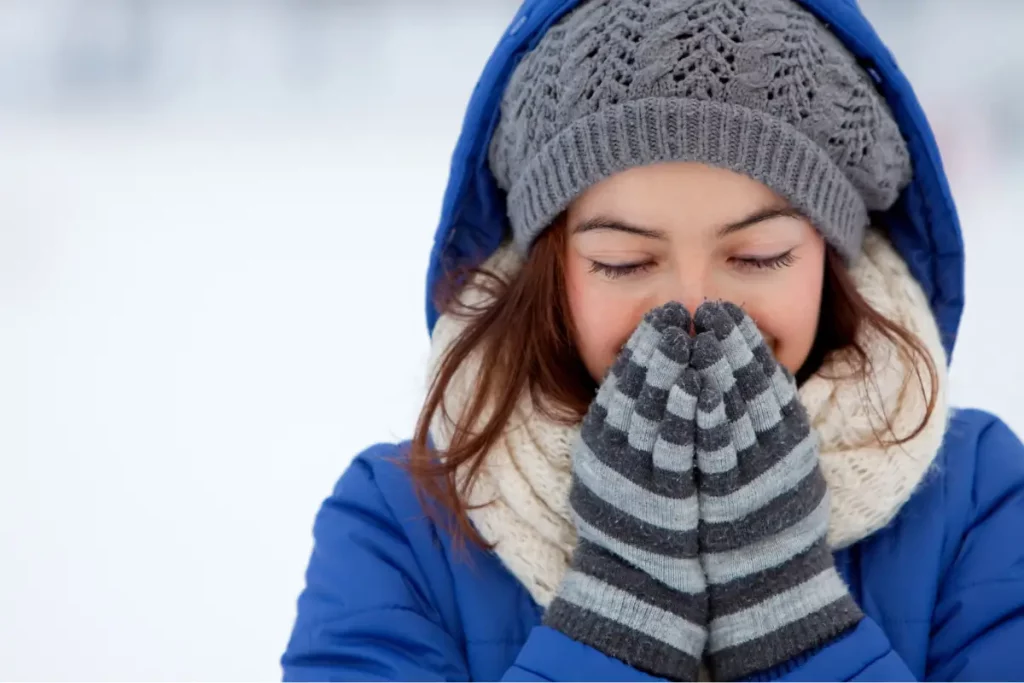
Up to 30% of heat loss can occur through an uncovered head.
Use:
- Insulated hats
- Windproof hoods
- Balaclavas or face masks
Hands
Hands lose heat quickly due to peripheral vasoconstriction.
Solutions:
- Layered glove systems
- Waterproof mittens
- Chemical hand warmers
Feet
Cold feet reduce mobility and increase injury risk.
Use:
- Wool socks (merino preferred)
- Waterproof insulated boots
- Vapor barrier socks (in extreme situations)
5. Energy, Nutrition, and Hydration: Fueling the Internal Furnace
A cold-exposed body needs significantly more energy to maintain heat.
5.1 Eat High-Calorie, High-Fat Foods
Fat is a powerful slow-burning energy source.
Ideal foods:
- Nuts and seeds
- Cheese
- Energy bars
- Chocolate
- Peanut butter
- Dried meat
Frequent small meals help maintain metabolic heat production.
5.2 Stay Hydrated
Dehydration impairs circulation and thermoregulation.
Cold diminishes thirst reflex, but hydration remains critical.
Best choices:
- Warm water
- Herbal tea
- Electrolyte mixes
Avoid:
- Alcohol (causes vasodilation and rapid heat loss)
- Excessive caffeine (diuretic effect)
6. Activity Management: Balancing Work and Heat Loss
6.1 Do Not Sweat in Cold Climates
Sweating is the fastest route to hypothermia.
Avoid sweating by:
- Removing layers before exertion
- Slowing pace on steep ascents
- Venting jackets and opening zippers
When resting, put layers back on immediately to trap heat.
6.2 Maintain Moderate, Steady Movement
If you stop moving entirely, your metabolism slows and heat production drops.
However, excessive activity leads to sweating, dehydration, and exhaustion.
Finding balance is essential.
6.3 Strategic Resting
During rest stops:
- Sit on an insulated pad
- Eat high-energy snacks
- Add layers, including hats and gloves
- Avoid resting in windy or wet areas
7. Environmental Tactics: Shelters, Fire, and Positioning
7.1 Shelter Construction
Shelter protects you from wind, precipitation, and radiative heat loss.
Options include:
- Mountaineering tents
- Snow caves
- Lean-tos
- Emergency bivy sacks
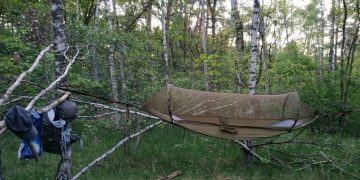
- Natural shelters (fallen trees, rock formations)
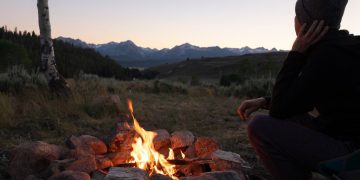
7.2 Building a Fire
In appropriate conditions, fire provides both heat and psychological comfort.
Fire can also:
- Dry clothing
- Melt snow for drinking water
- Warm shelters
Learn to use:
- Fire starters
- Windproof matches
- Metal cups for water heating
7.3 Heat Source Positioning
Place warm objects near:
- Chest
- Groin
- Armpits
- Neck
These areas are close to major blood vessels and help warm the core.
Avoid placing heat sources directly on hands or feet to prevent burns or afterdrop.
8. Recognizing Hypothermia Early: Critical Signs to Watch For
8.1 Behavioral Indicators
These appear before physical signs:
- Irritability
- Poor decision-making
- Difficulty performing simple tasks
- Slow speech
8.2 Physical Indicators
- Persistent shivering
- Cold, pale skin
- Reduced coordination
- Numb extremities
- Fatigue
Shivering stops in moderate-to-severe hypothermia—a critical red flag.
8.3 Severe Warning Signs
- Confusion
- Slurred speech
- Drowsiness
- Hallucinations
- Collapsing
- Weak or slow pulse
At this stage, immediate intervention is required.
9. First Aid and Emergency Response for Hypothermia
9.1 Mild Hypothermia
- Move to warm environment
- Change into dry clothing
- Add insulating layers
- Drink warm sweet liquids
- Apply heat packs to torso, not extremities
9.2 Moderate Hypothermia
- Handle gently—victims are prone to cardiac arrest
- Use insulating layers, blankets, or sleeping bags
- Apply external heat only to core
- Avoid rapid reheating
- Do not give alcohol
- Call emergency services
9.3 Severe Hypothermia
- Victim may appear dead—rescue efforts should continue until medical help arrives
- Perform CPR if breathing or pulse is absent
- Use active rewarming only with trained personnel
- Get to a hospital immediately
10. Psychological Factors and Decision-Making
The colder a person becomes, the worse their judgment becomes.
This leads to:
- Poor navigation
- Incorrect clothing adjustments
- Risky choices
- “Paradoxical undressing” in severe cases
This is why team communication and buddy-check systems are essential in extreme environments.
11. Specialized Knowledge for Extreme Temperature Environments
11.1 Mountain and High-Altitude Zones
Temperature drops dramatically with altitude.
Wind speeds also increase, raising convective heat loss.
Key tactics:
- Layer management on ascents
- Avoid sweating in cold, thin air
- Protect lungs with breathable masks
11.2 Arctic and Polar Regions
Moisture management is critical.
Permafrost and snow demand constant insulation awareness.
Strategies:
- Vapor barrier liners
- Expedition-grade boots
- Multi-layer glove systems
11.3 Desert Environments With Night-Time Cold
Rapid temperature swings shock the thermoregulatory system.
Key strategies:
- Gradual cooling
- Warm evening meals
- Wind protection
- Insulated sleeping systems
12. Equipment Checklist for Hypothermia Prevention
Essential Items
- Moisture-wicking base layers
- Insulating mid layers
- Windproof/waterproof shell
- Warm hat and balaclava
- Insulated gloves and mittens
- Wool socks
- High-calorie snacks
- Emergency blanket
- Waterproof fire starters
- Thermal sleeping pad
- Navigation tools
Optional but Recommended
- Chemical heat warmers
- Heated insoles
- Thermos with warm liquids
- Satellite communicator
- Extra dry clothing
Conclusion
Preventing hypothermia in extreme temperature differences is both a science and a skill. It involves understanding human physiology, recognizing environmental hazards, mastering clothing strategies, maintaining energy levels, and consistently monitoring yourself and partners for early signs of danger.
Hypothermia prevention is not about endurance or toughness—it is about preparation, awareness, and intelligent decision-making. With the right knowledge and equipment, humans can safely and confidently endure some of the most challenging environments on Earth.