









The Mariana Trench, located in the western Pacific Ocean, is the deepest part of the world’s oceans, reaching a maximum depth of approximately 10,994 meters at the Challenger Deep. This extreme environment represents the hadal zone, characterized by near-freezing temperatures, crushing pressures exceeding 1,000 atmospheres, perpetual darkness, and limited nutrient availability. Despite such inhospitable conditions, life not only exists in the Mariana Trench but also exhibits extraordinary adaptations, astonishing biologists and expanding our understanding of the limits of life on Earth.
This article explores the diverse life forms inhabiting the Mariana Trench, examining their morphology, physiology, ecological interactions, evolutionary significance, and the technological approaches used to study these extreme environments. Through an integration of marine biology, deep-sea ecology, and modern oceanography, the Mariana Trench emerges as both a biological frontier and a natural laboratory for understanding extreme life.
1. Introduction: The Hadal Zone
1.1 Defining the Hadal Zone
- Depth range: 6,000–11,000 meters.
- Environmental characteristics: temperatures between 1–4°C, complete darkness, immense hydrostatic pressure, and scarce food supply.
- Covers less than 1% of the global ocean but hosts a surprisingly diverse array of specialized species.
1.2 Importance of Hadal Research
- Expands knowledge of extremophiles and physiological adaptations.
- Provides insights into evolutionary processes, genetic diversity, and novel metabolic pathways.
- Offers analogs for potential extraterrestrial life in extreme environments, such as subsurface oceans on icy moons.
2. Environmental Extremes and Biological Challenges
2.1 Hydrostatic Pressure
- Pressure increases approximately 1 atmosphere every 10 meters.
- At Challenger Deep, organisms endure pressures exceeding 1,000 times atmospheric pressure at sea level.
- Adaptations include flexible cell membranes, piezolytes to stabilize proteins, and pressure-resistant enzymes.
2.2 Temperature and Nutrient Scarcity
- Low, stable temperatures slow metabolic rates, reducing energy requirements.
- Food primarily originates from marine snow—organic detritus descending from surface waters—or from chemosynthetic sources near hydrothermal vents.
2.3 Darkness and Sensory Adaptation
- Lack of sunlight prevents photosynthesis and eliminates visual cues.
- Organisms evolve specialized sensory systems: mechanoreceptors, enhanced chemosensory organs, and bioluminescent communication.
3. Morphological Adaptations of Mariana Trench Life
3.1 Transparency and Gelatinous Bodies
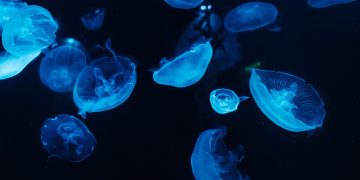
- Many trench species, such as deep-sea jellyfish and ctenophores, possess gelatinous, nearly transparent bodies.
- Benefits: energy-efficient locomotion, neutral buoyancy, and camouflage in darkness.
3.2 Bioluminescence
- Used for predation, mating, and anti-predator defense.
- Light-producing organs (photophores) are specialized and strategically distributed.
- Examples: deep-sea anglerfish, certain species of shrimp, and bioluminescent squid.
3.3 Extreme Body Morphologies
- Elongated appendages and barbels facilitate prey capture in sparse environments.
- Reduced skeletal structures minimize energy costs and resist pressure-induced damage.
- Unique mouth structures, such as expandable jaws and fang-like teeth, allow consumption of oversized prey relative to body size.
3.4 Gigantism and Miniaturization
- Deep-sea gigantism: observed in amphipods, isopods, and certain polychaete worms.
- Miniaturization occurs in some benthic invertebrates, optimizing energy efficiency in nutrient-poor habitats.
4. Hadal Ecosystems in the Mariana Trench
4.1 Benthic Communities
- Composed primarily of invertebrates: amphipods, polychaetes, sea cucumbers, and echinoderms.
- Organisms are often scavengers or detritivores, feeding on marine snow, carcasses, or sediment-associated organic matter.
- Examples: the giant amphipod (Alicella gigantea) and abyssal sea cucumbers.
4.2 Pelagic Communities
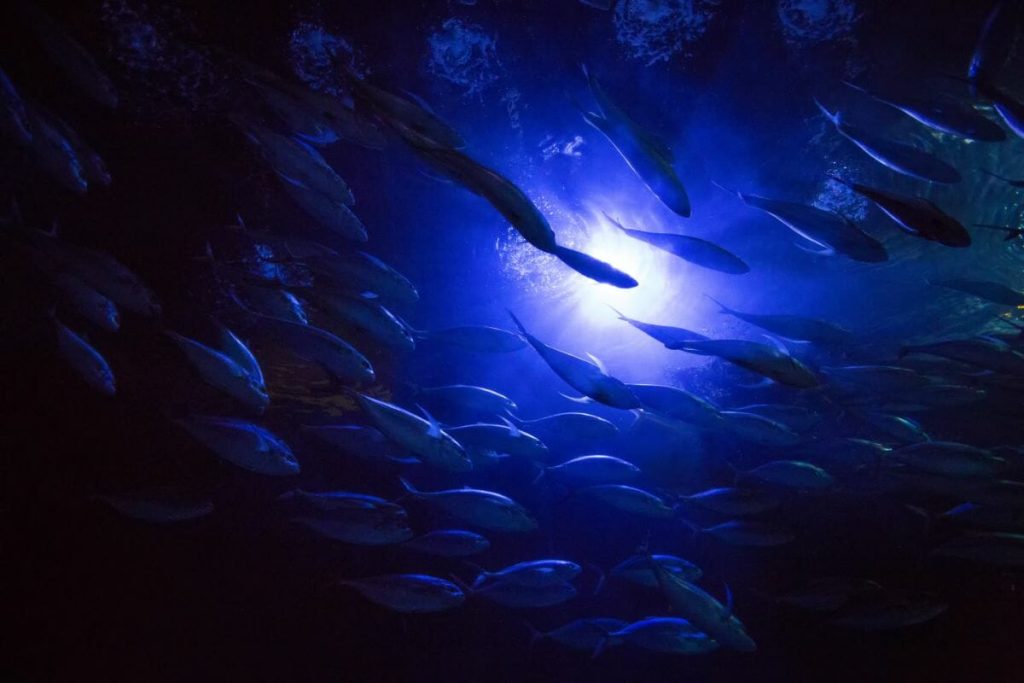
- Free-swimming organisms include certain species of fish, shrimp, and gelatinous zooplankton.
- Vertical migration is limited; many species are sedentary or slow-moving due to extreme energy constraints.
4.3 Chemosynthetic Hotspots
- Although less common than in shallower hydrothermal vents, some hadal trenches host microbial mats and chemosynthetic communities.
- Energy sources include sulfur, methane, and other reduced chemicals released from tectonic activity and sediment interactions.
5. Notable Life Forms of the Mariana Trench
5.1 Hadal Snailfish (Pseudoliparis swirei)
- Depth range: 6,900–8,100 meters.
- Morphology: translucent, scaleless body, reduced skeleton, flexible skull for capturing prey.
- Diet: small crustaceans, including amphipods.
5.2 Giant Amphipods (Alicella gigantea)
- Length: up to 34 centimeters, significantly larger than shallow-water relatives.
- Scavengers, consuming detritus and carrion.
- Robust exoskeleton provides protection against predators and extreme pressure.
5.3 Deep-Sea Cusk-Eels and Eelpouts
- Adapted to low-light hunting with enhanced lateral line systems.
- Some species exhibit reduced or absent swim bladders to withstand high pressure.
5.4 Foraminifera and Microbial Life
- Single-celled eukaryotes dominate sediment communities, aiding in nutrient recycling.
- Microbial mats serve as the base of localized food webs in hadal trenches.
5.5 Bioluminescent Invertebrates
- Shrimp, copepods, and jellyfish produce light for communication and predation.
- Some species exhibit unique bioluminescent patterns that remain largely unexplored.
6. Evolutionary Adaptations and Genetic Insights
6.1 Extreme Pressure Adaptation
- Piezolytes, such as trimethylamine N-oxide (TMAO), stabilize protein structures under high pressure.
- Genes regulating membrane fluidity, enzyme function, and stress response are highly specialized.
6.2 Slow Metabolism and Longevity
- Low metabolic rates reduce energy demand in nutrient-poor environments.
- Some trench organisms exhibit longer lifespans compared to shallow-water counterparts.
6.3 Reproductive Strategies
- Sparse populations favor strategies such as hermaphroditism, egg retention, and opportunistic spawning.
- Deep-sea anglerfish demonstrate extreme sexual dimorphism and parasitic male attachment to ensure reproduction.
7. Ecological Interactions in the Hadal Zone
7.1 Predator-Prey Dynamics
- Energy-efficient hunting: ambush predators dominate due to scarce prey.
- Cannibalism and scavenging are common.
7.2 Nutrient Cycling
- Detritus recycling sustains benthic communities.
- Scavenger organisms accelerate decomposition of fallen organic material, supporting higher trophic levels.
7.3 Habitat Structuring
- Sediment-dwelling invertebrates aerate seafloor sediments.
- Biogenic structures, such as tube worm aggregations or microbial mats, provide microhabitats.
8. Exploration and Research Technologies
8.1 Manned Submersibles
- DSV Limiting Factor: first full-ocean-depth submersible for repeated exploration.
- Allows direct observation, sampling, and filming of life forms at extreme depths.
8.2 Remotely Operated Vehicles (ROVs)
- Equipped with robotic arms, cameras, and environmental sensors.
- Enable precise sample collection and habitat mapping.
8.3 Autonomous Underwater Vehicles (AUVs)
- Map seafloor topography, detect biological hotspots, and collect environmental data.
- Can operate autonomously for extended periods in extreme conditions.
8.4 Molecular and Genomic Approaches
- Environmental DNA (eDNA) sampling identifies species without physical capture.
- Genomic sequencing reveals adaptations to extreme pressure, low temperature, and nutrient scarcity.
9. Mysteries and Frontiers
9.1 Undiscovered Species
- Estimates suggest the Mariana Trench may host thousands of unrecorded species.
- Many organisms remain known only from indirect evidence, such as scavenged remains or eDNA.
9.2 Behavioral Ecology
- Bioluminescent signaling, mating rituals, and territorial interactions remain largely unknown.
- Observational studies are limited due to technological constraints.
9.3 Geological Interactions
- Seafloor topography, tectonic activity, and hydrothermal processes influence habitat distribution.
- Understanding these factors is critical for predicting species ranges and ecological dynamics.
10. Conservation and Ethical Considerations
10.1 Threats to Hadal Ecosystems
- Deep-sea mining, climate change, and pollution may impact fragile ecosystems.
- Slow growth rates and low reproductive output increase vulnerability.
10.2 Sustainable Research Practices
- Minimizing disturbance during sampling and exploration is essential.
- International agreements, such as the United Nations Convention on the Law of the Sea (UNCLOS), regulate deep-ocean research and resource exploitation.
10.3 Future Prospects
- Combining AI, robotics, and molecular biology will enhance discovery while preserving ecosystems.
- Multinational collaboration is essential to study and protect hadal biodiversity.
11. Conclusion
The Mariana Trench, despite its extreme environment, supports a diverse array of life forms that challenge the boundaries of biology. From bioluminescent predators to gelatinous scavengers, from specialized microbial communities to evolutionary relics, the hadal zone illustrates the remarkable resilience of life under extreme pressure, darkness, and nutrient scarcity.
Modern exploration technologies—manned submersibles, ROVs, AUVs, and genomic analysis—have begun to unveil the diversity and ecological complexity of this deepest oceanic environment. Each discovery expands our understanding of biological adaptation, evolutionary innovation, and ecosystem function in one of Earth’s most extreme habitats.
As we continue to explore the Mariana Trench, it becomes increasingly clear that these deep-ocean life forms are not merely curiosities; they are living testimonies of survival, innovation, and resilience. The hadal zone offers profound insights into the limits of life on Earth and provides a model for studying extremophiles in extraterrestrial environments. Preserving this fragile frontier while advancing scientific knowledge remains a global priority, ensuring that the mysteries of the Mariana Trench continue to inspire wonder, research, and responsible stewardship of our planet’s last unexplored realm.