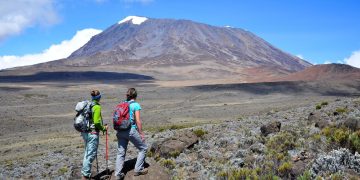








Mount Kilimanjaro, standing at 5,895 meters (19,341 feet), is Africa’s tallest peak and one of the world’s most iconic trekking destinations. Located in northern Tanzania, this majestic stratovolcano offers trekkers a unique combination of diverse ecosystems, breathtaking landscapes, and the ultimate challenge of high-altitude climbing without technical mountaineering. Successfully reaching the summit requires meticulous planning, physical preparation, and a deep understanding of the mountain’s routes, weather conditions, and environmental considerations.
This guide provides a detailed and professional overview of Mount Kilimanjaro’s summit routes, preparation strategies, trekking logistics, health precautions, and essential gear for an unforgettable expedition.
1. Understanding Mount Kilimanjaro
1.1 Geography and Climate
Kilimanjaro consists of three volcanic cones: Kibo, Mawenzi, and Shira. Only Kibo is dormant and accessible to trekkers seeking the summit. The mountain’s climate varies dramatically with altitude:
- Base (800–1,800 m / 2,600–5,900 ft): Warm tropical climate with lush forests and abundant wildlife.
- Mid-altitude (1,800–4,000 m / 5,900–13,000 ft): Heath and moorland zones with cooler temperatures and unique flora like giant lobelias.
- High-altitude (4,000–5,895 m / 13,000–19,341 ft): Alpine desert and arctic conditions with extreme cold, strong winds, and snow near the summit.
1.2 Trekking Challenges
Though Kilimanjaro is a non-technical climb, it presents serious challenges:
- High Altitude: Altitude sickness is common above 3,000 meters.
- Weather Variability: Sudden storms and temperature swings are frequent.
- Physical Endurance: Long daily treks with significant elevation gain require strong cardiovascular fitness.
2. Choosing the Right Summit Route
Kilimanjaro offers several trekking routes, each with distinct characteristics regarding scenery, duration, difficulty, and acclimatization opportunities. The most popular routes are Machame, Marangu, Lemosho, Rongai, Shira, Umbwe, and Northern Circuit.
2.1 Machame Route (“Whiskey Route”)
- Duration: 6–7 days
- Difficulty: Moderate to strenuous
- Highlights:
- Scenic rainforest trails and panoramic mountain views
- Steeper ascent, good acclimatization if extended to 7 days
- Recommendation: Best for trekkers seeking diverse landscapes and a challenging, rewarding route.
2.2 Marangu Route (“Coca-Cola Route”)
- Duration: 5–6 days
- Difficulty: Moderate, less steep
- Highlights:
- Huts along the route, reducing the need for camping gear
- Gradual ascent, making it suitable for moderate fitness levels
- Recommendation: Ideal for first-time trekkers or those preferring hut accommodation.
2.3 Lemosho Route
- Duration: 7–8 days
- Difficulty: Moderate
- Highlights:
- Starts on the western side with less crowded trails
- Beautiful Shira Plateau and excellent acclimatization opportunities
- Recommendation: Perfect for trekkers prioritizing scenery and acclimatization to reduce altitude sickness.
2.4 Rongai Route
- Duration: 6–7 days
- Difficulty: Moderate
- Highlights:
- Approaches from the northern side, drier and less busy
- Less forested, more open vistas
- Recommendation: Suitable for those seeking solitude and a less popular route.
2.5 Shira Route
- Duration: 7–8 days
- Difficulty: Moderate
- Highlights:
- High plateau scenery similar to Lemosho
- Begins at higher altitude, shorter time to summit may affect acclimatization
- Recommendation: Best for experienced trekkers comfortable with high-altitude trekking.
2.6 Umbwe Route
- Duration: 5–6 days
- Difficulty: Strenuous
- Highlights:
- Steepest and most direct route
- Requires strong fitness and experience
- Recommendation: Not recommended for first-timers; suitable for fit, seasoned trekkers seeking a challenge.
2.7 Northern Circuit Route
- Duration: 9 days
- Difficulty: Moderate
- Highlights:
- Longest route with complete circumnavigation of the mountain
- Excellent acclimatization and diverse scenery
- Recommendation: Ideal for trekkers with more time who want a less crowded, scenic experience.
3. Physical Preparation and Training
Successfully summiting Kilimanjaro requires physical fitness, endurance, and mental resilience. Recommended preparation includes:
3.1 Cardiovascular Training
- Hiking with a loaded backpack on hills or stair climbs
- Running, cycling, or swimming to improve lung capacity and stamina
3.2 Strength Training
- Focus on legs, core, and lower back
- Exercises: squats, lunges, step-ups, planks
3.3 Endurance and Acclimatization
- Long hikes at increasing altitude if possible
- Practice trekking 5–7 hours per day with weighted packs
3.4 Mental Preparation
- Prepare for long days, isolation, and harsh weather conditions
- Meditation or visualization techniques can help manage stress and fatigue
4. Altitude Awareness and Health Precautions
High-altitude illness is the main risk when climbing Kilimanjaro. Understanding symptoms and preventive measures is critical.
4.1 Types of Altitude Sickness
- Acute Mountain Sickness (AMS): Headache, nausea, dizziness
- High-Altitude Pulmonary Edema (HAPE): Shortness of breath, fatigue, fluid in lungs
- High-Altitude Cerebral Edema (HACE): Severe headaches, confusion, loss of coordination
4.2 Prevention Strategies
- Ascend slowly: follow the “climb high, sleep low” principle
- Stay hydrated and avoid alcohol
- Use medications like acetazolamide (Diamox) under medical supervision
- Monitor for symptoms and descend immediately if severe
5. Gear and Equipment Essentials
Climbing Kilimanjaro requires specific equipment to handle varying climates and terrains:
5.1 Clothing
- Base Layer: Moisture-wicking thermal tops and bottoms
- Insulating Layer: Fleece or down jackets
- Outer Layer: Waterproof and windproof jacket and pants
- Accessories: Gloves, hats, buff, and sunglasses
5.2 Footwear
- Waterproof, sturdy trekking boots with ankle support
- Moisture-wicking socks and gaiters
5.3 Backpack and Sleeping Gear
- 30–40L daypack for essentials
- Sleeping bag rated to -10°C to -15°C (14–5°F)
5.4 Miscellaneous Gear
- Trekking poles to reduce knee strain
- Headlamp with extra batteries
- Water bottles and hydration system
- First aid kit and personal medications
6. Trekking Logistics and Support
6.1 Guided vs. Independent Trekking
Kilimanjaro requires permits and is almost always done with licensed guides:
- Guides provide route navigation, safety, and logistical support
- Porters carry camping gear and food, minimizing hiker fatigue
6.2 Permits and Fees
- National park entry fees and camping fees are mandatory
- Tipping guides and porters is customary
6.3 Accommodation
- Depending on route, options include tents or mountain huts
- Meals are often provided by trekking operators
7. Daily Trekking Itinerary (Example: Machame Route, 7 Days)
Day 1 – Machame Gate to Machame Camp (1,800 m → 3,000 m)
- Hike: 5–6 hours
- Terrain: Rainforest with moderate ascent
- Highlights: Lush vegetation, waterfalls
Day 2 – Machame Camp to Shira Camp (3,000 m → 3,850 m)
- Hike: 5–6 hours
- Terrain: Forest to heath and moorland
- Highlights: Giant lobelias, panoramic views
Day 3 – Shira Camp to Barranco Camp (3,850 m → 3,960 m)
- Hike: 6–7 hours
- Terrain: Shira Plateau and lava formations
- Highlights: Wide plateau, dramatic scenery
Day 4 – Barranco Camp to Karanga Camp (3,960 m → 4,035 m)
- Hike: 4–5 hours
- Terrain: Barranco Wall climb (steep but non-technical)
- Highlights: Rewarding views, acclimatization
Day 5 – Karanga Camp to Barafu Camp (4,035 m → 4,640 m)
- Hike: 4–5 hours
- Terrain: Alpine desert
- Highlights: Preparation for summit push
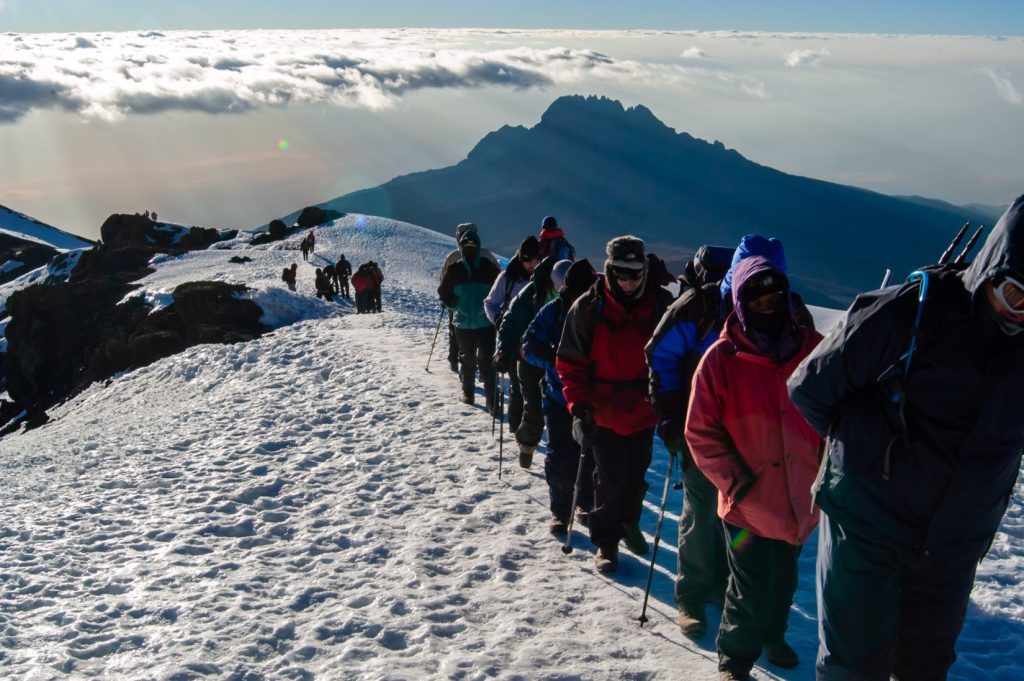
Day 6 – Barafu Camp to Uhuru Peak and descend to Mweka Camp (4,640 m → 5,895 m → 3,100 m)
- Summit: 6–8 hours up, 3–4 hours down
- Terrain: Steep scree and glacier proximity
- Highlights: Sunrise at Uhuru Peak, spectacular vistas
Day 7 – Mweka Camp to Mweka Gate (3,100 m → 1,800 m)
- Hike: 3–4 hours
- Terrain: Forest descent
- Highlights: Celebration and reflection on achievement
8. Environmental and Safety Considerations
8.1 Leave No Trace
- Carry out all waste
- Stick to established trails to protect fragile ecosystems
8.2 Wildlife Awareness
- Kilimanjaro is home to monkeys, birds, and small mammals
- Avoid feeding or disturbing wildlife
8.3 Weather Preparedness
- Check forecasts and be ready for sudden temperature changes
- Carry extra layers and rain protection
9. Psychological and Cultural Experience
Climbing Kilimanjaro is not only a physical challenge but also a cultural and spiritual journey:
- Interaction with guides and porters offers insight into Tanzanian culture
- The mountain’s changing ecosystems symbolize the passage of time and personal growth
- Summit success brings a profound sense of achievement and self-discovery
10. Conclusion
Reaching the summit of Mount Kilimanjaro is a dream for trekkers worldwide. The mountain offers a unique combination of adventure, natural beauty, and personal challenge. Choosing the right route, preparing physically and mentally, understanding altitude risks, and respecting the environment are crucial for a safe and successful climb. By embracing the journey with respect for the mountain and its people, climbers can experience the transformative power of one of Africa’s most extraordinary landscapes.
Mount Kilimanjaro is more than a peak; it is a test of endurance, a celebration of nature, and a life-changing experience for those who dare to reach its summit.