









Introduction
Hiking and mountaineering are activities that challenge human endurance, balance, and resilience. Essential to these pursuits are tools that enhance performance, reduce fatigue, and improve safety. Among such tools, trekking poles have evolved from simple wooden sticks to highly engineered devices made from advanced materials. Carbon fiber trekking poles represent the pinnacle of this evolution, combining lightweight construction, strength, and ergonomic design to elevate the hiking experience.
This article explores carbon fiber trekking poles in depth, covering material science, biomechanics, design principles, environmental considerations, and their impact on outdoor performance. By integrating engineering, physiology, and field application, this guide provides a comprehensive overview of why carbon fiber poles have become an essential choice for serious hikers and mountaineers.
1. Historical Evolution of Trekking Poles
1.1 Early Hiking Aids
- Historically, hikers relied on wooden staffs or locally sourced branches for stability on uneven terrain.
- These early tools were multifunctional: balance assistance, defense against wildlife, and support for river crossings.
1.2 Aluminum Era
- The mid-20th century saw the introduction of aluminum trekking poles, offering improved strength-to-weight ratio and durability.
- Aluminum poles, while lighter than wood, often suffered from bending under extreme load and vibrational stress transfer to the user.
1.3 Emergence of Carbon Fiber Technology
- Carbon fiber’s introduction into outdoor gear in the late 20th century allowed poles to be ultralight, stiff, and shock-absorbing.
- Modern carbon fiber trekking poles leverage aerospace-grade composites, ensuring high strength and minimal weight for challenging terrain.
2. Material Science of Carbon Fiber Poles
2.1 Composition and Properties
- Carbon fiber poles are composed of carbon filaments bound in epoxy resin, creating a composite structure.
- Key properties include:
- High tensile strength: Resists bending and breaking under load
- Low density: Reduces fatigue during long hikes
- Corrosion resistance: Suitable for wet, cold, and harsh environments
2.2 Structural Advantages
- Directional stiffness: Carbon fiber fibers can be aligned to optimize strength along the pole’s axis, enhancing support.
- Vibration damping: Unlike aluminum, carbon fiber absorbs minor shocks, reducing impact stress on joints.
- Thermal neutrality: Carbon poles do not become excessively cold or hot, ensuring comfort in extreme climates.
2.3 Limitations and Material Challenges
- Brittleness under lateral impact: Sudden side loads can cause fracture
- UV sensitivity: Extended exposure to sunlight may degrade resin over time
- Manufacturing complexity: High-quality carbon fiber poles require precise weaving, curing, and reinforcement techniques
3. Design and Engineering Principles
3.1 Pole Sections and Collapsibility
- Carbon fiber poles are often telescopic or folding:
- Telescopic poles: Adjustable length via locking mechanisms, suitable for varying terrain
- Folding poles: Compact, ideal for travel and ultralight hiking
- Multi-section design must balance joint strength and overall weight while minimizing potential wobble.
3.2 Grip and Ergonomics
- Handle materials include cork, EVA foam, and rubber, each offering specific benefits:
- Cork: Molds to hand shape, wicks moisture
- EVA foam: Lightweight, comfortable in cold conditions
- Rubber: Durable and suitable for wet environments
- Ergonomic handles reduce forearm fatigue, while adjustable straps improve energy transfer efficiency.
3.3 Tip Design
- Pole tips are engineered for traction and terrain adaptation:
- Tungsten carbide tips: Durable on rocky terrain
- Rubber caps: Reduce wear and improve grip on pavement
- Snow baskets: Prevent sinking in snow or soft soil
3.4 Shock Absorption and Joint Protection
- Some carbon fiber poles incorporate internal spring or elastomer systems, reducing impact stress on wrists, elbows, and knees.
- Shock-absorbing features are particularly valuable on downhill descents, where forces can exceed multiple times body weight.
4. Biomechanics and Performance Impact
4.1 Energy Efficiency
- Trekking poles distribute weight and impact forces, reducing stress on lower limbs by 10–25% during long hikes.
- Carbon fiber poles, due to low weight and high stiffness, maximize energy transfer, improving endurance and reducing fatigue.
4.2 Stability and Balance
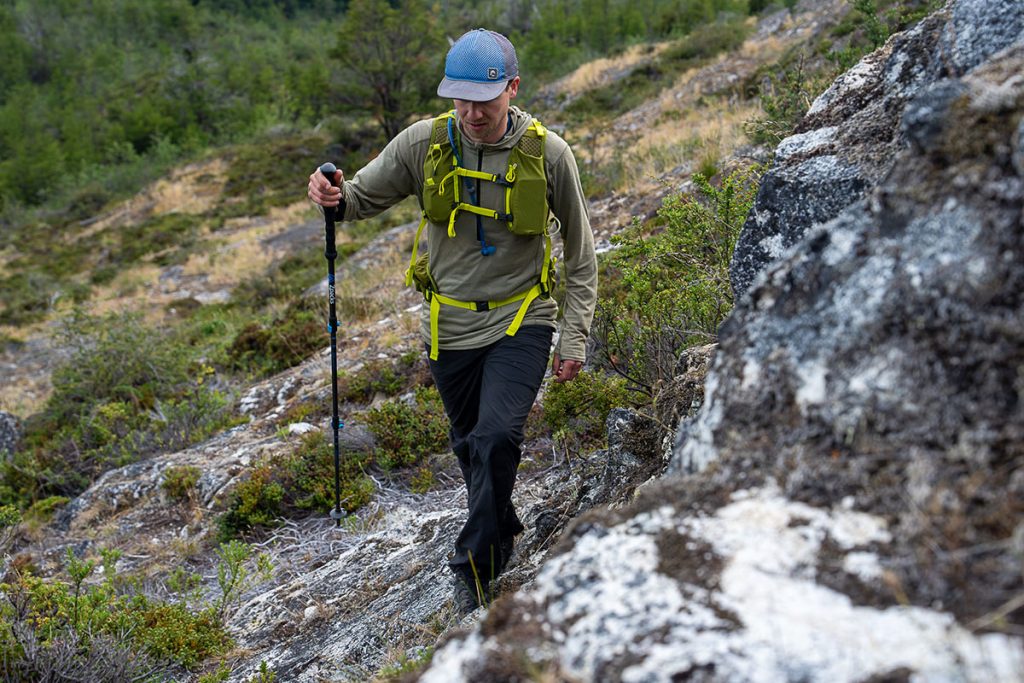
- Poles increase stability on slopes, uneven terrain, and river crossings.
- Enhanced stiffness in carbon fiber poles provides reliable push-off support, preventing slips and improving safety.
4.3 Joint Protection and Injury Prevention
- Proper use reduces knee, ankle, and hip stress, particularly on descents and uneven trails.
- Shock-absorbing poles mitigate micro-trauma from repetitive impact, protecting long-term joint health.
5. Environmental and Field Considerations
5.1 Weight and Portability
- Carbon fiber poles are significantly lighter than aluminum, often 200–400 grams per pair, crucial for long-distance trekking or ultralight hiking.
- Folding designs facilitate backpack integration, allowing hikers to navigate terrain efficiently.
5.2 Climate Adaptability
- Resistance to temperature extremes and corrosion makes carbon fiber poles ideal for:
- High-altitude expeditions
- Arctic or alpine conditions
- Humid or wet environments
5.3 Durability and Maintenance
- Poles require minimal maintenance but should be inspected for cracks and kept clean from dirt and sand to preserve sliding mechanisms.
- Rubber tips and baskets are replaceable, extending the lifespan of high-quality carbon poles.
6. Comparative Analysis: Carbon Fiber vs. Aluminum Poles
| Feature | Carbon Fiber | Aluminum |
|---|---|---|
| Weight | Lighter (~200–400g per pair) | Heavier (~300–500g per pair) |
| Strength-to-Weight Ratio | High | Moderate |
| Shock Absorption | Excellent | Low |
| Durability under Impact | Brittle under lateral stress | More ductile, bends without breaking |
| Cost | Higher | Lower |
- Carbon fiber excels in long-distance trekking, endurance-focused adventures, and alpine climbing, while aluminum may suit casual hikers or budget-conscious adventurers.
7. Market Trends and Innovations
7.1 Ultralight and Adventure-Optimized Models
- Manufacturers prioritize weight reduction, folding compactness, and vibration control.
- Advances include multi-carbon composites, enhancing resistance to torsional stress.
7.2 Integration with Modern Hiking Gear
- Poles now integrate with GPS devices, trekking apps, and multi-functional accessories.
- Lightweight designs complement minimalist backpacks, ultralight tents, and advanced footwear, creating a synergistic hiking ecosystem.
7.3 Eco-Friendly Production
- Sustainable initiatives focus on recyclable carbon fibers, reduced resin use, and low-energy manufacturing processes.
- Outdoor enthusiasts increasingly value gear that balances performance with environmental responsibility.
8. Practical Tips for Using Carbon Fiber Poles
8.1 Correct Length Adjustment
- Proper height ensures efficient energy transfer and joint protection:
- Flat terrain: Elbow at ~90°
- Uphill: Shorten poles slightly for leverage
- Downhill: Lengthen poles to stabilize descent
8.2 Grip Techniques
- Alternating hand and strap usage reduces forearm fatigue.
- Sliding techniques allow smooth motion and continuous support, especially on steep ascents.
8.3 Terrain-Specific Adjustments
- Use baskets in snow or soft soil, switch to bare tips for rocky surfaces, and avoid striking hard metal surfaces to prevent tip damage.
- Shock-absorbing poles should be tested for compression, ensuring proper function before critical terrain navigation.
9. Safety Considerations
9.1 Avoiding Structural Damage
- Poles must not strike delicate surfaces like historic structures or fragile flora.
- Responsible hikers respect trails, parks, and environmental regulations.
9.2 Awareness of Material Limits
- Carbon fiber poles can snap under extreme lateral stress; climbers should assess terrain risks.
- Carrying spare tips and repair kits is advisable for extended expeditions.
9.3 User Education
- Proper training enhances efficiency, reduces injury risk, and prolongs pole lifespan.
- Workshops, online tutorials, and guided hikes improve technique, terrain adaptation, and safety practices.
10. Conclusion
Carbon fiber trekking poles are more than accessories—they are performance-enhancing tools that merge material science, ergonomic design, and outdoor practicality. By offering lightweight construction, superior strength, vibration damping, and adaptability, they redefine the modern hiking experience.
For serious hikers, mountaineers, and adventure enthusiasts, carbon fiber poles provide:
- Enhanced energy efficiency and endurance
- Reduced joint stress and injury risk
- Reliable support across varied terrains and climates
- Integration with contemporary outdoor gear systems
As material technologies evolve and outdoor exploration becomes increasingly specialized, carbon fiber trekking poles exemplify how innovation can elevate traditional practices, making mountain hiking safer, more efficient, and more enjoyable. In the landscape of modern trekking, these poles are a testament to the synergy between engineering excellence and human performance.