










Introduction
Bleeding control is one of the most fundamental and life-saving competencies in medicine, emergency response, and first aid. Uncontrolled hemorrhage remains a leading cause of preventable death worldwide, particularly in trauma situations such as traffic accidents, industrial injuries, natural disasters, armed conflicts, and everyday domestic incidents. The ability to recognize bleeding severity and apply appropriate interventions within the first minutes—often referred to as the “golden minutes”—can mean the difference between life and death.
In recent decades, advancements in trauma science, military medicine, and civilian emergency preparedness have significantly improved our understanding of hemorrhage physiology and control strategies. Campaigns such as “Stop the Bleed” have emphasized that bleeding control is not solely the responsibility of medical professionals but a critical skill for the general public. This article provides a comprehensive, professional, and structured exploration of bleeding control, covering anatomical and physiological foundations, classification of bleeding, assessment strategies, traditional and modern control techniques, special scenarios, complications, and future trends.
1. Understanding Hemorrhage: Definitions and Physiological Impact
1.1 Definition of Hemorrhage
Hemorrhage refers to the escape of blood from the circulatory system due to damage to blood vessels. It can occur externally, where blood is visible outside the body, or internally, where blood accumulates within tissues or body cavities. While minor bleeding may be self-limiting, severe hemorrhage can rapidly compromise oxygen delivery, blood pressure, and organ function.
1.2 The Physiological Consequences of Blood Loss
Blood plays a critical role in oxygen transport, nutrient delivery, immune defense, and temperature regulation. Significant blood loss leads to:
- Hypovolemia: Reduced circulating blood volume
- Hypotension: Decreased blood pressure
- Tissue hypoxia: Insufficient oxygen delivery
- Metabolic acidosis: Due to anaerobic metabolism
- Coagulopathy: Impaired blood clotting mechanisms
If untreated, these changes may progress to hemorrhagic shock, multi-organ failure, and death.
2. Classification of Bleeding
Understanding different types of bleeding is essential for choosing appropriate control methods.
2.1 Classification by Vessel Type
2.1.1 Arterial Bleeding
- Bright red blood
- Spurting or pulsatile flow
- Rapid blood loss
- Medical emergency requiring immediate intervention
2.1.2 Venous Bleeding
- Dark red blood
- Steady, continuous flow
- Potentially severe but often easier to control than arterial bleeding
2.1.3 Capillary Bleeding
- Slow, oozing blood
- Common in minor wounds
- Usually self-limiting
2.2 Classification by Location
- External bleeding: Visible and often easier to assess
- Internal bleeding: Occurs within the body, difficult to detect, potentially fatal
2.3 Classification by Severity
- Mild: Minimal blood loss, no systemic symptoms
- Moderate: Noticeable blood loss, early signs of shock
- Severe: Life-threatening blood loss with altered consciousness and unstable vital signs
3. Initial Assessment and Scene Safety
3.1 Ensuring Scene Safety
Before providing assistance, rescuers must ensure their own safety. This includes awareness of traffic, fire hazards, unstable structures, or potential violence. Personal protective equipment (PPE), such as gloves, should be used whenever possible to reduce infection risk.
3.2 Primary Survey: The ABC Approach
Bleeding control is often integrated into the ABCDE trauma assessment:
- A – Airway
- B – Breathing
- C – Circulation (including hemorrhage control)
- D – Disability
- E – Exposure
In modern trauma care, catastrophic hemorrhage may be addressed even before airway management.
3.3 Rapid Bleeding Assessment
Key questions include:
- Is the bleeding visible?
- Is it life-threatening?
- Is the blood loss controlled or ongoing?
- Are there signs of shock?
4. Fundamental Techniques of Bleeding Control
4.1 Direct Pressure
Direct pressure is the cornerstone of bleeding control and should be the first intervention in most cases.
4.1.1 Method
- Apply firm, continuous pressure directly over the wound
- Use a clean cloth, gauze, or gloved hand
- Maintain pressure for at least 10–15 minutes without interruption
4.1.2 Advantages
- Simple and effective
- Requires minimal equipment
- Suitable for most external bleeding
4.2 Pressure Bandages
Pressure bandages combine direct pressure with sustained compression.
4.2.1 Components
- Absorbent dressing
- Elastic or non-elastic wrap
- Securing mechanism
4.2.2 Indications
- Ongoing bleeding after manual pressure
- Situations requiring hands-free pressure
4.3 Wound Packing
Wound packing is particularly useful for deep wounds where direct pressure alone is insufficient.
4.3.1 Technique
- Pack sterile or clean gauze deep into the wound
- Apply firm pressure over the packed wound
- Use hemostatic gauze when available
4.3.2 Common Applications
- Junctional wounds (groin, armpit, neck)
- Deep penetrating trauma
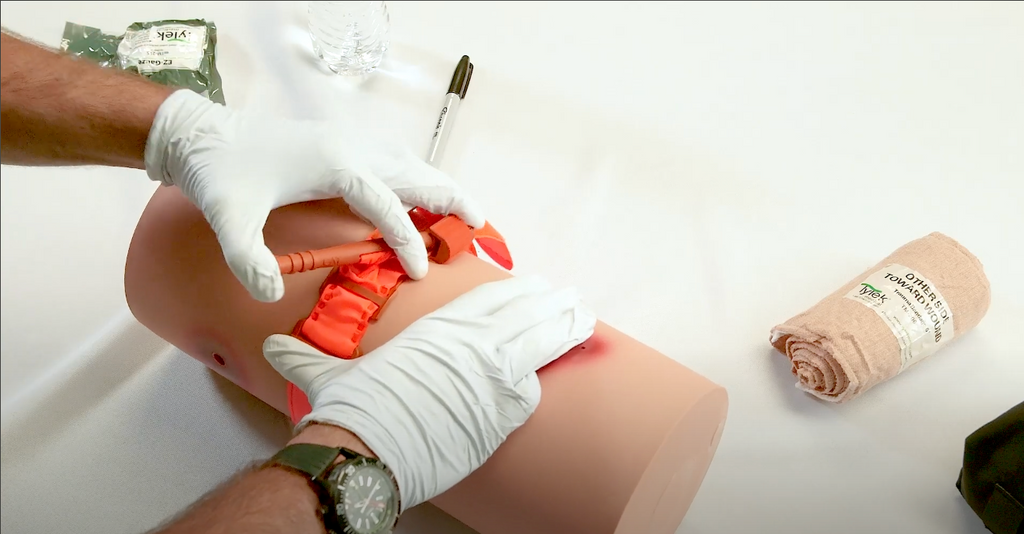
4.4 Tourniquets
Tourniquets are highly effective for controlling severe extremity hemorrhage.
4.4.1 Indications
- Life-threatening bleeding from arms or legs
- Failure of direct pressure
- Multiple casualties or unsafe environments
4.4.2 Proper Application
- Place 5–7 cm above the wound
- Tighten until bleeding stops
- Note application time
4.4.3 Common Myths
- Modern tourniquets are safe when properly used
- Limb loss is rare when applied correctly and promptly
5. Hemostatic Agents and Advanced Dressings
5.1 Hemostatic Gauze
Hemostatic dressings are impregnated with agents that accelerate clot formation.
5.1.1 Mechanisms
- Promote platelet aggregation
- Enhance clot stability
- Absorb blood rapidly
5.1.2 Advantages
- Faster bleeding control
- Effective in coagulopathic patients
- Widely used in military and civilian trauma care
5.2 Bioactive and Advanced Materials
Modern research has led to the development of:
- Chitosan-based dressings
- Fibrin sealants
- Synthetic clotting matrices
These materials are increasingly used in surgical and prehospital settings.
6. Internal Bleeding: Recognition and Management
6.1 Signs and Symptoms
Internal bleeding may present with:
- Abdominal pain or distension
- Bruising (ecchymosis)
- Pale, cool, clammy skin
- Dizziness or fainting
- Rapid pulse and breathing
6.2 Immediate Actions
- Call emergency medical services
- Keep the patient still and warm
- Do not give food or drink
- Monitor vital signs continuously
Internal bleeding always requires professional medical intervention.
7. Special Populations and Scenarios
7.1 Pediatric Patients
Children have lower blood volumes, making them more vulnerable to rapid deterioration. Bleeding control principles remain the same, but pressure must be adjusted appropriately.
7.2 Elderly Patients
Elderly individuals may:
- Have fragile skin and vessels
- Take anticoagulant medications
- Exhibit delayed signs of shock
Extra vigilance is required in assessment and monitoring.
7.3 Obstetric and Gynecological Bleeding
Postpartum hemorrhage is a leading cause of maternal mortality worldwide. Management includes:
- Uterine massage
- Pharmacological agents
- Rapid transport to advanced care
7.4 Industrial and Disaster Settings
Mass casualty incidents require:
- Triage prioritization
- Rapid hemorrhage control
- Efficient use of limited resources
8. Complications and Risk Management
8.1 Infection
Open wounds are susceptible to infection. Proper wound cleaning and sterile techniques reduce risk.
8.2 Ischemia and Nerve Damage
Improper or prolonged tourniquet use may cause:
- Tissue ischemia
- Nerve compression
Clear documentation and timely medical follow-up are essential.
8.3 Rebleeding
Rebleeding may occur if pressure is released too soon or dressings are disturbed. Continuous monitoring is critical.
9. Training, Public Education, and Global Initiatives
9.1 Importance of Training
Effective bleeding control requires practice. Training programs focus on:
- Hands-on skill development
- Scenario-based learning
- Stress management
9.2 Public Health Campaigns
Global initiatives emphasize:
- Accessibility of bleeding control kits
- Public awareness
- Integration into emergency response systems
10. Future Directions in Bleeding Control
10.1 Technological Innovations
Emerging technologies include:
- Smart bandages with sensors
- Injectable hemostatic foams
- Portable hemorrhage detection devices
10.2 Artificial Intelligence and Data Integration
AI-assisted triage and predictive analytics may enhance early hemorrhage detection and response efficiency.
Conclusion
Bleeding control is a critical, time-sensitive intervention that spans the continuum from layperson first aid to advanced medical care. Mastery of basic techniques—such as direct pressure, wound packing, and tourniquet application—can dramatically reduce preventable deaths. At the same time, ongoing research, technological innovation, and public education continue to refine and expand our capabilities.
By understanding the principles, recognizing bleeding severity, and applying appropriate control methods, individuals and professionals alike can play a decisive role in saving lives. In an unpredictable world, the knowledge of bleeding control is not merely a medical skill—it is a universal responsibility and a powerful tool for human survival.