









Africa, the second-largest continent in the world, is home to a vast mosaic of ethnic groups, cultures, and languages. The diversity of its peoples reflects centuries of migration, adaptation to diverse ecological zones, and historical interactions ranging from trade to colonization. Understanding the distribution of Africa’s ethnic groups provides insight into the continent’s complex social, cultural, and political landscape, revealing patterns that shape everything from local governance to international relations.
This article explores the geographic and cultural distribution of Africa’s major ethnic groups, the historical factors influencing their settlement, and the socio-political significance of ethnolinguistic diversity. From the nomadic Tuareg of the Sahara to the Bantu-speaking populations of Central and Southern Africa, this detailed overview presents both the richness and complexity of Africa’s human geography.
1. Introduction: Africa’s Ethnic Complexity
Africa is home to over 3,000 distinct ethnic groups and more than 2,000 languages, making it the most linguistically and ethnically diverse continent. Its populations are unevenly distributed, shaped by geography, climate, historical migration patterns, and cultural adaptation. Broadly speaking, the continent’s ethnic groups are classified by linguistic families, such as Afroasiatic, Niger-Congo, Nilo-Saharan, and Khoisan, but cultural practices, traditions, and histories further differentiate these populations.
Key factors influencing ethnic distribution include:
- Ecology and geography: Desert regions, tropical rainforests, savannas, and highlands have shaped lifestyles, from pastoralism to agriculture.
- Historical migrations: The Bantu expansion, Nilotic migrations, and Arab influence in North Africa profoundly altered population patterns.
- Colonial borders: Arbitrary boundaries drawn during the colonial era often cut across ethnic territories, creating multicultural states today.
2. North Africa: The Afroasiatic Heartland
North Africa, stretching from the Mediterranean coast to the Sahara Desert, is predominantly inhabited by Berber (Amazigh) and Arab populations, with some Nubian and Tuareg minorities. This region is historically influenced by Afroasiatic languages, Islam, and Mediterranean trade networks.
2.1 The Berbers (Amazigh)
- Location: Morocco, Algeria, Tunisia, Libya, parts of Mali and Niger
- Language: Berber languages (Tamazight, Tachelhit, Tarifit)
- Lifestyle: Berbers inhabit both mountainous and desert regions, engaging in agriculture, pastoralism, and trade.
- Cultural significance: Berbers have preserved distinct languages and traditions despite Arabization and Islamization.
2.2 Arabized Populations
- Location: Egypt, Libya, Tunisia, Algeria, Morocco, Sudan
- Language: Arabic (Maghrebi and Egyptian dialects)
- Lifestyle: Predominantly urbanized and agricultural; nomadic Bedouin groups remain in deserts.
- Historical influence: Arab conquests from the 7th century onward transformed local cultures and religions, blending Berber and Arab traditions.
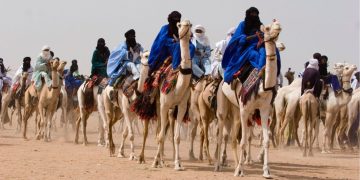
2.3 The Tuareg
- Location: Sahara Desert, Mali, Niger, Algeria, Libya
- Language: Tamasheq (a Berber language)
- Lifestyle: Nomadic pastoralists, trading salt and livestock across desert routes.
- Cultural traits: Recognizable by distinctive blue veils and matrilineal social structures.
3. The Sahel: The Transition Zone
The Sahel is a semi-arid region bordering the southern edge of the Sahara, extending from Senegal to Sudan. It hosts a mix of Niger-Congo, Nilo-Saharan, and Afroasiatic populations, blending African and Arab cultural influences.
3.1 Fulani (Peul)
- Location: Senegal, Mali, Nigeria, Cameroon
- Language: Fula
- Lifestyle: Traditionally pastoralist, with extensive cattle herding across national borders.
- Significance: Their mobility has allowed the Fulani to influence trade and social systems across the Sahel.
3.2 Hausa
- Location: Northern Nigeria, Niger
- Language: Hausa (Afroasiatic)
- Lifestyle: Urban and agricultural, heavily involved in trade and political systems.
- Cultural influence: A dominant ethnic group in West Africa, central to regional commerce and Islamic scholarship.
3.3 Kanuri
- Location: Nigeria, Niger, Chad
- Language: Kanuri (Nilo-Saharan)
- Lifestyle: Agriculture, fishing, and historical participation in the Kanem-Bornu empire.
4. West Africa: A Niger-Congo Stronghold
West Africa is home to some of Africa’s largest ethnic groups, predominantly Niger-Congo speakers, spread across savannas, forests, and coastal areas.
4.1 Yoruba
- Location: Southwestern Nigeria, Benin, Togo
- Language: Yoruba
- Lifestyle: Agriculture, urban centers, and rich cultural traditions, including the Ifá religious system.
- Diaspora influence: Yoruba culture profoundly influenced Afro-Caribbean and Latin American communities.
4.2 Igbo
- Location: Southeastern Nigeria
- Language: Igbo
- Lifestyle: Agriculture and commerce, with decentralized village structures.
- Cultural significance: Known for entrepreneurship and complex social organizations.
4.3 Akan
- Location: Ghana, Ivory Coast
- Language: Twi, Fante
- Lifestyle: Farming and gold mining historically; rich in art and matrilineal traditions.
4.4 Mandé (Manding)
- Location: Mali, Guinea, Senegal
- Language: Bambara, Malinke
- Lifestyle: Historically linked to empires such as Mali and Songhai, with trade networks spanning West Africa.
5. Central Africa: The Bantu Expansion
Central Africa is largely dominated by Bantu-speaking peoples, whose migration from the Cameroon-Nigeria border region over millennia shaped the cultural and linguistic landscape of Central and Southern Africa.
5.1 Luba and Kongo
- Location: Democratic Republic of Congo, Republic of Congo, Angola
- Language: Luba-Katanga, Kikongo
- Lifestyle: Agriculture, ironwork, and trade; historically organized in kingdoms.
5.2 Mongo
- Location: Congo Basin
- Language: Mongo
- Lifestyle: Hunter-gatherers and farmers in tropical forests, preserving traditional social structures.
6. East Africa: Nilotic, Cushitic, and Bantu Interactions
East Africa is a meeting point for Nilotic, Cushitic, Bantu, and Afroasiatic groups, creating a highly diverse region.
6.1 Nilotic Peoples
- Location: South Sudan, Kenya, Uganda, Tanzania
- Examples: Dinka, Nuer, Maasai
- Lifestyle: Pastoralist societies, cattle central to economy and culture.
6.2 Cushitic Peoples
- Location: Ethiopia, Somalia, Kenya
- Examples: Somali, Oromo, Afar
- Lifestyle: Pastoralists and farmers, with rich oral and musical traditions.
6.3 Bantu in East Africa
- Location: Tanzania, Kenya, Mozambique
- Lifestyle: Agriculture-based societies, often urbanizing and trading along the coast.
7. Southern Africa: Khoisan and Bantu Interactions
Southern Africa features a combination of Bantu-speaking groups and the Khoisan peoples, the latter representing some of the oldest human populations on Earth.
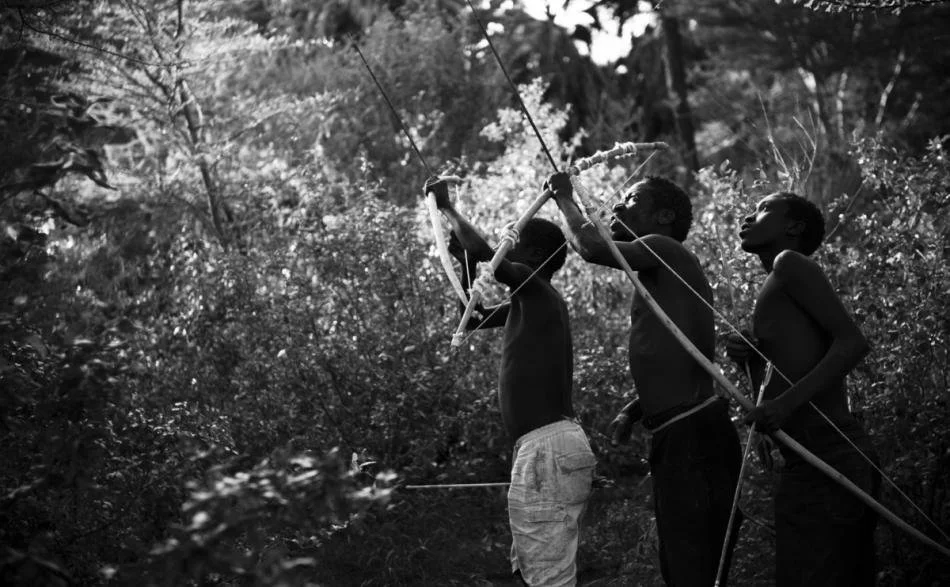
7.1 Khoisan
- Location: Namibia, Botswana, South Africa
- Language: Khoisan languages (click consonants)
- Lifestyle: Hunter-gatherer traditions; pastoralism introduced in recent centuries.
7.2 Zulu
- Location: South Africa
- Language: Zulu (Bantu)
- Lifestyle: Farming, cattle herding, and historically organized under kingdoms.
7.3 Shona
- Location: Zimbabwe, Mozambique
- Language: Shona
- Lifestyle: Agriculture-based societies, historically linked to Great Zimbabwe civilization.
8. Ethnic Distribution and Contemporary Implications
The distribution of Africa’s ethnic groups has far-reaching implications for:
- Politics: Ethnic diversity affects governance, power-sharing, and regional conflicts.
- Economy: Certain ethnic groups dominate trade networks or agricultural sectors.
- Culture: Music, language, and religious traditions are deeply linked to ethnic identities.
- Migration and urbanization: Modern migration patterns are reshaping historical ethnic distributions, often creating multiethnic urban centers.
9. Challenges in Mapping Ethnic Groups
Despite extensive studies, mapping ethnic groups in Africa is challenging due to:
- Fluid identities: Intermarriage and migration blur ethnic boundaries.
- Colonial borders: Arbitrary borders forced diverse groups into single states.
- Political sensitivity: Ethnic classifications can be controversial in regions with intergroup tensions.
10. Conclusion: The Rich Mosaic of Africa
Africa’s ethnic distribution is a testament to the continent’s rich history, cultural diversity, and ecological variation. From the Sahara’s nomadic Tuareg to the Bantu farmers of Southern Africa, every ethnic group contributes to the continent’s vibrant cultural landscape. Understanding these distributions is essential for appreciating Africa’s social complexity, informing development policies, and promoting peace and coexistence in an ethnically diverse continent.
The study of Africa’s ethnic groups is more than a map of populations; it is a window into human adaptation, migration, and resilience. By recognizing the historical and contemporary patterns of ethnic distribution, we gain a deeper appreciation of Africa’s remarkable diversity.