









Introduction: A Hidden World Below Our Feet
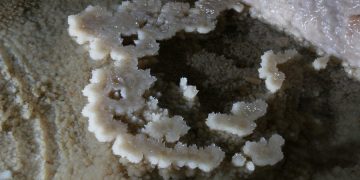
When we think of life on Earth, the first images that come to mind are often lush forests, vast oceans, and sprawling savannahs. However, an entirely different, secretive world exists beneath the Earth’s surface—one that remains largely unexplored yet holds the potential to change our understanding of life, biogeochemistry, and even extraterrestrial possibilities. This hidden world is home to subterranean microbial ecosystems, where life thrives miles below the Earth’s surface, isolated from sunlight and exposed to extreme pressures and temperatures.
In this article, we delve into the fascinating world of deep biospheres—microbial ecosystems that exist kilometers underground. These ecosystems are composed of extremophilic microorganisms that have adapted to survive in a variety of challenging conditions, including high temperatures, extreme pressure, and the absence of light. These organisms may hold secrets to life’s resilience and could offer insights into how life might survive on other planets or moons.
Through understanding the microbial communities living several kilometers below Earth’s surface, we also gain a deeper appreciation for the complexity of life and its ability to adapt to a variety of environments. This article will explore the characteristics, ecology, and significance of these underground ecosystems, as well as the methods scientists use to study them.
1. The Earth’s Subsurface: A Hidden Habitat
1.1 What is the Deep Biosphere?
The term “deep biosphere” refers to the vast, largely unexplored region of the Earth’s crust, which extends from the surface to several kilometers deep. Within this subterranean environment, a variety of microbial ecosystems have been discovered, thriving in environments with no access to sunlight, high pressure, and fluctuating temperatures. These ecosystems are primarily composed of bacteria, archaea, and some fungi, which survive by exploiting chemical energy sources instead of sunlight.
The deep biosphere is divided into different zones based on depth:
- Shallow subsurface: Up to a few hundred meters deep, where microbial life is sustained by nutrients from surface water and organic material.
- Deep biosphere: Extending from several hundred meters to several kilometers, where organisms live in isolated pockets of water, interacting with the minerals and rocks that surround them.
- Deepest layers: At depths of several kilometers, microorganisms survive by using geothermal energy from the Earth’s interior, in a form of metabolism known as chemosynthesis.
One of the most astonishing aspects of the deep biosphere is the sheer volume of life it contains. It is estimated that the deep biosphere may hold as much as 70% of Earth’s microbial biomass, a staggering amount that challenges our traditional understanding of ecosystems and the distribution of life on our planet.
1.2 Conditions in the Subsurface Environment
Life in the subsurface is vastly different from that on the surface, and microorganisms living in these environments must be adapted to survive extreme conditions. These conditions include:
- High pressure: As we go deeper underground, the pressure increases, with each kilometer adding around 100 times the pressure experienced at sea level.
- Temperature extremes: The deeper we go into the Earth, the higher the temperatures become. The Earth’s internal heat causes temperatures to rise by about 25-30°C for every kilometer of depth.
- Chemically rich environments: The deep biosphere is full of minerals, gases, and chemicals that microbes can metabolize, including hydrogen, methane, sulfur, and iron.
- Lack of sunlight: Photosynthesis, the process that supports life on the surface, is not possible in these dark environments. Instead, microbes rely on chemosynthesis, a process that uses chemical energy from minerals and gases.
Despite these harsh conditions, life has found a way to adapt and thrive deep beneath the Earth’s surface. The microbial communities living in these extreme environments are often referred to as extremophiles, as they have evolved specific adaptations to survive in conditions that would be lethal to most organisms.
2. Life in the Deep Biosphere: Microbial Communities
2.1 Types of Microorganisms
The microorganisms that inhabit the deep biosphere are diverse and highly specialized. They can be broadly classified into two groups: bacteria and archaea, both of which are single-celled organisms, and both groups have evolved various mechanisms to survive in such challenging environments.
- Bacteria: These organisms are capable of a wide range of metabolic processes, including fermentation, chemosynthesis, and denitrification. Many deep biosphere bacteria rely on sulfur or iron compounds as their primary energy source.
- Archaea: Closely related to bacteria, archaea are often more resilient to extreme conditions, including high temperatures and salinity. Some archaea in the deep biosphere live in hydrothermal vent environments, where they utilize sulfur compounds to produce energy.
Some of the most notable extremophiles found in the deep biosphere include:
- Thermophiles: These heat-loving microbes thrive in high-temperature environments, sometimes reaching temperatures in excess of 100°C (212°F).
- Halophiles: These salt-loving organisms live in environments with high salinity, often in briny underground lakes or salt deposits.
- Methanogens: These archaea produce methane as a metabolic byproduct and thrive in environments where oxygen is scarce, such as in deep ocean sediments or subterranean pockets of gas.
2.2 Chemosynthesis: The Alternative to Photosynthesis
In the absence of sunlight, microorganisms in the deep biosphere rely on chemosynthesis to produce energy. Chemosynthesis is the process by which certain organisms convert chemical compounds into energy, rather than using sunlight as plants do.
For example, sulfur bacteria and some archaea are able to oxidize hydrogen sulfide (H2S) or other sulfur compounds to produce sugar-like molecules for growth. In other instances, methanogens consume hydrogen and carbon dioxide to produce methane gas, a process that is key to energy production in the deep biosphere.
One of the most fascinating aspects of chemosynthesis is that it mirrors the processes that might support life in other extraterrestrial environments, such as on Mars, Europa, or Enceladus, moons of Jupiter and Saturn, which are believed to have subsurface oceans beneath their icy crusts. If life exists in these environments, it may rely on processes similar to those found in Earth’s deep biosphere.
2.3 Extremophiles and Their Survival Mechanisms
The extremophiles in the deep biosphere have evolved extraordinary adaptations that allow them to survive in such inhospitable conditions. Some of these adaptations include:
- Heat-resistant enzymes: Many microbes have developed enzymes that are stable and functional at high temperatures, allowing them to carry out vital biochemical reactions in hot, subterranean environments.
- Pressure-resistant membranes: The cell membranes of deep biosphere organisms are often composed of specialized lipids that help them withstand the immense pressures found deep underground.
- Antioxidants: Some microbes in the deep biosphere produce compounds that help protect their cells from the oxidative stress caused by exposure to chemicals like sulfur or iron.
3. The Role of Subterranean Ecosystems in Earth’s Biogeochemical Cycles
3.1 The Deep Carbon Cycle
One of the key ecological functions of deep biosphere microbes is their role in the carbon cycle. These organisms participate in carbon fixation, a process in which carbon dioxide is converted into organic molecules. In the deep biosphere, carbon fixation is driven by chemosynthesis rather than photosynthesis. Microbes use hydrogen or methane as an energy source to convert inorganic carbon into biomass, which can then be passed up the food chain in a variety of ecosystems, including hydrothermal vent communities.
Microbial activity in the deep biosphere has far-reaching implications for the global carbon cycle. In fact, some studies suggest that deep biosphere microorganisms may contribute a significant amount of carbon to the Earth’s surface ecosystems through the process of carbon sequestration, trapping carbon deep underground and potentially helping to regulate the planet’s climate.
3.2 The Nitrogen Cycle
Nitrogen is another key element involved in the deep biosphere’s ecological functions. Many microorganisms in the deep Earth are involved in the nitrogen cycle, converting nitrogen compounds into usable forms for other organisms. Nitrogen-fixing bacteria convert atmospheric nitrogen into biologically available forms, while other microbes perform denitrification, converting nitrate back into nitrogen gas.
The nitrogen cycle in the deep biosphere plays a critical role in maintaining ecosystem balance, both in underground environments and in surface ecosystems. Microbial interactions with nitrogen-rich minerals and compounds can also influence soil fertility and agricultural productivity.
4. Exploring the Deep Biosphere: Challenges and Methods
4.1 Methods for Studying Subterranean Life
Studying life deep below the Earth’s surface presents a number of challenges due to the extreme conditions and inaccessibility of these environments. However, advances in sampling techniques, genomic sequencing, and subsurface exploration have allowed scientists to uncover new insights into deep biosphere ecosystems.
Researchers use a combination of drilling, soil coring, and microbiological analysis to study subterranean life. For example, the Deep Hot Biosphere Project and similar initiatives involve drilling into deep rock layers to collect samples from kilometers below the surface. Once samples are retrieved, scientists can extract DNA and analyze microbial communities using cutting-edge metagenomic sequencing techniques.
Additionally, scientists are studying deep biosphere environments through laboratory simulations, which mimic the conditions of deep Earth, allowing researchers to better understand microbial survival strategies under extreme pressure and temperature.
4.2 The Future of Deep Biosphere Research
As we continue to explore deeper into the Earth, there are vast new frontiers in microbial ecology and geobiology to be uncovered. Understanding how life survives in such extreme environments not only expands our knowledge of Earth’s ecosystems but also raises important questions about the possibility of life on other planets.
Conclusion: Life in the Depths
The discovery of life in the Earth’s deep biosphere has fundamentally changed our understanding of the adaptability of life. These subterranean ecosystems challenge traditional definitions of habitability and demonstrate that life can thrive in the most extreme environments. As we continue to study the microorganisms that inhabit these underground worlds, we are not only learning more about life on Earth but also gaining critical insights into the potential for life on other planets.
The deep biosphere represents a hidden frontier of life, and its exploration is an essential part of understanding the full range of biological diversity on our planet. As we probe deeper into the Earth’s crust, we uncover more about the resilience and resourcefulness of life, which will no doubt inspire future scientific exploration and discovery.