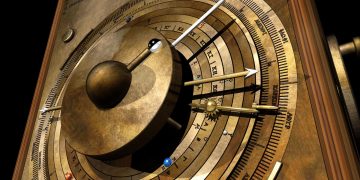










The Antikythera Mechanism, often hailed as the world’s first analog computer, represents one of the most astonishing technological achievements of the ancient world. Discovered in 1901 in a shipwreck off the coast of Antikythera, Greece, this intricate assembly of bronze gears and dials dates back to approximately 100 BCE. Despite being over two millennia old, the Mechanism embodies an extraordinary understanding of astronomy, mathematics, and mechanical engineering, long predating similar technological developments by centuries.
This article provides a comprehensive analysis of the Antikythera Mechanism, examining its discovery, construction, astronomical function, engineering sophistication, cultural context, and enduring influence. Through detailed study, it highlights the remarkable intersection of science, technology, and intellectual achievement in the Hellenistic era.
1. Discovery and Historical Context
1.1 Shipwreck Discovery
- In 1901, sponge divers discovered a Roman-era shipwreck near the island of Antikythera.
- Among the artifacts were corroded bronze fragments later identified as part of a sophisticated mechanical device.
- Initial investigations underestimated the complexity of the Mechanism, often describing it as an astrolabe or a clock-like object.
1.2 Dating and Origin
- Radiocarbon and stylistic analysis date the Mechanism to approximately 100–150 BCE.
- Likely Hellenistic Greek origin, reflecting the scientific advancements in astronomy, mathematics, and engineering in cities such as Rhodes and Pergamon.
- Context: The Hellenistic period (323–31 BCE) was characterized by intellectual flourishing, technological experimentation, and astronomical observation.
1.3 Early Studies
- Early researchers like Spyridon Stais (1902) and Derek de Solla Price (1950s) gradually revealed its mechanical sophistication.
- Price’s groundbreaking work established the Antikythera Mechanism as a complex analog computer capable of predicting astronomical events.
2. Physical Structure and Mechanism
2.1 General Description
- Composed of at least 30 bronze gears, embedded in a wooden frame (now largely lost).
- Features a front dial displaying the zodiac and calendar cycles, and a rear dial for predicting eclipses and planetary positions.
- Surviving fragments indicate inscriptions in Greek describing months, zodiac signs, and astronomical cycles.
2.2 Gearing and Mechanical Design
- Differential gearing: Allows calculation of the Moon’s irregular motion, including the elliptical orbit and variable speed.
- Epicyclic gearing: Enables prediction of planetary positions and lunar phases.
- Gear teeth: Carefully crafted triangular teeth, demonstrating sophisticated metallurgy and precision engineering.
2.3 Dials and Indicators
- Front dial: Calendar with Egyptian and Greek months, zodiac signs, and Sun position.
- Rear dial: Saros cycle (18-year eclipse prediction), Callippic cycle (76 years), and Metonic cycle (19-year lunisolar calendar).
- Small subsidiary dials: Likely tracked lunar phases, leap years, and other calendrical adjustments.
3. Astronomical and Mathematical Function
3.1 Calendar and Zodiac
- Converts between solar and lunar calendars, enabling synchronization of festival dates and agricultural cycles.
- Tracks sidereal motion of the Sun and Moon across the zodiac.
- Demonstrates understanding of lunisolar cycles centuries before mechanical clocks.
3.2 Eclipse Prediction
- Saros cycle: 223 lunar months (~18 years) for predicting eclipses.
- Rear dial indicates type, timing, and location of solar and lunar eclipses.
- Utilizes precise ratios in gear trains to replicate celestial periodicity.
3.3 Lunar Motion and Epicycles
- Moon’s orbit is elliptical; the Mechanism models the varying speed of lunar motion using epicyclic gearing.
- Allows prediction of lunar phases, conjunctions, and occultations.
- Reflects knowledge of Greek astronomy from Hipparchus and Aristarchus.
3.4 Planetary Predictions
- Evidence suggests the Mechanism could track at least the five known planets (Mercury, Venus, Mars, Jupiter, Saturn).
- Likely employed epicycles and gear ratios approximating observed planetary periods.
4. Engineering Complexity
4.1 Precision Metalworking
- Bronze gear teeth were hand-cut with remarkable accuracy (tolerances within 0.05 mm).
- Gear ratios precisely calculated to match astronomical periods.
4.2 Mechanical Innovation
- Differential and epicyclic gearing unknown in Europe until the Middle Ages.
- Small-scale mechanical integration demonstrates understanding of torque, friction, and load distribution.
4.3 Comparative Analysis
- Medieval clocks (14th century) employed similar gearing principles, more than a millennium later.
- The Antikythera Mechanism remains unparalleled in complexity for its era.
5. Cultural and Intellectual Context
5.1 Hellenistic Science
- Greek astronomers like Hipparchus (c. 190–120 BCE) influenced Mechanism design.
- Integration of geometry, observational astronomy, and mathematics indicates advanced intellectual environment.
5.2 Technological Patronage
- Likely commissioned by wealthy individuals or city-states interested in astronomy, navigation, or ritual timing.
- Demonstrates the social value placed on scientific instruments and intellectual prestige.
5.3 Education and Knowledge Transmission
- Mechanism may have served educational purposes, illustrating celestial cycles for students or scholars.
- Suggests sophisticated Greek pedagogy in applied mathematics and astronomy.
6. Modern Analysis and Reconstructions
6.1 X-Ray and CT Imaging
- Early studies relied on visual inspection and epigraphic analysis.
- Advanced imaging revealed hidden gear trains, inscriptions, and mechanical linkages.
- Confirms the full extent of gearing complexity and function.
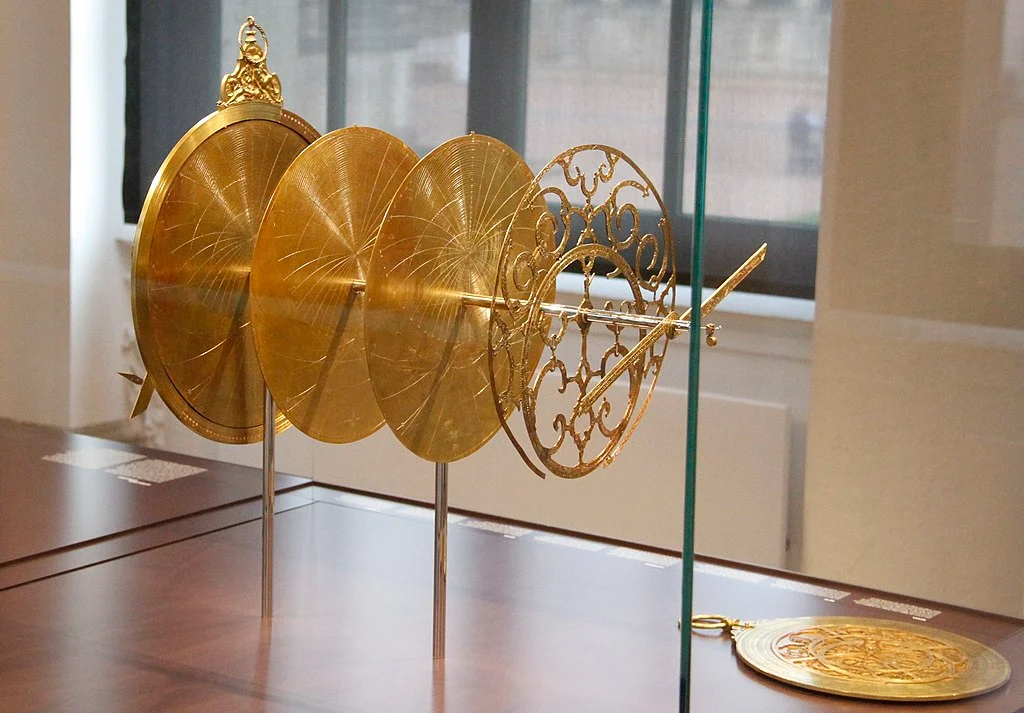
6.2 3D Modeling and Replicas
- Modern reconstructions replicate front and rear dials, lunar epicycles, and eclipse prediction.
- Demonstrates operational feasibility and precision.
- Educational and museum replicas allow public engagement with ancient technology.
6.3 Computational Simulations
- Gear ratios and angular motion mathematically modeled to match observed astronomical cycles.
- Validates hypotheses regarding lunar anomaly modeling and planetary tracking.
7. Implications for History of Technology
7.1 Precedence of Mechanical Computing
- Antikythera Mechanism predates European mechanical clocks by over a millennium.
- Demonstrates early understanding of programmable gear trains and analog computation.
7.2 Lost Knowledge
- Mechanism represents a technological peak whose continuity was lost during Roman decline.
- Suggests Hellenistic engineers achieved sophisticated mechanical abstraction previously unrecognized.
7.3 Influence on Modern Science History
- Challenges assumptions that complex mechanical computation began in medieval Europe.
- Reframes understanding of ancient Greek technological capabilities.
8. Broader Significance
8.1 Interdisciplinary Study
- Bridges archaeology, astronomy, mechanical engineering, and history of science.
- Encourages collaboration across disciplines to fully understand artifact function and context.
8.2 Cultural Heritage
- Symbolizes human ingenuity, curiosity, and the pursuit of understanding the cosmos.
- Serves as a tangible link between ancient and modern science.
8.3 Inspiration for Innovation
- Mechanism demonstrates potential for mechanical computation long before digital electronics.
- Inspires contemporary engineers, historians, and educators to explore historical technological achievements.
9. Remaining Mysteries
9.1 Missing Components
- Large portions of the Mechanism are lost, including possibly additional planetary dials.
- Research continues to hypothesize the complete functionality.
9.2 Exact Use Cases
- While astronomy is clear, exact social or ritual purposes remain speculative.
- Could have functioned as teaching tool, calendar regulator, or navigational aid.
9.3 Transmission of Knowledge
- Unclear why similar devices did not proliferate across the Mediterranean.
- Raises questions about knowledge preservation, technological diffusion, and societal priorities.
10. Conclusion
The Antikythera Mechanism stands as a testament to the extraordinary scientific and engineering capabilities of the ancient Greeks. Through meticulous craftsmanship, sophisticated gear trains, and profound astronomical understanding, this device embodied the principles of computation, prediction, and observation long before the era of modern machines. Its rediscovery not only reshaped perceptions of Hellenistic technology but also inspired contemporary study in mechanical engineering, archaeology, and the history of science.
As the world’s first known analog computer, the Mechanism highlights the universality of human curiosity and innovation. It underscores that the pursuit of understanding natural phenomena, coupled with applied technical skill, has been a hallmark of civilization for millennia. The Antikythera Mechanism remains a powerful symbol of human ingenuity, bridging the distant past with modern scientific imagination.