









Introduction
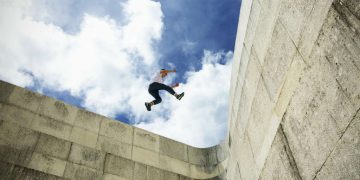
Urban parkour, often called freerunning, is a physical discipline that combines athleticism, creativity, and risk management to navigate complex urban environments. Rooted in the practice of moving efficiently through obstacles, parkour challenges the human body and mind to interact with the environment in novel ways. While originally developed for practical purposes, the modern manifestation of parkour has evolved into a global cultural phenomenon—one where extreme jumps, flips, and stunts capture the imagination of practitioners and spectators alike.
The essence of urban parkour lies not merely in performing daring feats but in understanding movement physics, risk assessment, and body mechanics. Extreme jumps, whether between rooftops or across urban voids, demand a combination of precision, strength, flexibility, and psychological control. This article delves into the science, techniques, and cultural impact of urban parkour, emphasizing extreme jumping as both a physical and mental discipline.
1. Origins and Philosophy of Parkour
1.1 Historical Background
Parkour traces its roots to France in the 1980s, primarily through the teachings of David Belle and the development of the “méthode naturelle” by Georges Hébert. Hébert’s philosophy emphasized:
- Functional movement for survival and efficiency.
- Natural body mechanics inspired by animal movement.
- Mental resilience and courage in the face of physical obstacles.
The evolution of parkour into an urban sport was marked by the adaptation of these natural movements to the city environment, transforming walls, rails, and rooftops into tools for creative locomotion.
1.2 Philosophical Tenets
Parkour is not just about jumping; it embodies mental and ethical dimensions:
- Overcoming fear: Practitioners learn to manage fear through calculated risk-taking.
- Respect for the environment: Many parkour communities advocate leaving urban spaces undamaged.
- Personal growth: Progression is individual, emphasizing mastery of self over competition.
This philosophical foundation underpins the practice of extreme urban jumping, where the stakes—physical injury or failure—heighten the psychological and ethical considerations.
2. The Mechanics of Extreme Urban Jumping
2.1 Physics Principles in Parkour
Understanding the physics behind jumps is crucial for safe and effective execution:
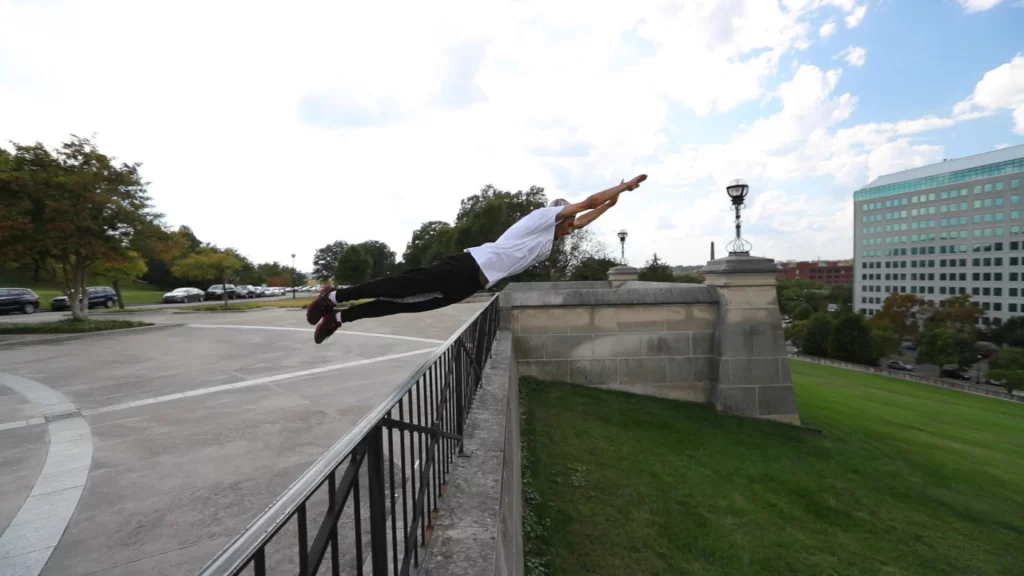
- Projectile motion: Jumping between structures involves calculating distance, angle, and trajectory.
- Force generation: Leg muscles generate vertical and horizontal forces, translating into momentum for long-distance or high-altitude jumps.
- Energy absorption: Landing safely requires converting kinetic energy into controlled deceleration to prevent injury.
For example, a precision jump between two rooftops requires careful consideration of take-off angle, body posture, and landing technique to minimize impact forces.
2.2 Body Mechanics and Training
Parkour athletes must develop full-body strength, flexibility, and proprioception. Key components include:
- Lower-body strength: Essential for powerful jumps and shock absorption.
- Core stability: Maintains balance during aerial movements and landings.
- Upper-body strength: Supports vaults, pulls, and wall climbs.
- Flexibility and joint mobility: Reduces injury risk during dynamic maneuvers.
- Neuromuscular coordination: Ensures precise timing and movement execution.
Training regimens often combine plyometric exercises, bodyweight strength routines, and skill-specific drills to enhance both power and control.
3. Risk Management in Extreme Parkour
3.1 Psychological Preparedness
The mental aspect of urban parkour is as important as the physical. Practitioners must:
- Assess risk: Determine feasibility based on distance, landing surface, and personal ability.
- Visualize movement: Mental rehearsal improves performance and reduces error.
- Control fear: Fear management techniques, such as controlled breathing and progressive exposure, are essential.
3.2 Environmental Assessment
Urban environments are unpredictable. Parkour athletes must evaluate:
- Surface integrity: Concrete, metal, or wood may behave differently under stress.
- Height and exposure: High-altitude jumps carry increased risk of injury or fatality.
- Crowd and traffic control: Ensuring the area is free of unexpected hazards.
3.3 Safety Measures and Equipment
While parkour is traditionally minimalist, safety considerations are critical in extreme scenarios:
- Padded surfaces: Practicing jumps over crash mats reduces impact forces.
- Spotters: Partnered support helps guide and catch practitioners during complex maneuvers.
- Progressive difficulty: Building skill incrementally reduces injury risk.
4. Notable Techniques in Extreme Urban Jumping
4.1 Precision Jumps
- Definition: Short, high-intensity jumps requiring exact landings on small surfaces.
- Execution: Combines explosive leg power with fine motor control for foot placement.
- Application: Common in rooftop gaps or narrow ledges.
4.2 Kong Vaults and Cat Leaps
- Kong Vaults: Jumping over obstacles with hands guiding the body over.
- Cat Leaps: Jumping to grab and cling onto a wall or ledge, absorbing impact through arms.
- Physics Consideration: Both techniques require momentum management to transition safely between aerial and static support.
4.3 Wall Runs and Tic-Tacs
- Wall Run: Using one leg to push off a wall to reach higher surfaces.
- Tic-Tac: Redirecting momentum off a vertical surface to reach a target.
- Biomechanical Importance: Core strength and leg coordination are critical for propulsion and trajectory control.
4.4 Drops and Landings
- Roll Technique: Distributes impact forces along the body during high drops.
- Precision Landing: Absorbing force through flexed knees, ankles, and hips.
- Extreme Jumps: Landings are often as technically challenging as the jumps themselves, requiring timing, strength, and proprioception.
5. Urban Parkour as a Cultural Phenomenon
5.1 Global Community and Media Influence
Urban parkour has grown from a niche discipline to a global subculture:
- Social media platforms have popularized freerunning videos showcasing extreme jumps.
- Movies and advertisements often depict parkour to symbolize agility, freedom, and rebellion.
- International competitions promote skill sharing and innovation in movement techniques.
5.2 Ethics and Respect in Urban Spaces
With the rise of public parkour, practitioners face ethical considerations:
- Respecting property: Avoiding damage to buildings and urban infrastructure.
- Safety of bystanders: Performing jumps in uncontrolled areas can endanger others.
- Community engagement: Promoting parkour as an inclusive and safe practice.
5.3 Psychological and Social Benefits
Engaging in urban parkour, especially extreme jumping, promotes:
- Mental resilience: Overcoming fear and stress through calculated risks.
- Problem-solving skills: Evaluating and navigating complex urban environments.
- Physical fitness: Comprehensive body conditioning.
- Community bonding: Collaboration with peers encourages shared learning and trust.
6. The Science Behind Extreme Jumps
6.1 Biomechanics Analysis
Research in sports science shows that extreme urban jumps involve:
- High vertical and horizontal forces generated by the lower limbs.
- Dynamic stability maintained through core engagement and proprioceptive feedback.
- Energy transfer optimized through joint alignment and movement sequencing.
6.2 Physics of Safe Landing
Landings in extreme parkour utilize principles such as:
- Momentum absorption: Rolling dissipates kinetic energy safely.
- Force distribution: Proper foot placement and body angles reduce injury risk.
- Friction management: Ensures stable contact with landing surfaces.
6.3 Injury Prevention
Common injuries in parkour include ankle sprains, fractures, and tendon injuries. Prevention strategies involve:
- Progressive skill development
- Strength and conditioning programs
- Environmental awareness and hazard assessment
7. Future Directions and Innovations
7.1 Training Technologies
- Motion capture and biomechanical analysis are increasingly used to refine techniques.
- Virtual reality simulations allow athletes to practice extreme jumps safely in controlled environments.
7.2 Integration into Urban Design
- Architects are beginning to consider parkour-friendly structures, incorporating safe rails, ledges, and gaps.
- Urban planners are exploring movement-based spaces that encourage exploration, creativity, and physical activity.
7.3 Competitive and Artistic Evolution
- Freerunning competitions now include precision, creativity, and difficulty scoring, reflecting the sport’s complexity.
- Parkour is evolving as both performance art and athletic discipline, highlighting the human capacity for adaptive movement.
Conclusion
Urban parkour, and particularly extreme jumping, embodies the fusion of physical prowess, scientific understanding, and mental resilience. These movements are not merely daring feats—they represent human adaptability, problem-solving, and the ability to interact creatively with our environment. From physics-based planning to biomechanical precision and risk assessment, the practice of extreme urban parkour reflects a sophisticated understanding of both the human body and the urban landscape.
As parkour continues to evolve globally, it challenges not only our perception of movement but also our understanding of space, safety, and creativity. By combining scientific knowledge, ethical practice, and artistic expression, urban parkour demonstrates how human beings can push the limits of what is physically and mentally possible while navigating the complex structures of the modern city.