









Introduction
Across civilizations, architects and engineers have sought to manipulate the environment to achieve better acoustics in the structures they designed. Ancient civilizations—without the advanced sound technology we have today—were able to design buildings and spaces with remarkable acoustical properties, using only their understanding of natural materials, geometry, and environmental interaction. The science behind ancient acoustical architecture provides a fascinating window into the ingenuity and resourcefulness of ancient architects.
Structures like Greek amphitheaters, Roman theaters, Mayan pyramids, and even ancient Egyptian temples were all designed with precise attention to sound behavior. Whether for speech, music, or ritual purposes, these buildings showcase an extraordinary understanding of acoustics, often driven by empirical observation rather than scientific theory. This article delves into the scientific principles behind ancient acoustical architecture, exploring the methods and materials used, the physics of sound at play, and the lasting legacy of these ancient innovations.
1. The Physics of Sound in Ancient Architecture
1.1 Sound Propagation: Understanding the Basics
Before delving into the specific acoustic strategies of ancient architecture, it’s important to understand the fundamental principles of sound. Sound is essentially a vibration that travels through a medium, typically air, in waves. These vibrations spread in a spherical manner from the source, and as the waves encounter surfaces, they can either reflect, absorb, or refract.
In architecture, sound design is focused on maximizing clarity and intelligibility of speech or music, and controlling how sound waves are reflected and absorbed within a space. The key acoustic elements include:
- Reverberation: The persistence of sound in a space after the original sound source has stopped. This can create a rich, full sound in larger spaces like amphitheaters.
- Reflection: The bouncing back of sound waves from walls, ceilings, and floors.
- Absorption: Materials and surfaces that soak up sound, minimizing echoes and reverb.
- Diffusion: The scattering of sound waves, which prevents concentration in one area, ensuring uniform distribution of sound.
Ancient architects intuitively understood how to use these principles, even without a formal understanding of acoustics as we know it today.
1.2 The Role of Geometry and Design
The design of ancient structures often employed geometrical precision to shape how sound waves interacted with the environment. For instance:
- Curved surfaces could direct sound waves more efficiently, creating focused areas of sound that allowed for greater clarity.
- Conical shapes could amplify voices or music, creating natural sound funnels that carried sound over long distances.
These geometrical features were not only artistic but highly functional, serving specific needs in spaces like theaters, temples, and public meeting areas.
2. Notable Examples of Ancient Acoustical Architecture
2.1 The Greek Amphitheaters
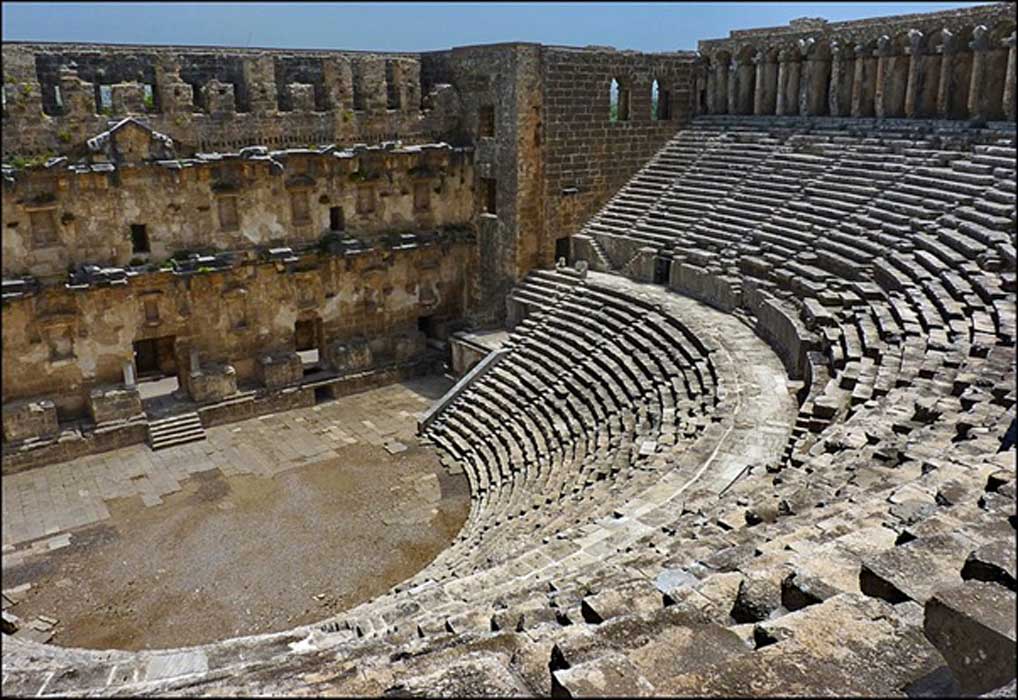
The ancient Greek amphitheaters are perhaps the most famous examples of acoustically advanced architecture. Designed for both drama and music, these open-air theaters were built to ensure that sound traveled effectively across large crowds, even without the use of microphones.
The Acoustics of the Theater of Epidaurus
The Theater of Epidaurus, dating back to the 4th century BCE, is often regarded as one of the best-preserved examples of ancient acoustical design. This theater, with a seating capacity of around 14,000 people, was built with precise acoustics in mind. Key design features include:
- The Seating Arrangement: The theater is built in a semicircular shape, with rows of seats that radiate outward from the stage. This design helped to reflect sound from the actors on stage to all areas of the theater, ensuring that every person, regardless of their seat, could hear clearly.
- The Material Composition: The seats of the theater are made of stone, a material known for its ability to reflect sound effectively. The stone also minimizes absorption, ensuring sound travels well.
- The Stage Design: The stage area was designed with a large circular orchestra (a space for the chorus) that also contributed to the sound’s directionality. The orchestra area, combined with the semicircular layout, created a natural acoustic focus.
Research has shown that sound travels from the actor’s voice and bounces off the stone seating in a way that diffuses sound evenly across the theater, preventing echoes while ensuring that all audience members hear the performance without amplification.
2.2 Roman Theaters and the Use of Concrete
The Romans took the principles of Greek theater acoustics and refined them further, particularly by incorporating the use of concrete in their constructions. Roman architects experimented with materials and geometrical shapes to improve sound delivery in large spaces. Key examples include:
The Theater of Pompey
The Theater of Pompey, built in 55 BCE, was the first permanent theater in Rome and employed Roman innovations in both acoustics and structure. Its design featured:
- The Use of Concrete: Roman concrete, a mixture of volcanic ash, lime, and water, was used to construct the structure. Concrete allowed for the creation of larger, more complex shapes that were impossible with traditional stone. The use of concrete also helped to enhance sound reflection, ensuring that the audience could hear both dialogue and music clearly.
- Multiple Levels of Seating: The theater’s design included multiple tiers of seating, each carefully positioned to ensure that sound from the stage would reach all corners of the audience.
- Strategic Use of Walls: The layout and size of the theater were optimized so that sound waves bounced off the walls and ceiling, without creating disruptive echoes, ensuring even distribution of sound across the space.
2.3 Egyptian Temples and Sound as a Ritual Tool
In ancient Egypt, the relationship between architecture and sound was not just practical but also spiritual. Temples were designed with acoustic properties to enhance the spiritual experience of the worshippers.
The Temple of Karnak
The Temple of Karnak is a prime example of how the Egyptians used sound in sacred spaces. While the primary purpose was to honor the gods, the acoustics of these temples played a significant role in religious rituals. Some key features include:
- High Ceilings and Columned Halls: The design of large columned halls created a space where sound could reverberate, enhancing the sense of grandeur and reverence during religious ceremonies.
- Ritual Sounds: The Egyptian priests used specific ritual sounds, such as chanting, musical instruments, and bells, to invoke a spiritual atmosphere. The temples were designed to amplify and project these sounds in ways that made them more impactful.
- Alignment with Natural Elements: Some temples were carefully positioned to align with celestial bodies, and sound was sometimes used in conjunction with sunlight to create a dramatic effect during worship, emphasizing the connection between the heavens and earth.
The Egyptians recognized the power of sound to evoke divine presence and enhanced this effect through architectural choices that allowed for both acoustic resonance and spiritual significance.
3. The Role of Materials in Ancient Acoustic Design
3.1 Stone and Marble
Materials like stone, marble, and granite were frequently used in ancient architecture for their acoustic properties. These materials have high reflective qualities, meaning that sound waves would bounce off them with little absorption, ensuring that the sound was directed effectively throughout a space.
- Greek and Roman theaters used stone seating and columns to reflect sound to all areas of the space.
- Egyptian temples used heavy stone and granite to enhance the reverberation of ritual sounds.
3.2 Wood and Other Organic Materials
Wood was used in many ancient buildings for its absorptive qualities. In smaller spaces, such as private residences or smaller theaters, wood could help control reverberation by absorbing excessive sound, ensuring clarity without echoes.
- Wooden panels and doors were sometimes used in Roman buildings and Egyptian structures for their ability to balance sound absorption and reflection.
- In some Mayan pyramids, organic materials like wood were used in conjunction with stone to create a balanced acoustic environment.
4. The Lasting Influence of Ancient Acoustical Design
4.1 Modern Applications of Ancient Acoustical Principles
Today, architects and acousticians still draw on the wisdom of ancient designs. The principles developed in ancient times are evident in many of today’s modern concert halls, theaters, and public spaces. For instance:
- The Sydney Opera House, with its iconic shell-shaped design, utilizes advanced acoustical principles to ensure that sound is evenly distributed throughout the auditorium, similar to the strategies used in ancient amphitheaters.
- Modern stadiums often incorporate curved seating and specialized sound-reflecting materials to enhance the experience of spectators, reflecting designs that date back to ancient times.
4.2 Preservation of Ancient Acoustic Sites
As many ancient structures are still in use today, preserving the original acoustic features is of utmost importance. The restoration of ancient theaters, temples, and arenas often involves careful work to maintain the integrity of their acoustical properties. Modern acousticians and architects work alongside archaeologists to ensure that these historical sites retain their sound qualities, providing valuable links to our past.
Conclusion
Ancient acoustical architecture represents a remarkable marriage of art, science, and function. While the architects of the ancient world lacked the modern tools and scientific theories we have today, they employed natural materials, geometrical precision, and an intuitive understanding of sound that has stood the test of time. The theaters, temples, and public spaces they left behind are not only impressive feats of engineering but also enduring examples of the power of sound in human culture.
Today, we continue to learn from these ancient innovations, drawing inspiration from their ability to create spaces where sound is not just heard but felt, enhancing both the spiritual and social experiences of those within.