









Introduction
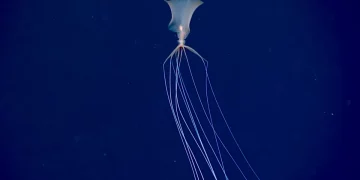
The deep ocean remains one of the least explored and most mysterious environments on Earth. At depths far below the reach of sunlight, vast and bizarre ecosystems thrive, populated by creatures that have adapted to the extreme conditions of the deep sea. Among these creatures, the giant squid (Architeuthis dux) has long captured the imagination of scientists and laypeople alike. Once thought to be purely mythical, this elusive giant has become the focus of groundbreaking research that sheds light on its biology, behavior, and role in the deep-sea food chain.
In recent years, significant advancements in deep-sea exploration technology and scientific research have led to a better understanding of the giant squid and its place in the marine food web. These discoveries have profound implications not only for marine biology but also for our understanding of ocean ecosystems and the complex interrelationships within them.
This article delves into the latest breakthroughs in giant squid research, explores the deep-sea food chain, and examines how new technologies and methodologies are transforming our comprehension of these enigmatic creatures and their role in the broader marine ecosystem.
1. The Giant Squid: A Brief Overview
The giant squid, often described as one of the ocean’s most enigmatic creatures, can grow up to 40 feet in length, making it one of the largest invertebrates on the planet. This elusive creature has long been the stuff of legend, with sailors recounting stories of monstrous squid attacking ships. However, it wasn’t until the 19th century that evidence of their existence began to surface, and it took until the late 20th century for scientists to make significant progress in studying the species.
Anatomy and Biology
Giant squids are part of the class Cephalopoda, which also includes octopuses, cuttlefish, and other squid species. They have a complex anatomy suited to life in the deep sea. Their long, muscular tentacles are equipped with powerful suckers and hooks, which they use to capture prey. The squid’s body is highly flexible, allowing it to maneuver through the water with great speed and precision. Additionally, giant squids possess a unique organ known as the “mantle,” which helps them to regulate buoyancy in the water.
Their eyes are among the largest in the animal kingdom, with diameters reaching up to 10 inches. These large eyes help them detect faint light in the dark depths of the ocean, where they reside. Despite their size and impressive features, giant squids are notoriously elusive, making it challenging for scientists to study them in their natural habitat.
Habitat and Distribution
Giant squids are deep-ocean dwellers, found at depths ranging from 660 to 3,300 feet. They are most commonly located in deep, offshore waters of the world’s oceans, including the North Atlantic, Pacific, and Southern Oceans. However, due to the remote nature of their habitat, their precise distribution remains somewhat uncertain. Giant squids are thought to inhabit deep-sea canyons, seamounts, and the continental slopes of various oceans.
Given their habitat, which lies far beyond the reach of traditional diving technologies, studying these creatures has been an ongoing challenge for marine biologists.
2. Breakthroughs in Giant Squid Research
Advances in marine technology have allowed scientists to explore the deep ocean in ways that were previously unimaginable. From remotely operated vehicles (ROVs) to submersible crafts and deep-sea cameras, these tools have made it possible to study the giant squid and other deep-sea creatures in their natural environment. The following sections outline some of the key breakthroughs that have advanced our understanding of the giant squid.
The First Video Footage of a Live Giant Squid
For centuries, the giant squid was little more than a legend, with sailors’ tales and the occasional washed-up specimen serving as the only evidence of its existence. However, it wasn’t until 2012 that researchers succeeded in capturing the first-ever video footage of a live giant squid in its natural habitat. This historic event took place off the coast of Japan, where a team of scientists led by Dr. Tsunemi Kubodera from the National Science Museum in Tokyo used a specially designed camera system to record the squid at a depth of over 2,000 feet.
The video footage, which showed the giant squid in its natural behavior, provided scientists with invaluable insights into its feeding patterns, movements, and interactions with its environment. It also provided the first concrete evidence of the giant squid’s elusive behavior and confirmed its existence in the deep-sea ecosystem.
Understanding Giant Squid Feeding Habits
Another major breakthrough in giant squid research came with the discovery of how they capture and consume their prey. Previously, scientists had limited understanding of their feeding mechanisms due to the difficulty of observing them in the wild. However, through careful study of squid anatomy, stomach contents, and even the examination of predator-prey relationships, researchers have pieced together a clearer picture of how the giant squid hunts.
The giant squid primarily feeds on deep-sea fish, crustaceans, and other squids, using its long, powerful tentacles to snare prey. Its suckers, equipped with sharp hooks, enable it to hold onto its prey while using its beak-like mouth to deliver a fatal bite. Recent studies have also highlighted the role of bioluminescence in the squid’s hunting tactics. Some species of deep-sea fish and cephalopods, including the giant squid, are known to produce their own light to attract prey or to communicate with others in the darkness of the deep ocean.
3. The Deep-Sea Food Chain: A Complex Web
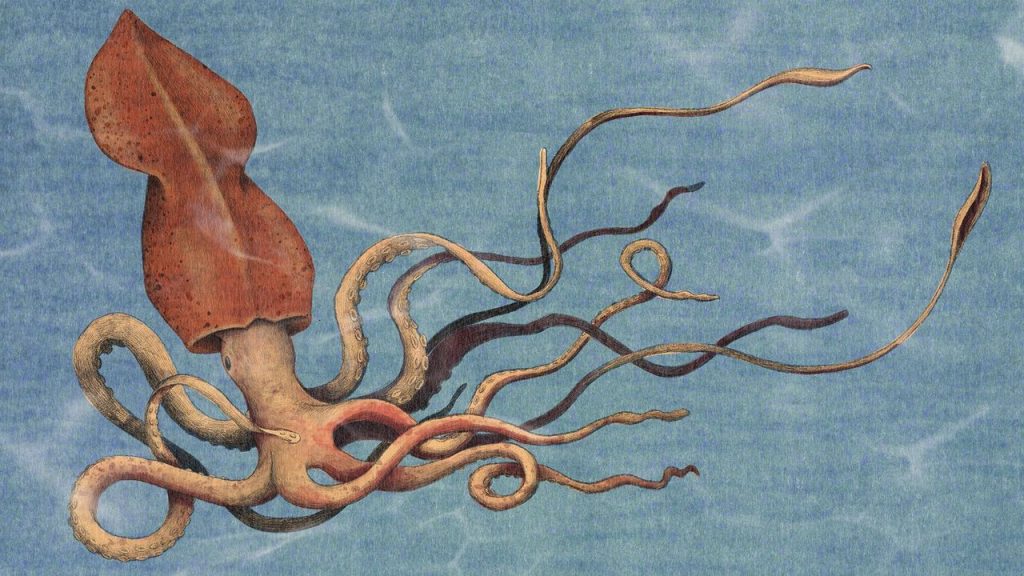
The deep-sea food chain is a dynamic and complex network of predators and prey that thrives in an environment where sunlight cannot penetrate. The creatures that inhabit this realm must adapt to extreme pressures, freezing temperatures, and near-total darkness. While the food chain in this part of the ocean has always been difficult to study, new research techniques have provided valuable insights into the intricate relationships between different species.
Primary Producers: Phytoplankton and Chemosynthesis
In the deep ocean, the primary source of energy is not sunlight but rather the chemical processes that occur around hydrothermal vents and cold seeps. Phytoplankton and other microorganisms that rely on chemosynthesis form the base of the food chain. These organisms use the chemical energy from compounds like hydrogen sulfide to produce organic matter, which forms the foundation of the deep-sea food web.
In addition to chemosynthetic organisms, some deep-sea ecosystems rely on organic matter that drifts down from the surface. This “marine snow” consists of dead plankton, fish feces, and other organic debris that slowly descends to the ocean floor, providing a source of food for creatures living at great depths.
Mid-Trophic Level: Deep-Sea Fish and Squids
The next level of the deep-sea food chain is occupied by mid-trophic level predators such as deep-sea fish, squid, and crustaceans. These animals feed on smaller organisms like zooplankton, smaller fish, and even other squid species. Giant squids, as apex predators in the deep ocean, are part of this level, feeding on a variety of fish and other cephalopods.
Interestingly, it has been discovered that giant squids are not only preyed upon by larger predators like sperm whales but may also engage in predatory relationships with other giant squids. The discovery of cannibalism in some squid species underscores the complexity and competitiveness of the deep-sea food web.
Apex Predators: Sperm Whales and Other Deep-Sea Giants
At the top of the deep-sea food chain are the apex predators—sperm whales, deep-diving sharks, and occasionally, even large predatory fish like the ocean sunfish. Sperm whales are perhaps the most well-known of these predators, as they are known to dive to incredible depths of over 10,000 feet in search of giant squid.
The relationship between sperm whales and giant squids has been a subject of fascination for scientists. Sperm whales have been found to possess scars from the giant squid’s suckers, which suggests that these creatures engage in intense battles during predation. The deep-sea food chain is, therefore, a finely balanced system in which each species plays a crucial role, from the smallest plankton to the largest predator.
4. Technological Advances and Future Directions in Research
Recent breakthroughs in deep-sea research have been facilitated by the development of cutting-edge technologies. The use of remotely operated vehicles (ROVs), autonomous underwater vehicles (AUVs), and advanced sonar mapping systems has allowed scientists to explore previously inaccessible areas of the ocean.
ROVs and AUVs: Pioneering Exploration
ROVs and AUVs are equipped with high-definition cameras, specialized sensors, and tools for capturing and collecting samples from the ocean floor. These technologies have made it possible to observe deep-sea creatures like the giant squid in their natural environment without the need for human divers. ROVs, such as the ones used in the 2012 giant squid video capture, are capable of reaching depths that would be impossible for manned submersibles to reach, providing researchers with unprecedented access to deep-ocean ecosystems.
Environmental DNA (eDNA) and New Analytical Techniques
Another promising area of research is the use of environmental DNA (eDNA) to track the presence of marine species. eDNA involves collecting water samples and analyzing the DNA particles left behind by organisms, which can reveal the presence of species in a given area. This non-invasive method is particularly useful for studying elusive creatures like the giant squid, as it allows researchers to identify their presence without having to directly observe them.
Future breakthroughs in genetic analysis, autonomous exploration, and real-time data sharing will likely lead to even greater discoveries about the deep-sea ecosystem and the role of the giant squid within it. The integration of AI and machine learning techniques to analyze vast amounts of data from deep-sea explorations is also on the horizon, offering the potential to uncover patterns and connections that were previously invisible.
Conclusion
The recent breakthroughs in giant squid research and our understanding of the deep-sea food chain mark a new era in marine biology. As we continue to explore the depths of the ocean with advanced technology and innovative research methods, our knowledge of these mysterious ecosystems will only grow. From the elusive giant squid to the complex interactions between species at different trophic levels, the deep-sea food web is an intricate system that continues to fascinate scientists.
By studying these ecosystems, we gain not only a deeper understanding of marine life but also critical insights into the health of our planet’s oceans. As human activity increasingly impacts the marine environment, it is essential to protect these unique ecosystems and the creatures that inhabit them. The research breakthroughs in giant squid and deep-sea food chain studies will undoubtedly pave the way for more sustainable and informed approaches to ocean conservation in the years to come.