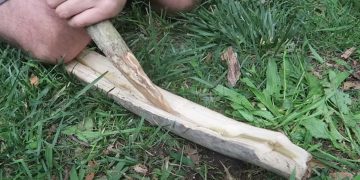










Fire has been an essential part of human civilization for thousands of years, playing a critical role in survival, warmth, cooking, and protection. Before the advent of modern matches, lighters, and other fire-starting tools, humans had to rely on their ingenuity and knowledge of nature to produce fire. The ability to create fire from natural materials is not only an impressive survival skill but also a testament to human innovation and adaptability.
In this article, we will explore the fascinating world of natural fire making, covering a variety of techniques that have been used throughout history, as well as the principles behind each method. From friction-based methods to fire from the sun, we will delve into the different ways people have harnessed the natural elements to spark flames. We will also discuss the science behind fire, the materials required, and how this ancient practice is still relevant today for modern adventurers, survivalists, and outdoor enthusiasts.
1. The Importance of Fire in Human History
Fire has been fundamental to the development of human culture and survival since the earliest days of our species. Early humans used fire for warmth during cold weather, to cook food, and to ward off predators. As humans evolved, the mastery of fire led to the development of metalworking, cooking techniques, and advancements in agriculture.
The importance of fire cannot be overstated. It was not only a tool of survival but also a symbol of control over nature. The ability to create fire on demand allowed our ancestors to extend their reach into colder regions, develop better tools, and, in many cases, shape their environments. For this reason, fire-making techniques have been passed down through generations, with many traditional methods still practiced today.
2. The Science of Fire: How Fire Works
Before delving into the techniques of natural fire making, it’s essential to understand the basic principles behind fire itself. Fire is a chemical reaction known as combustion, which occurs when a material combines with oxygen and reaches its ignition temperature. For a fire to sustain itself, three key elements must be present:
- Heat: Fire needs a source of heat to begin the combustion process.
- Fuel: A material that can burn, such as wood, dry grass, or other organic matter.
- Oxygen: Air, specifically the oxygen in it, is required to keep the fire going.
This is often referred to as the fire triangle. If any one of these elements is removed, the fire will go out. Natural fire-making techniques rely on manipulating these elements to ignite and maintain a fire.
3. Traditional Methods of Making Fire: A Hands-On Approach
Over the millennia, humans have devised a variety of ways to start fires in natural environments using simple tools and materials. While modern fire-starting devices such as lighters and matches are widely available, there is a growing interest in primitive fire-making techniques, especially among those who value self-reliance and survival skills. Here are some of the most common methods used by early humans and survivalists today:
3.1 The Friction-Based Methods
Friction is one of the oldest and most reliable ways to create fire, relying on the heat generated by rubbing two pieces of wood together. These methods are incredibly effective when done correctly and are a valuable skill for anyone interested in primitive survival.
3.1.1 The Hand Drill
The hand drill is perhaps the simplest friction-based fire-starting tool. It involves a spindle (a straight piece of wood) and a fireboard (a flat piece of wood with a notch to hold the spindle). The user rolls the spindle between their hands while pressing it down onto the fireboard. As friction is created, the spindle begins to heat up, producing embers that can then be transferred to a small bundle of tinder.
- Materials Needed: Softwood for the spindle and fireboard (such as cedar, cottonwood, or willow), dry tinder (such as dry grass, birch bark, or dry moss).
- Challenges: This technique requires significant skill and stamina. The process can be physically demanding and may take some time before producing a flame.
3.1.2 The Bow Drill
The bow drill is a more advanced friction method that allows for greater control and generates more heat. It uses a bow (a flexible piece of wood) to spin a spindle against a fireboard, creating friction and heat. The bow is moved back and forth to spin the spindle, which is held tightly against the fireboard with pressure.
- Materials Needed: A flexible bow, a spindle, a fireboard, and a bearing block (used to hold the top of the spindle in place). Softwoods such as pine or juniper are ideal for the spindle and fireboard.
- Challenges: This method requires practice to master, but with the right materials and technique, it is a reliable way to produce fire in the wilderness.
3.1.3 The Fire Plough
The fire plough is another friction-based technique, though less commonly used than the hand drill or bow drill. It involves scraping a dry piece of wood against a fireboard, generating heat through friction. The friction causes the wood to smolder, and once a small ember is created, it can be transferred to tinder.
- Materials Needed: A dry piece of wood (such as pine or cedar) and a fireboard made from softwood.
- Challenges: This method requires a high level of skill and patience, and it is less efficient than other friction-based techniques.
3.2 Fire from the Sun: Using Solar Power
One of the most fascinating natural fire-starting methods is using the sun to ignite tinder. This technique harnesses the power of the sun’s rays, focusing the energy onto a small point to create enough heat for combustion. Solar fire-making methods are best used on sunny days and require the right tools and materials.
3.2.1 The Magnifying Glass Method
The magnifying glass is perhaps the most well-known tool for starting fire with sunlight. By holding the magnifying glass at a specific angle, the sunlight is focused into a small, intense point of heat that can ignite tinder.
- Materials Needed: A magnifying lens or similar optical tool, such as a parabolic reflector or even the lens of a pair of eyeglasses.
- Challenges: This method is dependent on the availability of clear, bright sunlight. It cannot be used in overcast or cloudy conditions, and the fire is typically small and fragile.
3.2.2 The Solar Concentrator
A solar concentrator uses reflective materials, such as a shiny metal or a piece of polished metal, to focus sunlight onto a small area. By directing the light onto a piece of dry tinder, enough heat can be generated to start a fire.
- Materials Needed: A highly reflective surface (e.g., a polished metal plate or a concave mirror) and dry tinder.
- Challenges: While this method is effective in sunny conditions, it requires preparation and the right materials to focus the sun’s rays effectively.
3.3 Fire from Rocks: Using Pyrite or Flint
The use of rocks for fire-starting is another primitive method, where striking certain minerals together creates sparks that can ignite tinder. Pyrite and flint are two of the most well-known stones used in this technique.
3.3.1 Flint and Steel
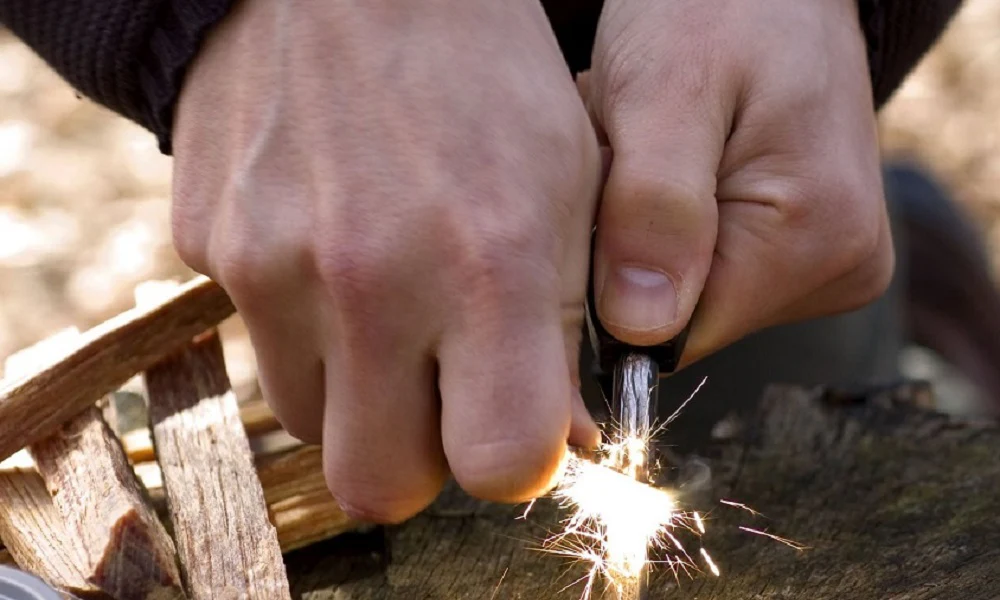
Striking a piece of flint against steel can produce a shower of sparks, which, when directed onto tinder, can start a fire. The steel strikes the flint with force, breaking off small pieces of metal, which are heated to the point of combustion.
- Materials Needed: A piece of flint, a steel striker, and tinder (such as char cloth or dry moss).
- Challenges: While effective, this method requires practice and precision to ensure that the sparks are directed onto the tinder.
3.3.2 Pyrite and Flint
Pyrite (also known as “fool’s gold”) can also be used to create sparks when struck against flint or steel. When pyrite is struck, small pieces of iron are dislodged, producing sparks that can ignite tinder.
- Materials Needed: Pyrite, flint, and a piece of steel or a striking surface.
- Challenges: The quality of pyrite can vary, and it may require a higher level of skill to use effectively compared to flint and steel.
4. The Modern Relevance of Natural Fire Making
While modern fire-starting tools are widely available, the skill of natural fire making remains relevant for a variety of reasons. Survivalists, campers, and adventurers often practice primitive fire-making techniques to ensure they can create fire without relying on modern tools. Additionally, learning these methods can deepen one’s connection to nature and teach valuable survival skills.
In survival situations, where resources may be scarce, knowing how to start a fire using natural materials can be the difference between life and death. Whether you’re stranded in the wilderness or simply want to reconnect with ancient human traditions, natural fire-making provides both a practical skill and an enriching experience.
5. Conclusion: The Timeless Skill of Fire Making
Natural fire making is more than just a survival skill; it’s a window into our past, a connection to our ancestors, and a testament to human ingenuity. The methods outlined above demonstrate that creating fire doesn’t require modern tools or technology—just knowledge, patience, and a deep understanding of the natural world.
As adventure tourism grows and more people seek to immerse themselves in the wild, the ability to start a fire with nothing but what nature provides is a skill that is becoming increasingly valuable. Whether through friction, solar power, or flint and steel, the timeless art of fire making is something that will continue to inspire and challenge those who seek to master it.