









Introduction
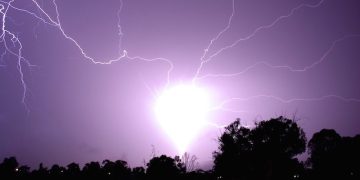
Ball lightning is one of the most captivating and perplexing phenomena in the field of atmospheric science. Unlike the traditional form of lightning, which is a bright, instantaneous flash caused by electrical discharge between clouds and the earth, ball lightning manifests as a floating, luminous sphere that can move unpredictably through the air. Despite centuries of anecdotal accounts and scientific observations, ball lightning remains one of nature’s most mysterious electrical events, with no widely accepted explanation.
This article explores the various facets of ball lightning: its historical accounts, proposed theories, challenges in scientific research, and potential practical implications. It will delve into the scientific mechanisms behind ball lightning, review the theories that have attempted to explain its origins, and discuss the difficulties researchers face in studying such an elusive phenomenon. By the end, the reader will have a comprehensive understanding of ball lightning’s place in the broader context of atmospheric and electrical phenomena.
Historical Background
The first documented mention of ball lightning dates back to the 16th century. Various cultures have long recorded sightings of this mysterious phenomenon, but the phenomenon was not formally studied until much later. In Europe, ball lightning was referred to as “thunderbolts” or “fireballs,” with numerous accounts emerging throughout the 18th and 19th centuries. The phenomenon was described as spherical, luminous, and capable of drifting through the air, sometimes appearing during thunderstorms.
However, it was not until the 20th century that more scientific attention was given to ball lightning, particularly with the advent of modern electrical and atmospheric theories. Even then, research into the subject remained difficult due to the rarity and unpredictability of the event. Many early scientists speculated that ball lightning was simply a myth, born from misidentifications of more common phenomena like heat lightning, meteors, or even rare atmospheric optical illusions.
Characteristics of Ball Lightning
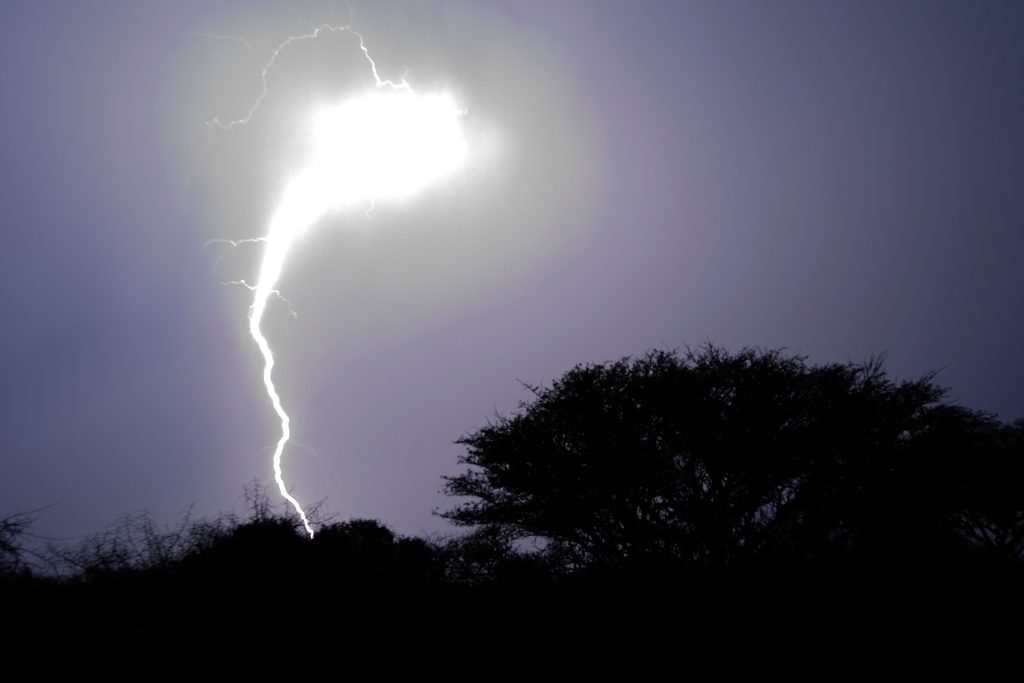
Ball lightning is typically described as a spherical or oval-shaped ball of light that can range from the size of a tennis ball to several meters in diameter. The color of the phenomenon often varies, with white, yellow, orange, and blue being the most common hues reported by observers. Some accounts mention a faint, crackling sound or even a sulfurous odor accompanying the appearance of ball lightning, suggesting a chemical component to its composition.
What makes ball lightning truly unique, however, is its unpredictable behavior. Unlike typical lightning, which travels in a straight line from a thundercloud to the ground, ball lightning is known to hover, drift, or even move through openings in buildings or windows. In some cases, it has been reported to travel through buildings and remain for several minutes before dissipating. The phenomenon is usually associated with thunderstorms, but its occurrence does not seem to follow a specific pattern in terms of time or location.
Physical Properties and Observations
- Duration: Ball lightning is often reported to last longer than the split-second flash of regular lightning, with some instances continuing for up to 20 seconds or more.
- Movement: The movement of ball lightning is erratic. It may float, roll, or even seem to move intentionally toward observers or certain objects.
- Energy: The amount of energy that ball lightning contains is difficult to quantify. Some reports suggest it can cause damage to nearby objects or electrical systems, hinting that it may carry a significant amount of electrical charge.
- Temperature and Heat: Though not universally agreed upon, some reports suggest that ball lightning is hot enough to cause burns or ignite nearby objects, implying that it might have a high temperature at the moment of its appearance.
- Dissipation: Ball lightning typically dissipates or vanishes abruptly, sometimes leaving behind no trace or, in rarer cases, leaving scorched marks on surfaces it has come into contact with.
Proposed Theories
Several theories have been put forward to explain the origin of ball lightning. While none have been definitively proven, each offers a plausible hypothesis based on current scientific understanding.
1. Plasma Theory
One of the leading theories suggests that ball lightning is a form of plasma—a state of matter similar to gas but with charged particles, including ions and electrons. According to this hypothesis, ball lightning forms when a high-energy electrical discharge in the atmosphere generates a stable plasma sphere. The theory posits that the electrical charge within the plasma keeps the sphere intact for longer periods, allowing it to float and move in a seemingly controlled manner. This would explain its glowing appearance and erratic motion.
However, the plasma theory faces challenges, as scientists have yet to replicate the exact conditions needed for ball lightning in laboratory settings, and the longevity of ball lightning far exceeds that of typical plasma discharges.
2. Microwave Cavity Theory
Another hypothesis suggests that ball lightning could be a result of electromagnetic waves—specifically, microwaves—trapped in a cavity of air created by the surrounding storm. The theory posits that when lightning strikes, the microwave radiation interacts with the surrounding air, causing it to ionize and form a stable electromagnetic cavity. The ball of light would be a visible manifestation of the electromagnetic field within this cavity.
While the microwave cavity theory has been suggested by several researchers, there are still unanswered questions about how such a phenomenon could occur naturally in the atmosphere, and no clear evidence has been found to support it.
3. Chemical and Plasma-Chemical Reactions
Some theories focus on the chemical composition of ball lightning. One such theory proposes that the phenomenon could be a result of chemical reactions occurring between the high-energy electrical discharge and trace gases in the air. For instance, the reaction between silicon and oxygen could lead to the formation of silicate compounds, which would burn brightly and create a luminous ball of light.
This theory ties into the fact that ball lightning often appears near thunderstorms, where the atmospheric conditions might facilitate such reactions. However, experiments to replicate ball lightning under controlled conditions have not been conclusive.
4. Quantum and Relativistic Effects
A more speculative explanation involves quantum mechanics and relativistic effects. Some researchers suggest that ball lightning could be a manifestation of strange interactions between electrical fields and quantum particles. In this view, ball lightning might be a macroscopic quantum effect, where the sphere is a stable configuration of energy, much like the standing waves seen in some subatomic particles.
This theory remains highly speculative, and no concrete evidence has been presented to link ball lightning to quantum effects. The rarity and unpredictable nature of the phenomenon make it difficult to test using standard scientific methods.
5. Vortex Theory
A recent theory posits that ball lightning could be a type of vortex—a rotating column of ionized gas. Similar to tornadoes or water vortices, these ionized air columns might form in the presence of strong electrical fields during thunderstorms. This rotating vortex could trap energy and allow the phenomenon to persist for longer than a typical lightning strike.
The vortex theory suggests that the motion and behavior of ball lightning can be explained by the swirling dynamics of an electrically charged air mass. While this theory has gained some traction in recent years, it is still largely unproven and speculative.
Challenges in Studying Ball Lightning
Studying ball lightning has proven to be extremely difficult due to its elusive and unpredictable nature. Unlike lightning strikes, which are relatively easy to observe and measure in real-time, ball lightning typically occurs infrequently and for short durations, making it a challenge to capture on film or in laboratory settings.
Additionally, the phenomenon’s inherent rarity means that scientific studies on ball lightning are largely observational. Researchers often rely on anecdotal reports and eyewitness accounts, many of which are inconsistent or contradictory. This lack of empirical data makes it difficult to test or verify the various theories about the origin of ball lightning.
Despite these challenges, there have been several notable attempts to capture ball lightning in action. In the late 20th century, advances in high-speed cameras and electromagnetic sensors led to a few breakthrough observations, though no experiment has been able to replicate the phenomenon under controlled conditions. Some researchers have even suggested using high-powered lasers or particle accelerators to artificially create ball lightning in the lab, but such efforts are still in their infancy.
Implications and Applications
Despite its scientific mystery, ball lightning may have practical applications in energy research. If its formation could be replicated and understood, ball lightning could potentially serve as a novel energy source. The phenomenon’s high energy density, coupled with its ability to persist for several seconds, raises intriguing possibilities for harnessing the electrical power contained within these luminous spheres.
Moreover, understanding ball lightning could improve our knowledge of other atmospheric electrical phenomena, such as lightning strikes and the behavior of plasma in the atmosphere. Advances in the study of ball lightning may also have applications in other fields, such as aerospace engineering and weather prediction.
Conclusion
Ball lightning remains one of the most fascinating and enigmatic phenomena in the study of atmospheric and electrical science. Although many theories have been proposed to explain its origin, there is no consensus within the scientific community. The phenomenon’s rarity, unpredictability, and the difficulty in observing it under controlled conditions make it one of the most elusive natural events known to science.
As technology and research methods continue to improve, there may come a time when ball lightning can finally be explained and harnessed. Until then, it remains a testament to the complexity and wonder of the natural world—a phenomenon that continues to captivate both scientists and the general public alike.