









Introduction
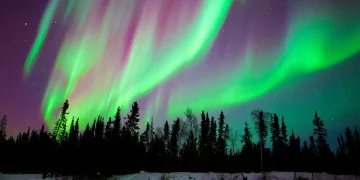
The Aurora Borealis, or Northern Lights, is one of the most stunning natural phenomena on Earth, captivating observers with its vivid colors and dynamic movements in the night sky. These spectacular light displays, primarily visible in the polar regions, occur when charged particles from the sun collide with the Earth’s magnetic field and atmosphere. However, despite centuries of fascination with the Aurora Borealis, much remains unknown about its intricate behavior, including its colorful variations and the appearance of new phenomena such as the subauroral auroras.
While traditional auroras are well-understood in terms of their physics and visual appearance, recent scientific research has led to the discovery of novel subauroral phenomena—new patterns and displays that occur outside the classical auroral zones. This article will delve into the multi-dimensional aspects of auroral phenomena, covering everything from the basic science of the aurora to the new frontier of subauroral light displays and their implications for both space weather and Earth’s magnetosphere.
The Science Behind the Aurora Borealis
To understand the colorful variations of the Aurora Borealis and the emergence of new phenomena, it’s essential first to explore the basic mechanics behind auroral displays.
What Causes the Aurora Borealis?
The Aurora Borealis is the result of complex interactions between the solar wind, Earth’s magnetic field, and the atmosphere. The solar wind is a constant stream of charged particles, primarily electrons and protons, that are emitted by the sun. When these particles reach Earth, they are attracted by the Earth’s magnetic field toward the polar regions.
At high altitudes, typically around 80 to 300 kilometers above the Earth’s surface, these particles collide with atoms and molecules in the Earth’s atmosphere, particularly oxygen and nitrogen. These collisions excite the atoms and molecules, causing them to release energy in the form of light. The color of the light emitted depends on the type of gas involved in the collision and the altitude at which the interaction occurs.
- Green: The most common color, produced by oxygen atoms at altitudes around 100 kilometers.
- Red: Produced by oxygen atoms at higher altitudes, around 200 kilometers.
- Purple / Blue: Emitted by nitrogen molecules when they are excited at lower altitudes.
Understanding the Geomagnetic Storms
Auroras are most visible during periods of heightened solar activity, such as during solar flares or coronal mass ejections (CMEs), which increase the density of charged particles streaming from the Sun. These events can lead to geomagnetic storms, which distort the Earth’s magnetic field, allowing auroras to be seen at lower latitudes than usual.
These geomagnetic disturbances often result in intensified auroral displays, including more dynamic movements and brighter colors. The interactions between solar wind and Earth’s magnetosphere thus play a crucial role in the formation and intensity of auroras.
The Color Variations of the Aurora Borealis
Auroras can appear in a wide range of colors and patterns, and their intensity varies depending on several factors, including the solar cycle, geomagnetic conditions, and atmospheric conditions.
Green: The Most Common Hue
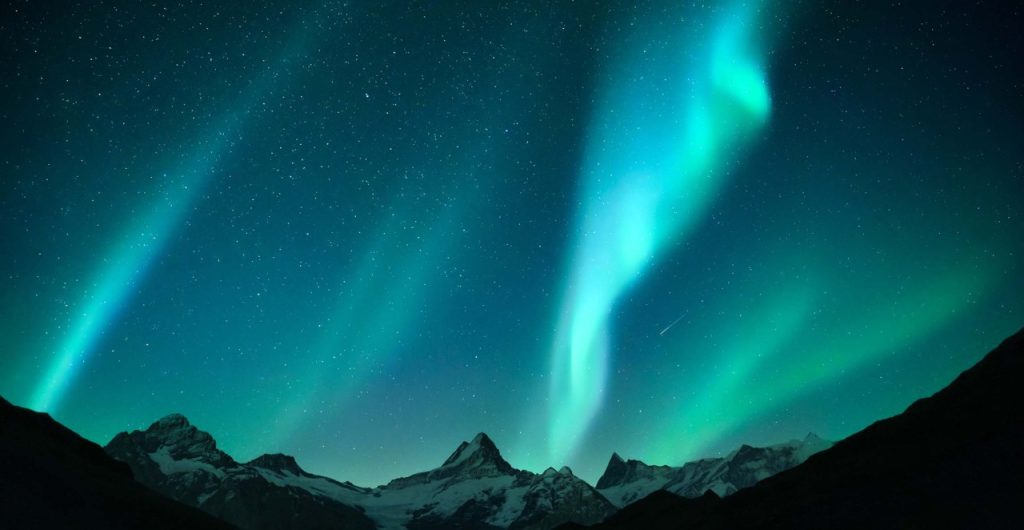
The most common color in the Aurora Borealis is green, which occurs when the Earth’s atmosphere’s oxygen atoms are excited by collisions with high-energy solar particles. This color appears at an altitude of about 100 kilometers and is often the most visible during auroral displays due to the abundance of oxygen in the upper atmosphere.
Red: The Rarest and Most Intense
A red aurora is relatively rare and is produced by oxygen atoms at altitudes of 200 kilometers or more. This color is most often seen during the peak of solar activity, such as during geomagnetic storms or solar maximum years, when the Sun is particularly active. The red light is a consequence of the higher energy levels required to excite oxygen atoms at these altitudes.
Purple, Blue, and Violet: The Nitrogen Contribution
Purple, blue, and violet hues are emitted when the nitrogen molecules in the atmosphere are excited by solar wind particles. These colors are less commonly seen compared to green and red, but when they do appear, they are often seen in combination with other colors, creating intricate auroral displays.
Yellow and Pink: A Rare Phenomenon
Yellow and pink auroras, though rare, are sometimes observed, especially in the upper atmosphere where both oxygen and nitrogen emissions blend. These colors often appear when the intensity of the aurora is particularly high, creating a richer and more diverse color palette.
The Emergence of Subauroral Phenomena
While the Aurora Borealis has long been a subject of scientific interest, recent discoveries have expanded our understanding of auroral activity to include subauroral phenomena—light displays that occur outside of the traditional auroral zone.
What Are Subauroral Phenomena?
Subauroral phenomena refer to light displays that occur just south of the auroral oval, in regions that are traditionally not associated with auroral activity. While auroras are typically confined to latitudes near the magnetic poles, recent studies have shown that subauroral auroras can sometimes appear at latitudes much closer to the equator.
These subauroral events are thought to be caused by a variety of factors, including disturbances in the magnetosphere, electrical currents in the ionosphere, and solar wind activity that affects regions far beyond the typical auroral zones. Some of these subauroral phenomena appear as faint auroras in areas that are usually too far south to witness any significant auroral activity.
Subauroral Auroral Arcs
One of the most fascinating subauroral phenomena is the appearance of subauroral arcs, which are narrow bands of auroral light that appear at latitudes far south of the auroral oval. These arcs have been observed at mid-latitudes, particularly during strong geomagnetic storms when solar activity is particularly intense.
Subauroral arcs often appear as faint, low-altitude bands of light that can be seen stretching horizontally across the sky. They are typically composed of green auroras but can also display hints of red, blue, and purple depending on the solar wind’s interaction with the Earth’s atmosphere.
Subauroral Ionization
Subauroral ionization is another important phenomenon that occurs in conjunction with auroral activity. This event is characterized by a sudden increase in the ionization levels of the atmosphere at subauroral latitudes, which can lead to the appearance of faint auroral displays. Subauroral ionization typically occurs during intense geomagnetic storms and is linked to high-energy electron precipitation from the magnetosphere.
Unlike traditional auroras, which are concentrated near the magnetic poles, subauroral ionization tends to occur at lower latitudes, often producing diffuse auroras that are less intense and more fleeting in nature.
The Role of Solar Activity and Geomagnetic Storms
The occurrence of both classic auroras and subauroral phenomena is closely tied to the level of solar activity. Periods of heightened solar activity, particularly during solar maximum (the peak of the 11-year solar cycle), are associated with increased geomagnetic disturbances, which in turn lead to more intense and expansive auroral displays.
Geomagnetic Storms and Their Effects
Geomagnetic storms, caused by large bursts of solar wind or coronal mass ejections (CMEs), can drastically alter the Earth’s magnetic field and lead to the intensification of auroras. These storms can stretch the auroral oval far beyond its typical range, bringing auroras to latitudes that are usually too far south for such phenomena.
In some cases, intense geomagnetic storms have been observed to trigger subauroral events in regions that rarely experience auroras, such as parts of the mid-latitudes. This has led to the identification of new subauroral zones where auroral-like phenomena can appear unexpectedly.
The Future of Aurora Research and Subauroral Discoveries
As our understanding of the Earth’s magnetosphere and the processes that govern auroral activity continues to evolve, scientists are making exciting strides in researching both traditional auroras and subauroral phenomena. New tools, such as satellites, ground-based sensors, and advanced computer simulations, are providing researchers with unprecedented data about the solar wind and its interactions with the Earth’s atmosphere.
As more is learned about subauroral light displays, we may uncover new mechanisms behind these phenomena and even discover new types of auroral behavior that were previously unknown. The study of subauroral auroras is particularly important for understanding the broader impacts of space weather on Earth’s magnetic environment and its potential effects on modern technologies, such as satellites, GPS systems, and communication networks.
Conclusion
The Aurora Borealis is one of the most awe-inspiring natural phenomena on Earth, with its vibrant colors and intricate patterns captivating people worldwide. While much of the focus has traditionally been on the more common auroral displays near the polar regions, recent discoveries have unveiled a whole new frontier in auroral research: subauroral phenomena.
These new, unexpected auroral events, appearing at lower latitudes, offer a fascinating glimpse into the dynamic interactions between the solar wind, Earth’s magnetosphere, and atmosphere. The colorful variations of the Aurora Borealis and the emergence of subauroral phenomena are reshaping our understanding of space weather and how it impacts our planet.
As research progresses, we will continue to unlock the mysteries of the Aurora Borealis and its various manifestations, revealing even more stunning light displays and offering a deeper understanding of our planet’s magnetic environment and its connection to the cosmos.