









Introduction
In an era dominated by rapid air travel and road transportation, train travel has experienced a remarkable resurgence. Once considered an outdated mode of transportation, today’s global train journeys are being hailed as some of the most romantic, culturally enriching, and scenic ways to explore the world. Whether it’s the luxury of traveling aboard the Orient Express, the rugged beauty of the Trans-Siberian Railway, or the scenic splendor of the Rocky Mountaineer, train travel offers a depth of experience that is unmatched by other forms of transportation.
Train journeys have always been a symbol of adventure, elegance, and exploration. From the glamour of 19th-century railroads to the cutting-edge high-speed networks that connect major cities today, trains have maintained their allure as a symbol of leisurely travel, cultural immersion, and human connection.
In this article, we will explore the evolution of global train travel, its current popularity, and why it remains one of the most romantic and culturally significant ways to travel. From the historical significance of train travel to modern technological advancements and the growing appeal of luxury and scenic train routes, we will delve into what makes train journeys stand out in today’s fast-paced world.
The Allure of Train Travel: A Historical Perspective
To understand the modern appeal of train travel, it’s essential to look at its historical roots. The early 19th century saw the birth of the modern railway system, revolutionizing travel across Europe, North America, and eventually much of the world.
The Birth of Railroads: A Revolution in Transportation
The first commercial steam-powered railway, the Stephenson’s Locomotion No. 1, was introduced in 1825 in England. It marked the dawn of a new era in transportation, making travel faster, more efficient, and more accessible than ever before. The development of rail networks in the United Kingdom, United States, and Europe quickly expanded, creating what was once thought impossible: the ability to travel vast distances quickly and comfortably.
Railroads became a central feature of industrialization, and long-distance train journeys became a symbol of both progress and luxury. The golden age of railroads in the late 19th and early 20th centuries saw the creation of some of the world’s most iconic and luxurious trains, such as the Orient Express and the Trans-Siberian Railway. These trains were not just about getting from point A to point B; they were about the experience of travel itself.
The Romance of Train Travel: A Symbol of Elegance
Train travel during the early 20th century was synonymous with elegance and sophistication. The rise of luxury trains transformed the notion of travel into an opulent experience. The Orient Express, which began service in 1883, became one of the most iconic trains in history, offering passengers a journey of unparalleled luxury and comfort from Paris to Istanbul.
The allure of luxury trains, including the Venice Simplon-Orient-Express and the Royal Scotsman, remains strong today. The plush interiors, exquisite dining options, and impeccable service evoke a sense of old-world glamour that continues to attract discerning travelers looking for an unforgettable experience.
Modern Train Travel: A Revival of Romance and Culture
Train travel today has experienced a remarkable revival. Whether it’s the speed of high-speed rail networks or the cultural and scenic significance of luxury trains, travelers are rediscovering the magic of the railway. What was once considered a nostalgic pastime has been rejuvenated with modern conveniences, technology, and an emphasis on slow, experiential travel.
High-Speed Rail Networks: Connecting the Modern World
One of the key factors driving the resurgence of train travel is the development of high-speed rail networks that connect major cities across the globe. In countries such as Japan, France, China, and Germany, high-speed trains have become a symbol of modern efficiency, speed, and sustainability. These trains, such as the Shinkansen in Japan and the TGV in France, have revolutionized how people travel between cities, offering comfort and speed with minimal environmental impact.
The Shinkansen, in particular, has been a global model for high-speed rail since its inception in 1964. With speeds exceeding 200 miles per hour (320 km/h), Japan’s bullet trains are not only marvels of engineering but also represent the future of mass transportation. The Eurostar, which connects London with Paris and Brussels, and China’s CRH trains, connecting cities like Beijing and Shanghai, are part of the growing network that promises to reshape how we think about cross-country travel.
While high-speed rail provides efficiency and speed, it also offers a unique opportunity to witness the changing landscapes as you move from one region to another. The appeal of these trains lies not only in their speed but in the experience of traveling through mountains, plains, and coastlines, offering travelers views of the world that they would otherwise miss by flying.
The Appeal of Luxury and Scenic Trains
While high-speed rail networks dominate short to medium-range travel, luxury and scenic trains are becoming increasingly popular for those looking to combine the romance of old-world rail travel with the comforts of modern amenities.
These trains offer a slower pace, allowing passengers to immerse themselves in the landscapes they pass through and engage with the rich cultural history of the regions they travel through. The experience is more than just the destination—it’s about the journey itself.
1. The Venice Simplon-Orient-Express
One of the most famous luxury trains in the world, the Venice Simplon-Orient-Express retraces the original Orient Express route from Paris to Venice, offering an unparalleled experience of luxury, comfort, and elegance. Passengers travel in sumptuous art deco-style carriages, dining on gourmet meals while enjoying panoramic views of European countryside. The journey evokes the glamour of the golden age of rail travel, with its impeccable service and world-class cuisine.
2. The Trans-Siberian Railway
Another iconic train journey is the Trans-Siberian Railway, which stretches over 9,000 kilometers (5,500 miles) from Moscow to Vladivostok. As one of the longest continuous rail journeys in the world, the Trans-Siberian offers travelers an opportunity to experience the vastness of Russia, passing through Siberian forests, the Ural Mountains, and Lake Baikal. The journey is both a cultural and scenic adventure, providing travelers with a window into Russia’s history and geography.
3. The Rocky Mountaineer
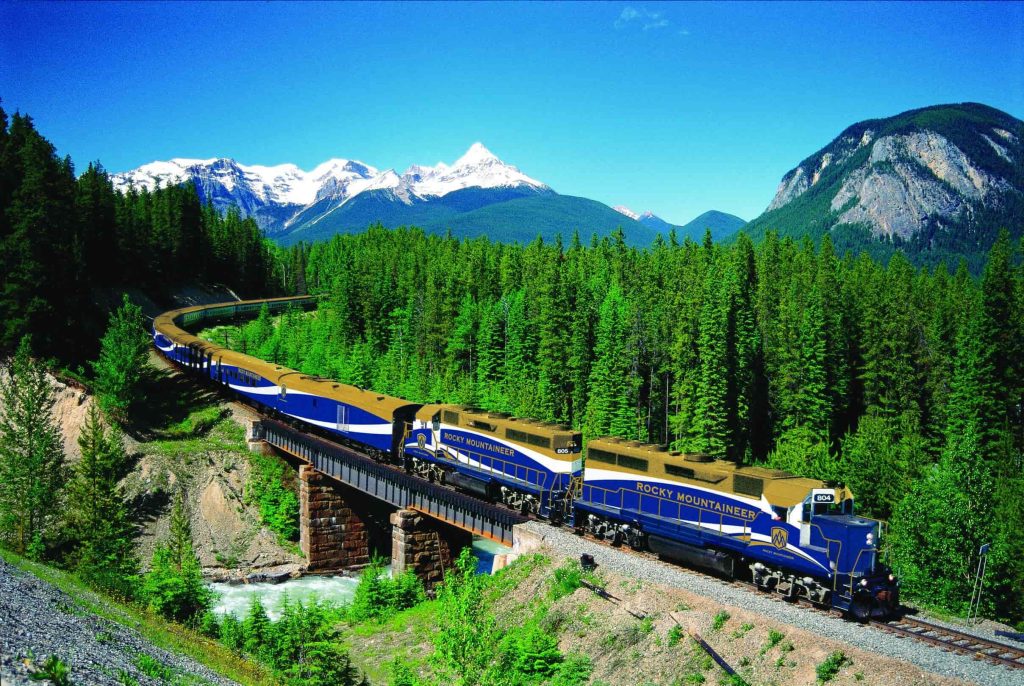
In North America, the Rocky Mountaineer offers one of the most spectacular scenic train journeys in the world. Traveling through the Canadian Rockies, the train provides travelers with breathtaking views of snow-capped mountains, turquoise lakes, and expansive wilderness. The journey, which includes gourmet meals, glass-domed coaches, and luxurious accommodations, is a celebration of nature, offering passengers a chance to witness the beauty of Canada’s natural landscapes in comfort.
4. The Maharajas’ Express
For those seeking opulence and grandeur, the Maharajas’ Express offers a journey through India’s most famous destinations. With its palatial interiors, fine dining, and royal service, the train is a luxury experience that traces India’s Golden Triangle, including Delhi, Agra, and Jaipur, along with other significant heritage sites.
The Cultural Depth of Train Travel: A Journey Through History and Society
What makes train travel particularly special is its cultural richness. As you travel through different regions and countries, you are not just a passenger; you are a witness to the evolution of societies, the rhythms of local life, and the changing cultures. This immersive experience goes far beyond what is possible with air travel or even road trips.
Cultural Immersion: Connecting with Local Life
Train journeys offer unparalleled opportunities for cultural immersion. Unlike airplanes, which isolate you from the ground beneath, trains allow you to connect with the world outside. You can see the changes in architecture, hear different languages spoken, taste regional cuisines, and witness the daily lives of people in the countryside.
- In Europe, luxury trains often stop at small towns and villages, giving passengers a chance to explore local markets and interact with the inhabitants.
- In Africa, the Pride of Africa trains pass through remote landscapes and offer guided excursions into national parks, introducing passengers to the local cultures and wildlife.
- In India, the Palace on Wheels offers a glimpse into the country’s royal history, combining cultural exploration with luxury travel.
Historical Significance: Trains as Catalysts for Change
Train travel has historically been a catalyst for change. The development of railroads played a central role in the industrial revolution, the expansion of empires, and the establishment of global trade networks. Steam trains revolutionized the way goods and people moved, and this transformation had profound economic, political, and social implications.
Today, railways continue to be crucial in connecting remote regions and facilitating trade. The Belt and Road Initiative spearheaded by China is a contemporary example of how rail infrastructure can foster economic cooperation and cultural exchange across countries and continents.
Why Train Travel is the Ideal Way to Explore the World
With the allure of both luxury and cultural depth, train travel offers an experience that is hard to replicate. Whether traveling for relaxation, adventure, or cultural exploration, train journeys provide an intimacy with the landscape and culture that air travel cannot match.
- Romanticism: The slow pace, scenic views, and luxurious settings make train travel a romantic experience, perfect for couples, solo travelers, and those seeking peace and tranquility.
- Cultural Immersion: Trains travel through areas that are rich in history, offering a unique window into local cultures and traditions.
- Sustainability: Trains are an environmentally friendly form of transport, especially compared to cars and airplanes.
- Comfort: Today’s trains offer modern amenities, including luxurious cabins, gourmet dining, and high-speed options, ensuring travelers enjoy both comfort and efficiency.
Conclusion
In the modern age of travel, train journeys are more than just a means of transportation—they are an invitation to slow down, immerse yourself in new cultures, and enjoy the world in a more meaningful way. The romance, cultural depth, and scenic beauty of global train travel make it a compelling choice for those looking to explore the world at a different pace.
Whether you are riding the luxury trains of Europe, the vast expanses of the Trans-Siberian Railway, or experiencing the wilderness of the Canadian Rockies, train travel offers an experience like no other—one that is both timeless and modern, full of discovery and wonder. It is, without a doubt, one of the most romantic and culturally rich ways to explore our world.