









For centuries, humanity has gazed up at the stars, wondering if we are truly alone in the universe. The quest to answer this profound question has become one of the most exciting and transformative areas of scientific research. A key part of this pursuit is the discovery of exoplanets — planets that orbit stars outside our solar system — particularly those located in the so-called “habitable zone.” These are the regions around stars where conditions might be just right to support liquid water, a critical ingredient for life as we know it.
The concept of the habitable zone, also known as the “Goldilocks zone,” has become central to the search for life beyond Earth. In recent decades, thanks to advancements in telescope technology, scientific missions, and space observatories, we have made significant strides in identifying exoplanets in the habitable zone. While the discovery of life beyond Earth remains elusive, the detection of potentially habitable exoplanets has opened up new frontiers in astrobiology, astronomy, and planetary science.
In this article, we will explore the discovery of exoplanets in the habitable zone, focusing on the methods used to detect these planets, the conditions required for habitability, and the implications for the search for extraterrestrial life. We will also examine some of the most exciting and promising exoplanets discovered so far.
1. What is the Habitable Zone?
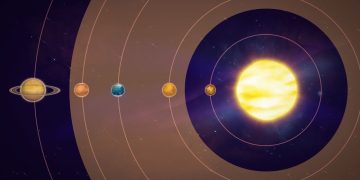
The habitable zone is a region around a star where temperatures are suitable for liquid water to exist on a planet’s surface. Water, as a solvent, is considered essential for life because of its role in supporting complex chemistry. The specific distance from a star that constitutes the habitable zone depends on the star’s size and luminosity, with smaller stars (like red dwarfs) having a closer habitable zone and larger stars (like our Sun) having a habitable zone farther out.
1.1 The Concept of the Goldilocks Zone
The term “Goldilocks zone” is derived from the classic fairy tale of Goldilocks and the Three Bears, in which the protagonist finds a bowl of porridge that is “just right.” In the context of planetary science, the Goldilocks zone refers to the region around a star where conditions are neither too hot nor too cold for liquid water to exist — they are just right for the potential of life.
The habitable zone is not a fixed boundary but a dynamic range that varies based on several factors:
- Star Type: The size and temperature of the star determine the location of its habitable zone. For example, a red dwarf star (which is smaller and cooler than our Sun) has a habitable zone much closer to the star, whereas a massive star like an A-type star would have a habitable zone much farther out.
- Planet’s Atmosphere: A planet’s atmosphere plays a crucial role in maintaining liquid water on its surface. A thick atmosphere with greenhouse gases like carbon dioxide could keep a planet warm enough, even if it is slightly outside the traditional habitable zone.
- Planet’s Orbital Characteristics: The planet’s orbit also affects its climate. A more eccentric orbit (i.e., an orbit that is elliptical rather than circular) could result in extreme variations in temperature, making the zone less stable for habitability.
2. How Do We Detect Exoplanets in the Habitable Zone?
The discovery of exoplanets, particularly those located in the habitable zone of their parent stars, has been made possible by several advanced detection methods. These techniques allow scientists to identify planets light-years away and determine whether they are within the potential Goldilocks zone.
2.1 The Transit Method
One of the most successful methods for detecting exoplanets in the habitable zone is the transit method. This method involves measuring the dip in a star’s brightness as a planet passes, or transits, in front of it. When a planet moves between the observer (on Earth or a space observatory) and its parent star, it blocks a small amount of light, causing a temporary dimming.
- Kepler Space Telescope: NASA’s Kepler Space Telescope was designed specifically to search for exoplanets using the transit method. Launched in 2009, Kepler’s mission was groundbreaking, leading to the discovery of thousands of exoplanets, including many in the habitable zone. The telescope operated for nearly a decade, confirming the existence of planets in a variety of sizes and orbital distances.
- TESS (Transiting Exoplanet Survey Satellite): Launched in 2018, TESS is the successor to Kepler and focuses on identifying exoplanets around nearby bright stars. This mission is continuing to discover potentially habitable worlds in our cosmic neighborhood.
2.2 The Radial Velocity Method
The radial velocity method involves detecting the gravitational pull of a planet on its host star. As a planet orbits its star, it exerts a small force on the star, causing it to wobble slightly. This wobble can be detected as a shift in the star’s light spectrum — a phenomenon known as the Doppler effect. By measuring these shifts, scientists can determine the presence of an exoplanet and estimate its mass, orbit, and distance from the star.
- HARPS (High Accuracy Radial Velocity Planet Searcher): Located at the European Southern Observatory, HARPS has been instrumental in identifying exoplanets using the radial velocity method. It has contributed to numerous discoveries, including some in the habitable zone.
2.3 Direct Imaging
In some cases, scientists can directly capture images of exoplanets by blocking out the light from the parent star. This technique, known as direct imaging, is challenging because the light from stars is vastly brighter than that of planets. However, advances in technology have made it possible to detect exoplanets by observing their reflected light or thermal emissions.
- The James Webb Space Telescope (JWST): Expected to revolutionize our understanding of exoplanets, the JWST, launched in December 2021, will be able to observe exoplanets in the habitable zone in unprecedented detail. Its ability to analyze planetary atmospheres will help scientists determine if they could support life.
3. Conditions for Habitability: What Makes an Exoplanet Suitable for Life?
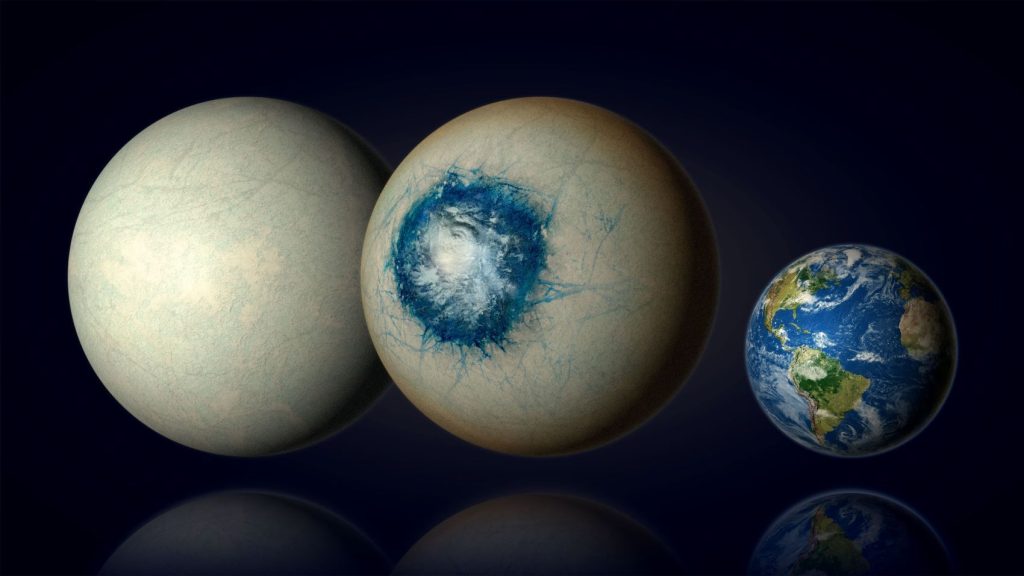
While being in the habitable zone is a crucial first step, other factors determine whether an exoplanet can truly support life. These include the planet’s atmosphere, its ability to maintain liquid water, and its geologic and chemical properties.
3.1 Water and Atmosphere
The presence of liquid water is the most fundamental requirement for life as we know it. Water acts as a solvent for chemical reactions that are critical for life processes. In addition to water, a stable atmosphere is needed to maintain conditions conducive to life, including temperature regulation and protection from harmful radiation.
- Greenhouse Gases: A planet’s atmosphere must have the right balance of greenhouse gases like carbon dioxide and methane. Too much can lead to runaway warming (like Venus), while too little can freeze the surface (like Mars). The ideal balance would allow for stable, temperate conditions that support liquid water.
3.2 Geological Activity and Magnetosphere
Geological activity can help sustain an environment suitable for life by cycling nutrients, shaping the landscape, and contributing to a stable climate. A planet with plate tectonics, for example, might have a recycling process that removes carbon dioxide from the atmosphere and regulates the long-term climate.
Additionally, a magnetosphere — a protective magnetic field generated by a planet’s internal processes — shields the planet from harmful solar and cosmic radiation, making the surface more hospitable for life.
4. Notable Exoplanets in the Habitable Zone
With advancements in detection technology, numerous exoplanets have been discovered in the habitable zone of their parent stars. Some of the most promising candidates for supporting life are as follows:
4.1 Proxima Centauri b
Located in the habitable zone of Proxima Centauri, the closest star to our solar system, Proxima Centauri b has garnered significant attention. This exoplanet is about 4.2 light-years away and is roughly the size of Earth. While it is located in the habitable zone, its habitability is still in question due to its exposure to stellar flares from its host star, which could strip away its atmosphere.
4.2 Kepler-452b
Often referred to as “Earth’s cousin,” Kepler-452b orbits in the habitable zone of a star similar to our Sun, about 1,400 light-years away. It is about 60% larger than Earth and may have a similar surface temperature, making it one of the most Earth-like exoplanets discovered.
4.3 TRAPPIST-1 System
The TRAPPIST-1 system, located about 39 light-years away, contains seven Earth-sized planets, three of which lie in the habitable zone. This discovery is groundbreaking because it suggests the possibility of multiple habitable worlds around a single star, making TRAPPIST-1 a prime candidate for future study and exploration.
5. The Future of Exoplanet Exploration
The discovery of exoplanets in the habitable zone is just the beginning. As our detection methods improve and new missions are launched, we are likely to find many more Earth-like planets that could harbor life. In the coming decades, space missions like JWST and James Webb Space Telescope will provide detailed observations of exoplanet atmospheres, possibly even identifying signs of biological activity.
The discovery of a truly habitable exoplanet — or even one that shows signs of life — would be one of the most profound achievements in human history, offering answers to questions we have long pondered about our place in the cosmos.
Conclusion: A New Frontier in the Search for Life
The search for exoplanets in the habitable zone has opened an exciting new chapter in humanity’s exploration of the universe. While we have yet to find definitive evidence of life beyond Earth, the growing catalog of potentially habitable exoplanets offers hope that we are on the cusp of one of the greatest discoveries of all time.
As technology continues to evolve, the next generation of space telescopes and missions will undoubtedly bring us closer to answering one of the most profound questions humanity has ever asked: Is there life beyond Earth? The discovery of exoplanets in the habitable zone is an essential step in this journey, providing the foundation for future explorations that may eventually reveal the answer.