


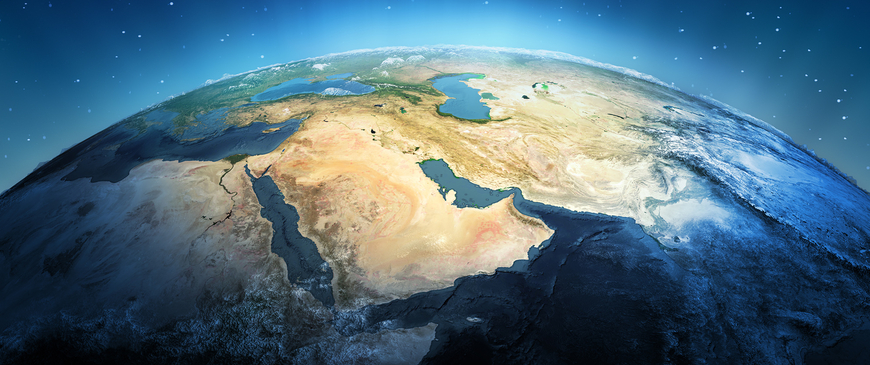
The cultural divide between Europe and the Middle East has long been a subject of fascination, debate, and exploration. Geographically, they are neighbors, separated by only the Mediterranean Sea, yet historically and culturally, the divide has been substantial. The development of distinct cultural identities, shaped by religion, politics, language, and historical events, has created a complex relationship between these two regions. In the past, as well as in contemporary society, the boundaries between Europe and the Middle East remain fluid, influenced by a multitude of factors including trade, religion, imperialism, colonialism, and migration.
This article will explore the cultural boundaries between Europe and the Middle East from a historical and contemporary perspective. We will examine the historical roots of these divisions, the ways in which cultural exchange has shaped the identities of both regions, and how modern forces are challenging or reinforcing these boundaries in today’s globalized world.
Introduction: Defining the Cultural Divide
When discussing the cultural boundaries between Europe and the Middle East, it is important to recognize that the terms “Europe” and “Middle East” are not merely geographical; they are also socio-political and cultural constructs. Europe, as a continent, has long been associated with a particular set of values, philosophies, and institutions, many of which arose from classical antiquity, Christianity, and the Enlightenment. On the other hand, the Middle East, a region primarily characterized by Islamic culture, has its own rich history that draws on pre-Islamic civilizations, the rise of Islam, and the Arab and Persian empires.
The cultural distinctions between Europe and the Middle East have been further reinforced by religious differences. Christianity, the dominant religion in Europe, and Islam, the dominant religion in the Middle East, have often been at odds, both in terms of theological beliefs and political power. These religious differences, combined with historical conflicts such as the Crusades, the Ottoman Empire’s expansion into Europe, and the colonial period, have reinforced the cultural boundaries between the two regions.
However, these boundaries are far from rigid. Throughout history, both regions have influenced each other in profound ways, particularly in the realms of science, art, philosophy, and trade. The Mediterranean Sea has served as a bridge, facilitating cultural exchange and interaction, even in periods of tension and division.
Historical Context: The Roots of Cultural Boundaries
The Classical Era and Early Interactions
The first significant interactions between Europe and the Middle East took place in antiquity, during the period of Greek and Roman civilization. In the 4th century BCE, Alexander the Great’s empire stretched from Greece to Egypt and Persia, incorporating vast portions of the Middle East. The Hellenistic period that followed saw Greek culture blending with Persian, Egyptian, and Indian influences, laying the groundwork for future cross-cultural exchanges.
After the fall of the Roman Empire in the West in the 5th century CE, Europe entered a period of relative isolation from the East. However, the Byzantine Empire, centered in Constantinople (modern-day Istanbul), continued to maintain connections with the Middle East, particularly through trade and diplomacy. This period also saw the rise of Islam in the 7th century, which rapidly expanded across the Middle East, North Africa, and parts of Europe, introducing a new cultural and religious dimension to the region.
The Crusades: A Defining Moment in the Cultural Divide
One of the most significant episodes in the history of Europe-Middle East relations was the series of Crusades that began in the 11th century. These religious wars, initially launched by European Christians to reclaim Jerusalem from Muslim control, brought the cultures of Europe and the Middle East into direct conflict. The Crusades, which spanned nearly two centuries, had profound cultural and religious consequences, leading to deep-seated animosity between the two regions.
Despite the violence and hostility of the Crusades, there was also significant cultural exchange. European Crusaders came into contact with the advanced civilizations of the Middle East, which had preserved much of the knowledge of ancient Greece and Rome. Many scientific, mathematical, and philosophical works from antiquity were reintroduced to Europe via the Middle East, helping to spark the European Renaissance.
The Ottoman Empire: A Bridge Between East and West
The Ottoman Empire, which spanned from the late 13th century to the early 20th century, was a defining force in shaping the cultural interactions between Europe and the Middle East. At its height, the empire controlled vast swathes of territory in both regions, including parts of Southeast Europe, the Middle East, and North Africa. The Ottoman Empire played a key role in the transmission of ideas, goods, and culture between the two regions.
However, the expansion of the Ottoman Empire into Europe also contributed to the sense of division between the two regions. The Ottoman presence in Eastern Europe, particularly the Balkans, created tensions that lasted for centuries. The Battle of Lepanto in 1571 and the siege of Vienna in 1683 marked moments of intense conflict between European powers and the Ottomans, reinforcing the cultural boundary between Europe and the Middle East.
Colonialism and Imperialism: Shaping the Modern Divide
The colonial period, particularly in the 19th and early 20th centuries, played a pivotal role in shaping the modern cultural divide between Europe and the Middle East. European powers, including Britain, France, and Italy, carved up the Middle East into spheres of influence, exerting control over much of the region. The Sykes-Picot Agreement (1916) and the subsequent creation of artificial borders in the Middle East had lasting consequences, contributing to political instability and resentment toward European powers.
During this period, the West often viewed the Middle East through an Orientalist lens, framing it as exotic, mysterious, and backward in comparison to Europe’s Enlightenment ideals. This cultural stereotyping reinforced the sense of division between the two regions, further entrenching the perception of Europe as modern and rational, and the Middle East as traditional and irrational.
Contemporary Dynamics: Challenging and Reinforcing the Boundaries
Cultural Exchange in the Globalized World
In the modern era, globalization has created new opportunities for cultural exchange between Europe and the Middle East. Trade, migration, and communication technologies have brought the two regions into closer contact. Cities like Istanbul, Beirut, and Cairo serve as melting pots of Eastern and Western cultures, where individuals from diverse backgrounds interact daily.
The flow of people across borders, particularly in the wake of conflicts in the Middle East, has also contributed to cultural integration. Immigrant communities from the Middle East have become an integral part of European societies, particularly in countries like France, Germany, and the United Kingdom. This migration has resulted in the blending of cultural practices, cuisines, languages, and religious beliefs.
The Role of Religion in the Cultural Divide
Religion continues to be a central factor in the cultural boundaries between Europe and the Middle East. The rise of political Islam in the Middle East and the resurgence of religious identity in Europe have both influenced cultural perceptions and tensions. In Europe, the rise of far-right movements and anti-immigrant sentiment often targets Muslim communities, exacerbating the divide between the two regions.
The political discourse surrounding Islam and its place in Europe is highly polarized. On the one hand, there are efforts to promote intercultural dialogue and understanding through initiatives such as the Euro-Mediterranean Partnership, which seeks to bridge the gap between Europe and the Arab world. On the other hand, the perception of Islam as a foreign and incompatible religion has led to social and political friction, particularly in the context of terrorism and the refugee crisis.
Modern Geopolitical Tensions: The Middle East’s Impact on European Security
Geopolitical events in the Middle East continue to influence European security and political dynamics. Conflicts in Iraq, Syria, and Afghanistan, as well as the ongoing Israeli-Palestinian conflict, have led to waves of refugees and displaced persons seeking asylum in Europe. The migration crisis has exposed the deep cultural and political divides between Europe and the Middle East, as European countries struggle to balance humanitarian responsibilities with concerns about national security and cultural assimilation.
The rise of terrorism, particularly in the form of groups like ISIS, has further heightened tensions. Europe’s role in military interventions in the Middle East, such as the 2003 invasion of Iraq and the ongoing involvement in Syria, has strained relations with the region and has been used by extremist groups to fuel anti-Western sentiment.
The Future of the Cultural Boundary: Bridging the Divide
Despite the deep cultural and historical divisions between Europe and the Middle East, there are also powerful forces working to bridge the gap. Academic exchanges, art exhibitions, and cultural festivals are helping to foster mutual understanding and appreciation. Additionally, social media and digital communication have created unprecedented opportunities for dialogue and the sharing of cultural experiences.
As the world becomes increasingly interconnected, the boundaries between Europe and the Middle East may continue to blur. The challenges of global migration, climate change, and political instability require cooperation and dialogue between these two regions. It is through these collaborative efforts that new cultural boundaries can be formed—ones that are defined not by division, but by shared experiences and mutual respect.
Conclusion: A Dynamic Cultural Relationship
The cultural boundaries between Europe and the Middle East are far from static. They are defined by centuries of interaction, conflict, exchange, and transformation. While historical tensions and political divisions have often reinforced these boundaries, the forces of globalization and cultural exchange are challenging old perceptions and fostering new connections between the two regions.
In the 21st century, as both Europe and the Middle East confront global challenges and opportunities, the need for dialogue, understanding, and cooperation has never been greater. The cultural divide may still persist in certain areas, but it is increasingly being reshaped by the shared experiences of people from both regions. In this dynamic and interconnected world, the future of Europe-Middle East relations will be defined not by division, but by the potential for shared growth and mutual understanding.