









Introduction
Urban climbing, often referred to as buildering or rooftopping, is a daring and controversial activity in which individuals scale urban structures such as skyscrapers, bridges, and other man-made edifices. Unlike traditional climbing in natural environments, urban climbing integrates physical skill, mental acuity, risk assessment, and urban exploration. In recent years, this practice has evolved from a fringe activity into a global subculture, blending elements of adventure sport, photography, and social media performance.
This article explores urban climbing from multiple perspectives: historical development, technical aspects, physiological and psychological demands, legal and safety considerations, and its impact on urban culture. By examining both the thrills and the risks, this comprehensive analysis highlights why urban climbing fascinates participants and observers alike.
1. Historical Background and Evolution
1.1 Origins of Urban Climbing
- Early instances of urban climbing date back to the late 19th and early 20th centuries, with daredevils ascending church steeples, towers, and bridges.
- Famous historical figures include George Willig, who climbed the World Trade Center in 1977, and Dan Goodwin, who scaled skyscrapers with minimal safety equipment.
1.2 Influence of Parkour and Free Running
- Urban climbing is closely linked with parkour, which emphasizes fluid movement and creative navigation through urban landscapes.
- The combination of climbing and acrobatics in urban spaces gives rise to highly dynamic movements that require strength, flexibility, and mental focus.
1.3 Emergence of Rooftopping and Buildering Communities
- Rooftopping involves scaling high-rise structures to capture aerial cityscape photography, often shared on social media platforms.
- Online communities have promoted knowledge exchange, risk awareness, and creative inspiration, while simultaneously amplifying public scrutiny and legal concerns.
2. Technical Foundations of Urban Climbing
2.1 Climbing Techniques and Strategies
- Grip and hold analysis: Urban climbers often rely on architectural features such as ledges, window frames, pipes, and scaffolding.
- Dynamic vs. static movements: Controlled movements are critical for balance and minimizing injury, while dynamic leaps are used to traverse gaps.
- Route planning: Climbers must anticipate load-bearing capacity, surface textures, and potential obstacles.
2.2 Physical Conditioning
- Strength training: Upper body, core, and grip strength are crucial for handling vertical surfaces.
- Flexibility and agility: Essential for navigating tight spaces, corners, and complex structural geometries.
- Endurance: Urban climbs can be physically exhausting, requiring sustained energy and focus over extended periods.
2.3 Use of Equipment
- While traditional urban climbing is minimalist, some practitioners use:
- Gloves and climbing shoes for enhanced grip
- Chalk to reduce hand moisture
- Ropes and harnesses for higher-risk ascents (particularly in semi-professional or training contexts)
3. Psychological Dynamics of Urban Climbing
3.1 Risk Perception and Management
- Urban climbers operate in environments with unpredictable hazards, including heights, structural weaknesses, and environmental factors.
- Psychological strategies include:
- Mental rehearsal and visualization of routes
- Controlled breathing and focus techniques
- Incremental exposure to height and difficulty to build confidence
3.2 Thrill-Seeking and Flow States
- Many climbers describe flow experiences, characterized by intense concentration, heightened awareness, and loss of temporal perception.
- These experiences are tied to dopamine release and psychological satisfaction, creating a powerful motivation loop.
3.3 Fear Management and Cognitive Control
- Managing acrophobia is central: climbers develop habituation techniques through repeated exposure and mindfulness practices.
- Cognitive strategies involve risk assessment, contingency planning, and scenario visualization, which reduce anxiety and enhance performance.
4. Urban Climbing and the Built Environment
4.1 Architectural Considerations
- Skyscrapers and modern buildings present unique challenges and opportunities for climbers:
- Glass facades require careful friction management
- Steel structures provide stable anchor points but may be slippery
- Ventilation and utility shafts offer access routes but demand precise technical skill
4.2 Environmental Factors
- Weather conditions, such as rain, wind, and temperature, significantly affect grip and stability.
- Urban noise, lighting, and pedestrian traffic can distract climbers, requiring heightened situational awareness.
4.3 Ethical Considerations and Property
- Urban climbing raises ethical issues regarding property damage, trespassing, and public safety.
- Responsible climbers emphasize non-destructive techniques and avoidance of private property whenever possible.
5. Safety, Risk, and Legal Issues
5.1 Common Injuries and Medical Implications
- Injuries range from minor scrapes and bruises to serious fractures, dislocations, and fatalities.
- Medical preparedness includes first-aid knowledge, contingency planning, and awareness of emergency services.
5.2 Legal and Regulatory Challenges
- Urban climbing is often classified as trespassing, endangering public safety, or vandalism.
- Many cities enforce strict penalties; high-profile incidents have led to criminal charges and fines.
- Some practitioners advocate for designated urban climbing zones or legalized structures for training and performance.
5.3 Safety Protocols
- Climbers implement safety measures such as:
- Pre-assessment of structural integrity
- Buddy systems and spotters
- Use of minimal safety gear for high-risk maneuvers
6. Urban Climbing in Media and Culture
6.1 Photography and Videography
- Rooftopping has become synonymous with dramatic urban photography, often capturing:
- Panoramic cityscapes
- Extreme perspectives from high angles
- Urban nightscapes highlighting light and shadow interplay
6.2 Influence of Social Media
- Platforms like Instagram, YouTube, and TikTok have amplified the popularity of urban climbing.
- Visual storytelling attracts global attention, inspiring both admiration and controversy.
6.3 Cultural Impact
- Urban climbing intersects with street art, parkour, and extreme sports communities, forming a distinct subculture with its own norms, language, and values.
- The activity challenges traditional perceptions of public space, blending exploration, artistry, and athleticism.
7. Training, Education, and Professional Development
7.1 Structured Training Programs
- Some urban climbing enthusiasts follow programs combining:
- Rock climbing techniques for grip and body positioning
- Parkour movement drills for agility and dynamic transitions
- Mental conditioning for risk management and fear control
7.2 Interdisciplinary Skills
- Knowledge of structural engineering, architecture, and urban planning enhances safety and strategy.
- Photography, videography, and social media skills are increasingly relevant for cultural documentation and audience engagement.
7.3 Potential Career Paths
- Professional urban climbers may work in:
- Stunt coordination for film and media
- Extreme sports exhibitions
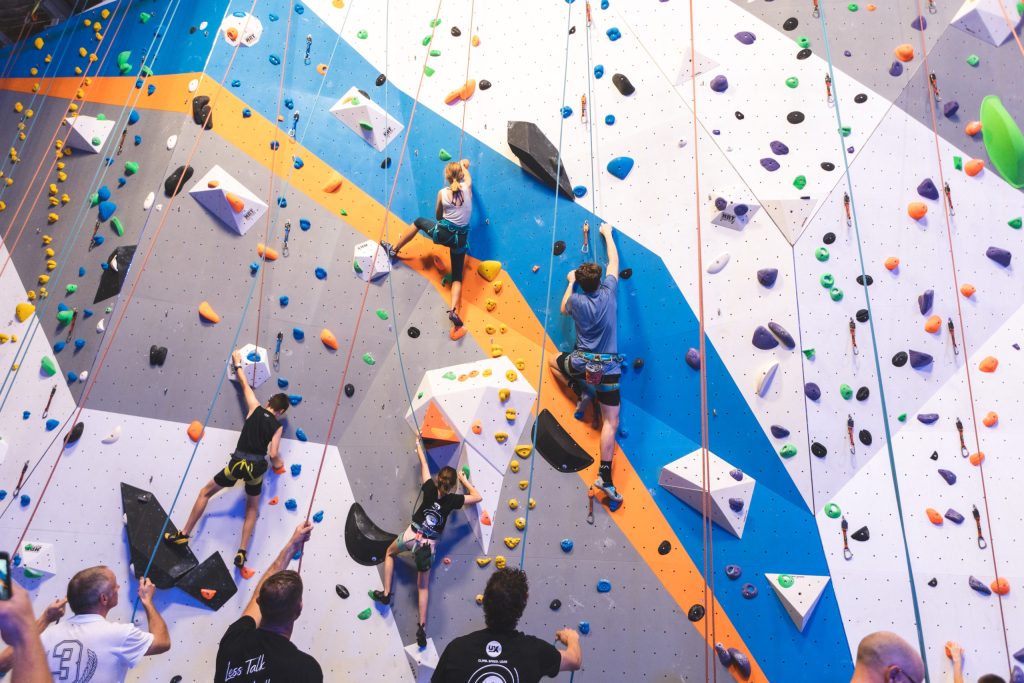
- Consulting for urban adventure parks and climbing gyms
8. Societal Perspectives and Controversies
8.1 Risk vs. Freedom Debate
- Supporters view urban climbing as a form of self-expression, skill mastery, and personal freedom.
- Critics argue it is reckless and socially irresponsible, particularly when performed illegally.
8.2 Legalization and Safe Urban Spaces
- Some cities explore designated climbing walls on urban structures to balance thrill-seeking with safety.
- Community-led initiatives promote educational programs on climbing techniques and legal responsibilities.
8.3 Psychological and Cultural Significance
- Urban climbing reflects modern society’s desire for adventure in controlled urban environments.
- The activity embodies resilience, courage, and creativity, challenging conventional limitations of public spaces.
9. Research and Scientific Perspectives
9.1 Biomechanics of Urban Climbing
- Studies investigate force distribution, muscle activation, and grip efficiency.
- Motion capture and biomechanical analysis reveal optimal movement patterns for stability and energy conservation.
9.2 Cognitive Psychology
- Research on urban climbers examines risk perception, fear management, and decision-making under stress.
- Findings have applications in occupational safety, extreme sports training, and adventure therapy.
9.3 Environmental Psychology
- Urban climbing offers insights into human interaction with architectural space, highlighting the psychological impact of height, space perception, and environmental design.
10. Conclusion
Urban climbing represents a unique fusion of physical prowess, mental discipline, artistic expression, and cultural exploration. It challenges conventional ideas about how humans interact with urban spaces, pushing boundaries while offering glimpses into the psychology of risk, adventure, and mastery.
While inherently dangerous, the activity fosters community, skill development, and creative exploration, particularly when performed responsibly. Advances in training, safety protocols, and legal frameworks could enable climbers to pursue their passion while minimizing hazards.
As urban climbing continues to grow, it serves as a mirror of modern urban culture, highlighting the interplay between human ambition, architectural landscapes, and the quest for aesthetic and experiential fulfillment. In a world dominated by concrete, glass, and steel, urban climbers reclaim vertical spaces, demonstrating that the city itself can become a playground, a canvas, and a stage for human ingenuity.