









Introduction
Across continents and millennia, ancient civilizations have left behind monuments, artifacts, texts, and urban systems of astonishing sophistication. Many of these achievements are well understood through archaeology, anthropology, and historical research. Yet alongside established knowledge exists a compelling category of unanswered questions—the unsolved mysteries of ancient civilizations. These mysteries are not mere legends or pseudoscience; many are grounded in real archaeological evidence that challenges conventional timelines, technological assumptions, or cultural interpretations.
From monumental stone constructions whose engineering precision seems far ahead of their time, to vanished cities swallowed by deserts or jungles, to undeciphered scripts that silence entire civilizations, these enigmas continue to inspire debate, research, and imagination. This article offers a comprehensive, professional, and structured examination of major unresolved mysteries in ancient civilizations, balancing mainstream scholarship with unresolved gaps in understanding. Rather than offering sensational conclusions, it emphasizes evidence-based inquiry, competing hypotheses, and the limits of current knowledge.
1. What Constitutes an “Unsolved Mystery” in Ancient History?
1.1 Defining the Term
An unsolved mystery in ancient civilization studies typically involves one or more of the following:
- Incomplete or missing evidence
- Artifacts that defy clear functional explanation
- Engineering or scientific achievements that exceed known cultural capabilities
- Sudden societal collapse without definitive cause
- Undeciphered languages or scripts
Crucially, a mystery does not imply supernatural explanation. It reflects the boundaries of current archaeological and historical understanding.
1.2 The Role of Scientific Method and Interpretation
Ancient history relies on fragmentary evidence. Interpretation must integrate:
- Archaeological context
- Radiometric dating
- Comparative anthropology
- Experimental archaeology
When evidence is insufficient or contradictory, responsible scholars acknowledge uncertainty rather than forcing conclusions.
2. Megalithic Architecture: Engineering Beyond Explanation?
2.1 The Great Pyramids of Giza
The pyramids of Egypt remain among the most studied yet debated structures in human history.
2.1.1 Precision and Scale
- Over 2.3 million limestone blocks
- Average block weight of 2.5 tons
- Alignment with cardinal directions accurate to fractions of a degree
Despite extensive research, questions remain regarding:
- Exact construction methods
- Logistical organization
- Workforce management at such scale
Mainstream theories propose ramps, levers, and human labor, yet no single model fully accounts for all observed features.
2.2 Stonehenge and the Mystery of Transportation
Stonehenge’s bluestones were transported from Wales—over 200 kilometers away.
Unresolved questions include:
- Methods of long-distance transport
- Social or ritual motivation for such effort
- Acoustic or astronomical functions
While theories exist, definitive evidence remains elusive.
2.3 The Polygonal Masonry of the Andes
Sites such as Sacsayhuamán and Machu Picchu feature stone blocks fitted with extraordinary precision, often without mortar.
Mysteries include:
- Stone shaping techniques
- Earthquake-resistant design knowledge
- Absence of metal tools capable of such work
Experimental archaeology has replicated aspects, but not the full efficiency observed.

3. Lost Cities and Vanished Civilizations
3.1 The Indus Valley Civilization
Flourishing around 2600–1900 BCE, the Indus Valley civilization featured:
- Advanced urban planning
- Standardized bricks
- Sophisticated drainage systems
Yet major mysteries persist:
- The undeciphered Indus script
- The cause of societal decline
- Political and religious structure
Without readable texts, interpretation remains speculative.
3.2 The Maya Collapse
The Classic Maya civilization experienced a dramatic decline between the 8th and 10th centuries CE.
Proposed explanations include:
- Climate change and prolonged drought
- Environmental degradation
- Warfare and political fragmentation
Evidence suggests a combination of factors, but no single cause fully explains the widespread abandonment of cities.
3.3 The Lost City of the Amazon?
Recent lidar discoveries reveal extensive earthworks beneath the Amazon rainforest.
Open questions include:
- Population scale
- Agricultural techniques
- Reasons for disappearance
These findings challenge the long-held belief that the Amazon was untouched wilderness before European contact.
4. Ancient Technologies That Challenge Modern Assumptions
4.1 The Antikythera Mechanism
Discovered in a Greek shipwreck, this 2,000-year-old device is often described as the world’s first analog computer.
It demonstrates:
- Advanced gear systems
- Predictive astronomical modeling
- Mathematical precision
How such knowledge emerged—and why it seemingly disappeared—remains a major historical puzzle.
4.2 Roman Concrete: A Lost Formula?
Roman marine concrete has proven more durable than many modern equivalents.
Mysteries include:
- Self-healing properties
- Chemical reactions with seawater
- Reasons for the loss of this technology
Only recently have scientists begun to rediscover its composition.
4.3 Ancient Metallurgy and Precision Craft
Artifacts such as:
- The Damascus steel swords
- Gold alloys of pre-Columbian America
- High-purity iron pillars resistant to corrosion
raise questions about ancient material science knowledge not fully documented in surviving texts.
5. Undeciphered Scripts and Silent Civilizations
5.1 Linear A
Used by the Minoan civilization, Linear A remains undeciphered.
Challenges include:
- Lack of bilingual inscriptions
- Unknown underlying language
- Limited corpus
Until deciphered, Minoan political, religious, and social systems remain largely hidden.
5.2 The Rongorongo Script of Easter Island
Rongorongo glyphs may represent one of the few independent writing systems.
Unresolved issues:
- Whether it encodes a full language
- Direction and structure of reading
- Cultural context of usage
The decline of indigenous knowledge after European contact complicates interpretation.
5.3 The Voynich Manuscript (Borderline Ancient Mystery)
Though medieval rather than ancient, the Voynich Manuscript illustrates the limits of cryptographic analysis.
Despite modern computational methods, its meaning remains unknown.
6. Astronomical Knowledge in Ancient Cultures
6.1 Alignments and Calendrical Precision
Many ancient structures align with celestial events:
- Solstices and equinoxes
- Lunar cycles
- Planetary movements
Examples include:
- Newgrange in Ireland
- Chichén Itzá in Mesoamerica
- Angkor Wat in Cambodia
The mystery lies not in their existence, but in how such precise astronomical knowledge was developed without modern instruments.
6.2 Knowledge Transmission Across Cultures
Similar astronomical concepts appear in distant civilizations.
Key questions include:
- Independent discovery versus cultural diffusion
- Trade routes as knowledge corridors
- Oral tradition reliability
Definitive evidence of global knowledge exchange remains limited.
7. Sudden Collapse and Societal Disappearance
7.1 Environmental Versus Human Causes
Ancient collapses often show:
- Rapid depopulation
- Abandoned infrastructure
- Cultural discontinuity
Debates focus on:
- Climate instability
- Overexploitation of resources
- Social inequality and unrest
Understanding collapse offers lessons for modern civilization resilience.
7.2 The Ancestral Puebloans
Cliff dwellings in the American Southwest were suddenly abandoned.
Mysteries include:
- Migration destinations
- Cultural transformation
- Environmental stress indicators
Oral traditions provide clues but not complete answers.
8. Human Origins and Cultural Complexity
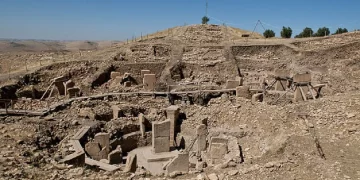
8.1 Göbekli Tepe: Rethinking Prehistory
Dating to around 9600 BCE, Göbekli Tepe predates agriculture.
It challenges assumptions that:
- Monumental architecture requires settled farming
- Complex religion follows urbanization
The site raises fundamental questions about early human social organization.
8.2 The Speed of Cultural Development
Archaeological evidence increasingly suggests:
- Rapid innovation bursts
- Non-linear development
- Loss of knowledge during collapses
This contradicts earlier models of slow, steady progress.
9. Separating Science from Speculation
9.1 The Appeal of Pseudoscience
Unsolved mysteries often attract claims involving:
- Lost advanced civilizations
- Extraterrestrial intervention
- Suppressed historical truths
While imaginative, such theories often lack empirical support.
9.2 Responsible Skepticism
Professional inquiry requires:
- Peer-reviewed evidence
- Reproducible methods
- Willingness to revise conclusions
Mystery does not justify abandoning scientific standards.
10. Why These Mysteries Matter Today
10.1 Expanding Human Self-Understanding
Ancient mysteries remind us that:
- Intelligence is not exclusive to modernity
- Innovation can arise under diverse conditions
- Knowledge can be lost as well as gained
10.2 Lessons for the Future
Understanding ancient successes and failures informs:
- Sustainable development
- Urban planning
- Climate adaptation strategies
History becomes a laboratory for human resilience.
10.3 The Ongoing Nature of Discovery
New technologies—such as lidar, DNA analysis, and advanced dating methods—are rapidly reshaping the field.
What is mysterious today may be understood tomorrow.
Conclusion
The unsolved mysteries of ancient civilizations do not represent failures of knowledge, but invitations to deeper inquiry. They exist at the intersection of evidence and uncertainty, where archaeology, science, and human curiosity converge. From monumental architecture and lost technologies to vanished cities and undeciphered scripts, these enigmas challenge simplistic narratives of human progress.
Rather than diminishing the achievements of ancient peoples, these mysteries elevate them—revealing societies capable of extraordinary innovation, adaptation, and complexity. As research methods advance and interdisciplinary collaboration grows, some mysteries will undoubtedly be resolved. Others may remain unanswered, reminding us that history is not a closed book, but a living dialogue between the past and the present.
In confronting what we do not yet know, we gain not only knowledge, but humility—and a deeper appreciation for the vast, intricate story of human civilization.