









Introduction: The Art of Building Your Own Shelter
In the wild, shelter is one of the most critical survival priorities. Exposure to wind, rain, cold, and heat can quickly lead to hypothermia, heatstroke, or other life-threatening conditions. Whether you are on a short camping trip, an extended backcountry expedition, or facing an emergency survival situation, knowing how to construct a safe and functional shelter is indispensable.
The concept of a DIY wilderness shelter is rooted in bushcraft, survival skills, and primitive construction techniques, emphasizing adaptability, resourcefulness, and respect for the natural environment. Modern adventurers combine traditional knowledge with practical ingenuity to create shelters that are lightweight, effective, and suitable for diverse terrains and climates.
This article provides a comprehensive guide to DIY shelter construction, covering principles, materials, types, techniques, tools, planning strategies, and safety considerations for both novice and experienced outdoor enthusiasts.
1. The Importance of Shelter in Survival
Shelter serves multiple critical functions in wilderness survival:
1.1 Protection from the Elements
- Insulates against cold and wind
- Provides shade in hot environments
- Offers rain and snow protection
1.2 Safety from Wildlife
- Keeps insects, snakes, and larger predators at bay
- Creates a defensible personal space in the wild
1.3 Psychological Stability
- A secure shelter promotes mental well-being, reduces stress, and maintains morale
- Provides a sense of routine and comfort, essential for long-term survival
Key Principle: A well-constructed shelter can be as vital as food or water in a wilderness survival scenario.
2. Principles of Wilderness Shelter Construction
Successful shelter building relies on several core principles:
2.1 Location Selection
- Avoid low-lying areas prone to flooding
- Seek natural windbreaks such as hills, rock formations, or dense vegetation
- Consider proximity to water sources without compromising safety
- Evaluate exposure to wildlife and terrain hazards
2.2 Materials Utilization
- Prioritize locally available natural materials: branches, leaves, bark, moss, grasses
- Incorporate lightweight, portable gear if available (tarps, rope, emergency blankets)
- Use materials that offer insulation, water resistance, and structural stability
2.3 Design Principles
- Efficiency: Minimal material use for maximum protection
- Stability: Structure must withstand wind, rain, and snow
- Comfort: Interior should accommodate sleeping, storage, and movement
2.4 Sustainability
- Minimize ecological impact by avoiding damage to live trees or sensitive habitats
- Collect only fallen branches, leaves, and natural debris
3. Types of DIY Wilderness Shelters
Depending on environment, resources, and skill level, different shelters are suitable:
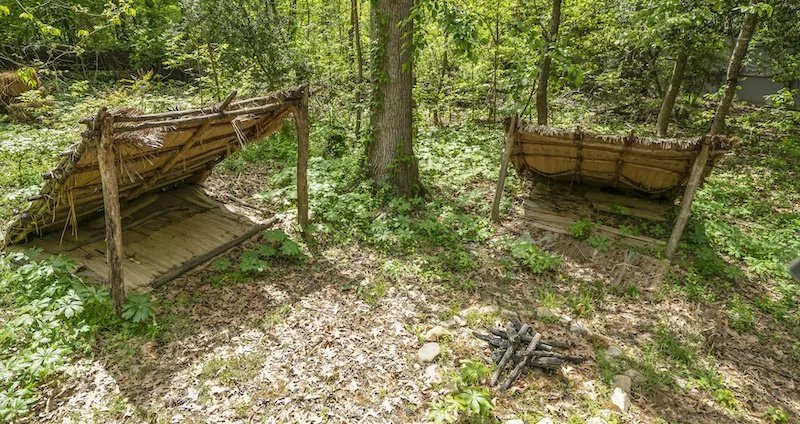
3.1 Lean-To Shelter
- Simple structure with a slanted roof made from branches or tarps
- Provides excellent wind protection
- Can be insulated with leaves or moss for warmth
- Best for moderate climates and short-term use
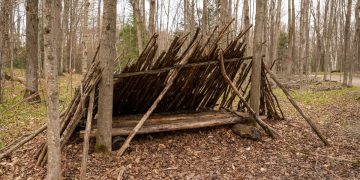
3.2 Debris Hut
- Triangular structure built entirely from natural debris
- Excellent insulation due to thick layers of leaves, grass, and moss
- Ideal for cold environments
- Requires careful layering for water resistance and airflow
3.3 Tarp Shelter
- Lightweight, versatile, and fast to construct
- Can be pitched as A-frame, lean-to, or tent-like configuration
- Compatible with ultralight backpacking and minimalist expeditions
3.4 Snow Shelter
- Quinzhee or snow cave structures for winter survival
- Provides thermal insulation in sub-zero temperatures
- Requires understanding of snow consistency and ventilation
3.5 Elevated Shelter
- Tree platforms or raised debris shelters
- Protects against flooding, insects, and ground-dwelling animals
- Requires advanced bushcraft skills and structural integrity
4. Tools and Equipment for Shelter Building
While shelters can be constructed using only natural materials, certain tools and equipment enhance speed, safety, and comfort:
- Knives and Axes: Cutting branches, shaping wood, and trimming materials
- Saw or Folding Saw: Efficient for larger timber
- Cordage/Paracord: Securing structures, suspending tarps, or creating rope ladders
- Tarp or Emergency Blanket: Lightweight weather protection
- Mallet or Rock: Hammering stakes or breaking branches
- Measuring Tools (Optional): Helps with precision for larger shelters
Key Principle: Skill often outweighs tools; even primitive shelters can be highly functional with proper technique.
5. Step-by-Step Shelter Construction Techniques
5.1 Lean-To Construction
- Find two sturdy trees 6–8 feet apart.
- Lay a ridge pole between them at a 45° angle.
- Lean smaller branches against the ridge pole to form the roof.
- Layer leaves, moss, or pine boughs for insulation.
- Clear ground inside for sleeping, add natural bedding.
5.2 Debris Hut Construction
- Select a flat area, create a frame using three to four large sticks.
- Lean sticks to form a triangle, with base wide enough for sleeping.
- Pile leaves, grass, or moss thickly around the frame.
- Add interior bedding for insulation.
- Ensure ventilation at the peak to prevent suffocation.
5.3 Tarp Shelter Construction
- Stretch tarp between two anchor points or trees.
- Secure corners with rope or cord.
- Adjust pitch for weather conditions (low for wind, higher for ventilation).
- Add stakes or rocks to secure edges against rain or wind.
5.4 Snow Shelter Construction
- Identify a mound of dense, packable snow.
- Hollow interior space, leaving walls 1–2 feet thick.
- Carve entrance slightly below sleeping area to trap warm air.
- Ventilation hole at the top prevents suffocation.
- Use snow blocks to reinforce walls if needed.
6. Insulation and Weatherproofing
Shelters must retain heat and shed water efficiently:
- Use layers of leaves, moss, pine needles, or grass for insulation
- Add tarps or emergency blankets for waterproofing
- Elevate sleeping area with logs or bedding to prevent contact with cold, damp ground
- Construct windbreaks or walls using branches or boulders
Tip: Even a small layer of natural material can significantly reduce heat loss.
7. Site Planning and Environmental Considerations
7.1 Safety
- Avoid avalanche-prone slopes or flood zones
- Avoid areas with dead trees overhead
- Maintain distance from wildlife paths
7.2 Resource Management
- Use only fallen branches or naturally abundant materials
- Avoid stripping bark from live trees
- Leave the site as close to natural as possible after departure
7.3 Ergonomics
- Shelter should accommodate sleeping, sitting, and minimal movement
- Consider airflow, sunlight, and proximity to fire source
8. Survival Scenarios and Applications
DIY shelters are applicable in various scenarios:
- Backcountry Hiking: Provides temporary rest and protection
- Emergency Survival: Essential when lost or injured in remote terrain
- Extended Expeditions: Base camp construction for multi-day exploration
- Ultralight Adventure: Combining tarp and minimal natural material for mobility
Skillful construction increases comfort, safety, and energy efficiency.
9. Psychological and Physical Benefits of Shelter Mastery
- Promotes mental resilience in challenging environments
- Encourages problem-solving, creativity, and adaptability
- Enhances physical fitness through wood collection, construction, and preparation
- Provides a sense of accomplishment and self-reliance
10. Integration with Other Bushcraft Skills
Shelter building complements other wilderness skills:
- Firecraft: proximity to cooking and warmth
- Water sourcing: selecting safe shelter locations near water
- Food procurement: integrating storage and preparation areas
- Navigation: selecting sheltered locations while maintaining route access
Holistic Approach: Mastery of shelter is part of a larger survival toolkit.
11. Challenges and Safety Considerations
- Structural Stability: Poor construction can collapse under snow, wind, or rain
- Exposure Risks: Improper insulation can lead to hypothermia or heat loss
- Time Management: Shelter building can be time-consuming; plan before sunset
- Wildlife Encounters: Food storage and site selection critical to avoid animals
Mitigation requires practice, knowledge, and pre-planning.
12. Innovations and Modern Adaptations
Modern adventurers combine bushcraft with technology:
- Ultralight trekking tarps and bivvy sacks
- Reflective emergency blankets for insulation
- Lightweight cordage and stakes for rapid deployment
- Modular shelters for group use or extended trips
These innovations maintain lightweight efficiency while enhancing safety and comfort.
Conclusion: The Power of DIY Wilderness Shelter
Building your own shelter is more than a survival tactic—it is a skill that develops resourcefulness, patience, and a deep connection with nature. Whether using primitive materials, modern ultralight gear, or a combination of both, the ability to construct a functional, safe, and comfortable shelter is essential for anyone venturing into the wild.
Mastery of DIY shelter construction ensures protection from the elements, psychological stability, and survival confidence, transforming the wilderness from a challenge into an environment where skill, observation, and creativity allow you to thrive.
In the broader context, shelter building is a gateway to bushcraft mastery, integrating with firecraft, water procurement, and navigation to create a holistic approach to outdoor survival. The resurgence of interest in DIY wilderness shelters reflects a timeless truth: the ability to create a safe haven in nature is both empowering and life-saving.