









Introduction
Freediving, also known as apnea diving, is an extreme sport that combines aesthetic beauty, psychological discipline, and inherent danger. Unlike scuba diving, freedivers rely solely on a single breath, challenging the body and mind to withstand extended periods underwater without external breathing apparatus. The sport has grown rapidly over recent decades, evolving from traditional spearfishing and cultural practices in coastal communities to a global competitive and recreational pursuit.
Freediving is unique because it engages multiple dimensions of human experience:
- Physiological: Mastering breath-holding and oxygen conservation.
- Psychological: Cultivating mental calm, focus, and resilience.
- Artistic: Performing elegant movements underwater, akin to dance.
- Risk Management: Understanding and mitigating hazards such as hypoxia, barotrauma, and marine life encounters.
This article provides a comprehensive exploration of freediving, covering its history, physiological and psychological aspects, training techniques, competitive structures, safety considerations, and its broader cultural and philosophical significance.
1. Historical and Cultural Roots of Freediving
Freediving is not a modern invention; it has been practiced for centuries in various coastal communities around the world.
1.1 Traditional Freediving Practices
- Ama Divers of Japan: Women divers who have harvested shellfish, seaweed, and pearls for over 2,000 years, holding their breath for extended periods and diving to depths exceeding 10 meters.
- Haenyeo of Korea: A similar tradition, emphasizing communal diving, shared knowledge, and spiritual connection to the sea.
- Mediterranean Pearl Divers: Historically, freedivers collected oysters and sponges along coastlines, developing techniques for breath-hold endurance.
- Polynesian and Pacific Islanders: Freediving has been integral for fishing and resource gathering, reflecting a deep connection to the ocean environment.
These historical practices highlight freediving as a combination of practical survival skill, cultural ritual, and physical mastery.
1.2 Modern Freediving Evolution
In the 20th century, freediving evolved into a competitive and recreational sport:
- Competition Emergence: Jacques Mayol and Enzo Maiorca popularized depth and apnea record attempts, inspiring global interest.
- Freediving Schools: Institutions emerged to teach safety, technique, and mental training.
- Integration with Underwater Sports: Freediving now intersects with photography, spearfishing, and artistic underwater performance.
Modern freediving emphasizes safety, physiology, and mental discipline, blending historical traditions with scientific understanding.
2. Physiological Dimensions of Freediving
Freediving pushes the human body beyond ordinary limits, demanding adaptations in respiratory, cardiovascular, and neurological systems.
2.1 Breath-Holding Mechanics
The fundamental physiological challenge in freediving is managing oxygen and carbon dioxide levels:
- Oxygen Utilization: Muscles and organs require oxygen; divers learn to minimize consumption through relaxed movement and controlled breathing.
- CO₂ Tolerance: Carbon dioxide buildup triggers the urge to breathe; training enhances tolerance and delay of this reflex.
- Apnea Tables: Divers practice timed breath-holds on land or in water, progressively extending duration.
Breath-holding requires meticulous balance between oxygen conservation and mental control.
2.2 The Mammalian Dive Reflex
Freedivers benefit from an evolutionary adaptation known as the mammalian dive reflex:
- Bradycardia: Heart rate slows significantly, reducing oxygen consumption.
- Peripheral Vasoconstriction: Blood flow to non-essential muscles decreases, prioritizing oxygen delivery to vital organs.
- Spleen Contraction: Releases red blood cells, enhancing oxygen-carrying capacity.
This reflex is more pronounced in experienced divers and contributes to record-setting deep dives.
2.3 Depth and Pressure Effects
Freedivers experience increasing water pressure with depth, posing physiological challenges:
- Barotrauma: Pressure differences can damage ears, sinuses, and lungs; equalization techniques are critical.
- Nitrogen Narcosis: Rare in freediving but possible at extreme depths, affecting cognition and coordination.
- Pulmonary Edema Risk: Shallow-water blackout can result from hypoxia and pressure changes.
Understanding the interplay between depth, breath-holding, and safety protocols is essential for survival and performance.

3. Psychological and Mental Aspects
Freediving is as much a mental discipline as a physical one.
3.1 Breath Control and Relaxation
Relaxation is central to maximizing breath-hold duration:
- Diaphragmatic Breathing: Deep, slow breathing increases oxygen storage.
- Meditation and Visualization: Mental imagery prepares the body for deep dives and reduces anxiety.
- Mind-Body Integration: Synchronizing movement with breath lowers oxygen consumption and enhances efficiency.
Freedivers often describe a state of “flow” or transcendence, where the body and mind operate in perfect harmony.
3.2 Overcoming Fear and Anxiety
Mental resilience is critical due to inherent risks:
- Hypoxia Awareness: Recognizing bodily cues before blackouts is essential.
- Fear Management: Experience and training reduce panic responses underwater.
- Psychological Conditioning: Mindfulness and cognitive training improve control over involuntary responses.
The psychological component separates casual snorkeling from elite freediving.
4. Training Techniques and Safety Protocols
Effective training and risk management are critical in a sport where one breath can determine success or disaster.
4.1 Physical Conditioning
- Cardiovascular Fitness: Improves oxygen efficiency and recovery.
- Core Strength and Flexibility: Supports streamlined movement underwater.
- Swimming Technique: Reduces energy expenditure and extends dive time.
4.2 Breath-Hold Training
- Static Apnea: Holding breath while floating or stationary, building CO₂ tolerance.
- Dynamic Apnea: Swimming underwater horizontally to improve movement efficiency under breath-hold.
- Recovery Breathing: Oxygenating efficiently between dives to prevent hypoxia.
4.3 Safety Measures
- Buddy System: Mandatory in training and competition to monitor for distress.
- Rescue Techniques: Training in immediate response to blackouts, shallow-water hypoxia, or equipment failure.
- Gradual Progression: Incremental depth and duration increases prevent physiological shock.
- Equipment Checks: Fins, masks, and wetsuits enhance safety and performance.
5. Competitive Freediving
Freediving competitions measure depth, distance, or time, with different disciplines:
- Constant Weight (CWT): Diver descends and ascends using fins or no fins.
- Free Immersion (FIM): Pulling along a rope without fins.
- Static Apnea (STA): Maximum breath-hold duration at the water surface.
- Dynamic Apnea (DYN): Horizontal underwater swimming for distance.
Competitive freediving emphasizes mental focus, technique, and strict adherence to safety regulations.
6. Aesthetic and Artistic Dimensions
Freediving has an artistic and meditative element:
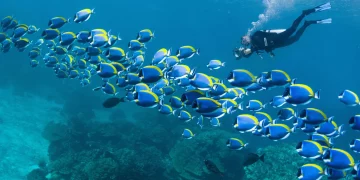
- Underwater Photography and Videography: Capturing human movement in harmony with marine life.
- Artistic Apnea: Performances highlight graceful motion and interaction with natural surroundings.
- Meditative Immersion: Freedivers report psychological clarity and sensory amplification.
The combination of human form, water, and environment makes freediving an unparalleled expression of human beauty and endurance.
7. Inherent Risks and Risk Management
Freediving carries significant risks, even for trained athletes:
- Shallow Water Blackout: Loss of consciousness from hypoxia, often during ascent.
- Barotrauma: Ear and sinus injuries due to pressure mismanagement.
- Decompression Illness: Rare but possible at extreme repetitive dives.
- Marine Hazards: Jellyfish, sharks, or strong currents can pose danger.
Risk mitigation relies on knowledge, training, preparation, and community oversight.
8. Freediving and Human Limits
Freediving pushes human physiology to its limits:
- Elite divers can hold breath for over 10 minutes.
- Depth records exceed 130 meters, testing the limits of human pressure tolerance.
- The sport challenges our understanding of oxygen management, mental endurance, and stress adaptation.
This makes freediving a laboratory for studying human resilience and adaptation.
9. Freediving in Popular Culture and Philosophy
Freediving resonates beyond sport:
- Symbolism: Represents human courage, introspection, and confrontation with fear.
- Philosophical Reflection: Encourages awareness of mortality, the body-mind connection, and environmental interconnectedness.
- Media Influence: Documentaries and photography highlight both spectacle and serenity, promoting environmental appreciation.
Freediving exemplifies the intersection of adventure, art, and consciousness.
Conclusion
Freediving is a unique sport that combines beauty, psychological mastery, and significant risk. Its practice requires physical conditioning, breath control, mental discipline, and respect for natural forces. From historical traditions to competitive arenas, freediving challenges human limits while offering profound aesthetic and meditative experiences. The sport embodies the paradox of vulnerability and empowerment: humans can explore the depths of the ocean, gracefully suspended on a single breath, yet remain at the mercy of their own physiology and the unforgiving marine environment.
In essence, freediving is more than a sport; it is an exploration of self, environment, and the boundaries of human potential. Its continued growth reflects both our fascination with the underwater world and the enduring human desire to transcend ordinary limits, balancing art, psychology, and adventure in a single, breathtaking pursuit.