









Introduction
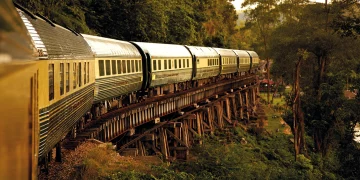
In an age dominated by air travel, the prospect of long-distance train journeys might seem like a relic of the past. Yet, over the past decade, there has been a marked resurgence in interest and investment in long-distance rail travel. Whether it’s the luxurious Orient Express, high-speed trains connecting major cities, or scenic routes like the Trans-Siberian Railway, trains are making a remarkable comeback as a preferred mode of travel for those seeking comfort, sustainability, and a deeper connection to the journey itself.
This article explores the historical context of long-distance train travel, its technological evolution, and the reasons behind its modern revival. From the golden age of railroads to the cutting-edge innovations in high-speed trains and sustainable rail systems, we will analyze the multifaceted reasons why long-distance train travel is gaining new prominence. We will also examine the environmental and social benefits that make train travel not only a viable but also a preferable alternative to air travel in an increasingly environmentally conscious world.
The Golden Age of Railroads: A Historical Context
The history of long-distance train travel dates back to the early 19th century when railroads first revolutionized transport, opening up new possibilities for both freight and passenger movement. The Steam Engine developed by George Stephenson in the 1820s set the stage for the rapid expansion of rail networks across Europe, North America, and beyond.
The Rise of Rail Travel
By the mid-19th century, rail travel had become the backbone of industrial and commercial economies, allowing goods and people to travel faster than ever before. In countries like Britain, France, and the United States, railroads became synonymous with progress and modernity.
The development of long-distance trains that offered comfort, speed, and luxury, such as the Transcontinental Railroad in the U.S. and the Paris to Istanbul Orient Express, marked the golden age of long-distance travel. These trains were not just a means of getting from one place to another but were often an experience in and of themselves.
The Orient Express and Luxury Rail Travel
One of the most iconic long-distance trains to emerge during the late 19th and early 20th centuries was the Orient Express, which first began service in 1883. The train, which connected Paris with Istanbul, became a symbol of luxury and adventure. Known for its opulent interiors, exquisite dining cars, and world-class service, the Orient Express epitomized the romance and glamour of long-distance rail travel during the golden age.
Train travel in this era was characterized by a sense of social status, with first-class passengers enjoying private compartments, fine dining, and an opportunity to interact with the elite of society. The luxury aspect of rail travel was not just limited to the Western world; trains like the Maharajas’ Express in India, which traversed the vast subcontinent, offered an unparalleled level of opulence to travelers.
The Decline of Rail Travel
The mid-20th century saw the rise of automobiles and air travel, which began to replace trains as the dominant modes of long-distance transportation. The jet age made air travel faster and more efficient, while cars and highways offered greater flexibility and convenience for personal travel. As a result, many long-distance rail routes were discontinued, and the golden age of luxury train travel seemed to fade into the background.
The Resurgence of Long-Distance Train Travel
Despite the dominance of air and road transport, long-distance train travel is making a remarkable comeback in the 21st century. A variety of factors, including advancements in technology, environmental concerns, and the growing appeal of slower, more scenic modes of travel, are contributing to this resurgence.
Technological Advances in Rail Systems
The renaissance of long-distance trains is largely driven by advances in rail technology, particularly the development of high-speed trains. Maglev trains, bullet trains, and electric-powered systems have drastically reduced travel times between major cities, making rail travel competitive with air travel, particularly on short to medium-length routes.
One of the most well-known examples of high-speed rail is Japan’s Shinkansen, also known as the “bullet train.” Since its debut in 1964, the Shinkansen has set the global standard for speed, safety, and punctuality. With speeds reaching up to 320 km/h (200 mph), the Shinkansen has transformed travel in Japan and is now a model for high-speed rail systems in other parts of the world.
High-Speed Rail: Connecting Major Cities
Europe and Asia have also been at the forefront of adopting high-speed rail technologies. In Europe, the TGV (Train à Grande Vitesse) in France, the Eurostar connecting London with Paris and Brussels, and the ICE (InterCityExpress) trains in Germany have revolutionized travel across the continent. In China, the China Railway High-speed (CRH) network, one of the most extensive in the world, connects cities like Beijing, Shanghai, and Hong Kong with extraordinary efficiency.
High-speed rail networks have drastically reduced travel times between major cities. For instance, a trip from Paris to Lyon, which once took several hours by car, can now be completed in under two hours via the TGV. Similarly, the Eurostar allows travelers to cross the English Channel in just over two hours, significantly shortening the time it takes to travel between the UK and mainland Europe.
Scenic Routes: The Slow Travel Movement
In addition to technological advancements, another important factor in the revival of long-distance trains is the growing interest in slow travel. Unlike air travel, which is often focused on getting from point A to point B as quickly as possible, long-distance train journeys offer a chance to enjoy the journey itself.
Routes such as the Trans-Siberian Railway, the Rocky Mountaineer in Canada, and the Glacier Express in Switzerland offer breathtaking views of some of the world’s most beautiful landscapes. These scenic train journeys are becoming increasingly popular among travelers who seek a more immersive and leisurely travel experience, one that emphasizes the journey over the destination.
The appeal of scenic train routes has led to a renewed interest in luxurious long-distance trains, reminiscent of the golden age of rail travel. The Belmond Venice Simplon-Orient-Express, for example, offers travelers an opulent experience as they traverse Europe in style, evoking the glamour and luxury of the original Orient Express.
The Environmental Case for Train Travel
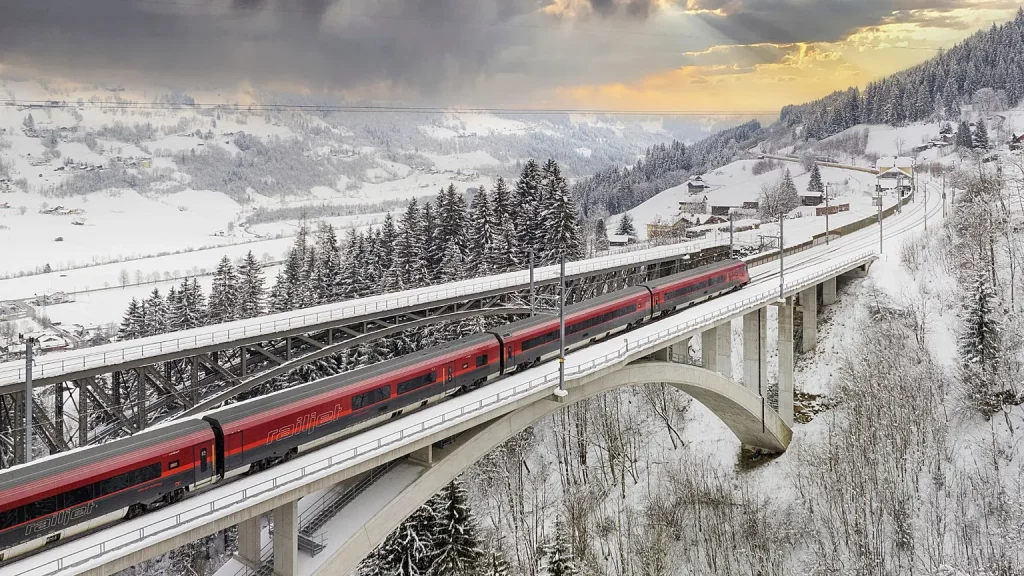
One of the most compelling reasons for the resurgence of long-distance train travel is its environmental sustainability. In an era of growing concerns over climate change and the carbon footprint of various forms of transportation, trains present a much greener alternative to air travel and cars.
Lower Carbon Emissions
On average, train travel produces significantly fewer greenhouse gas emissions per passenger than flying or driving. High-speed trains, particularly those powered by electricity, are among the most energy-efficient modes of transportation. In countries where the electricity grid is powered by renewable energy sources such as wind, solar, or hydroelectric power, the carbon footprint of train travel is even lower.
For example, studies have shown that taking a train from London to Paris generates about 90% less CO2 than flying the same route. In Europe, countries with extensive rail networks, such as Germany and Switzerland, have seen a marked increase in the use of rail transport as an environmentally friendly alternative to air travel.
Reduced Congestion and Air Pollution
Trains also help reduce congestion on roads and at airports, alleviating some of the environmental pressures created by traffic and air travel. Long-distance trains can move large numbers of passengers efficiently, reducing the need for private cars and the associated environmental costs of fuel consumption and emissions.
In cities with high levels of air pollution, such as Beijing and Mexico City, high-speed rail systems can provide a cleaner and more efficient alternative to air and road transport. By connecting urban centers with sustainable rail options, countries can reduce their dependence on fossil fuels and improve overall air quality.
The Social and Economic Benefits of Long-Distance Trains
Beyond environmental concerns, long-distance train travel offers a variety of social and economic benefits. Trains, particularly those that link rural and remote areas, contribute to regional development by improving access to larger markets and creating economic opportunities for local communities.
Regional Development
Rail travel promotes economic integration by connecting regions and facilitating the movement of people, goods, and services. High-speed rail, for example, has been shown to increase property values along major rail lines and stimulate investment in local economies. In countries like China and Spain, the development of high-speed rail has helped bring remote areas into the economic mainstream by providing easy access to larger metropolitan areas.
Job Creation
The expansion of rail networks, particularly high-speed and luxury train services, creates numerous jobs in sectors such as construction, tourism, hospitality, and maintenance. As demand for rail travel grows, both in terms of passenger numbers and freight, new employment opportunities are created, contributing to economic growth.
The Future of Long-Distance Train Travel
Looking to the future, the renaissance of long-distance train travel shows no signs of slowing down. As more countries invest in high-speed rail networks and as travelers continue to seek sustainable and experiential travel options, rail is poised to play an increasingly important role in the global transportation landscape.
The Hyperloop and Maglev Trains
In the coming years, Hyperloop technology and maglev (magnetic levitation) trains may revolutionize long-distance travel even further. Hyperloop, which uses pods traveling through low-pressure tubes at speeds exceeding 700 miles per hour, has the potential to reshape how we think about travel over long distances. Similarly, maglev trains—which float above the track using magnetic forces—offer the promise of ultra-fast, energy-efficient travel that could make even current high-speed trains seem slow in comparison.
Sustainability and Innovation
With increasing concerns about climate change and the environmental impact of transportation, the future of long-distance rail travel will likely be focused on sustainability and innovation. As trains continue to evolve, we can expect more environmentally friendly technologies, improved efficiency, and new, exciting ways to experience the world by rail.
Conclusion
The renaissance of long-distance train travel is a testament to the enduring appeal of rail as a sustainable, comfortable, and meaningful mode of transport. From its historic origins to its modern-day resurgence, trains have continuously played a vital role in shaping the global transportation landscape.
In a world that increasingly values sustainability, slow travel, and experiential journeys, long-distance trains are poised to offer a unique, eco-friendly alternative to air and road travel. Whether it’s the speed of high-speed rail, the comfort of luxury trains, or the scenic beauty of scenic routes, the future of long-distance train travel promises to be bright, offering travelers a chance to rediscover the joy of the journey itself.