









Introduction
Glacier hiking and ice cave exploration are among the most exhilarating and visually stunning forms of adventure travel. Traversing glaciers and venturing into ice caves allow individuals to engage directly with some of the planet’s most dynamic and fragile environments. These pursuits, however, are not merely recreational—they demand a deep understanding of glacial geology, climate conditions, technical skills, and safety protocols. The combination of extreme physical challenges and environmental unpredictability makes glacier expeditions a test of both skill and resilience.
Glaciers, often referred to as the “rivers of ice,” are moving landscapes shaped by the interplay of gravity, temperature, and accumulated snowfall. Ice caves, formed by meltwater or volcanic heat beneath ice, reveal ethereal formations that change continually. This article explores the scientific, technical, and cultural aspects of glacier hiking and ice cave exploration, emphasizing preparation, safety, environmental stewardship, and the unique challenges posed by these frozen frontiers.
1. Understanding Glaciers: Nature’s Moving Ice
1.1 Glacier Formation and Dynamics
Glaciers are formed over centuries as snow compacts into ice under its own weight, gradually moving downhill under gravitational force. Key types of glaciers include:
- Valley glaciers: Flow through mountainous valleys.
- Ice caps: Dome-like glaciers covering smaller landmasses.
- Piedmont glaciers: Spread out at the base of mountains.
Glacial movement creates crevasses, seracs, and moulins, which are both navigational challenges and unique natural features for explorers.
1.2 Glacial Hazards
- Crevasses: Deep fissures that can be hidden by snow bridges.
- Icefall collapse: Seracs can break without warning, posing lethal risks.
- Avalanches: Triggered by snow accumulation or ice shifts.
- Meltwater hazards: Hidden streams and weak ice over flowing water.
Understanding glacier dynamics and terrain is essential for safe exploration.
2. Technical Skills for Glacier Hiking
2.1 Essential Gear
Safety and performance require specialized equipment:
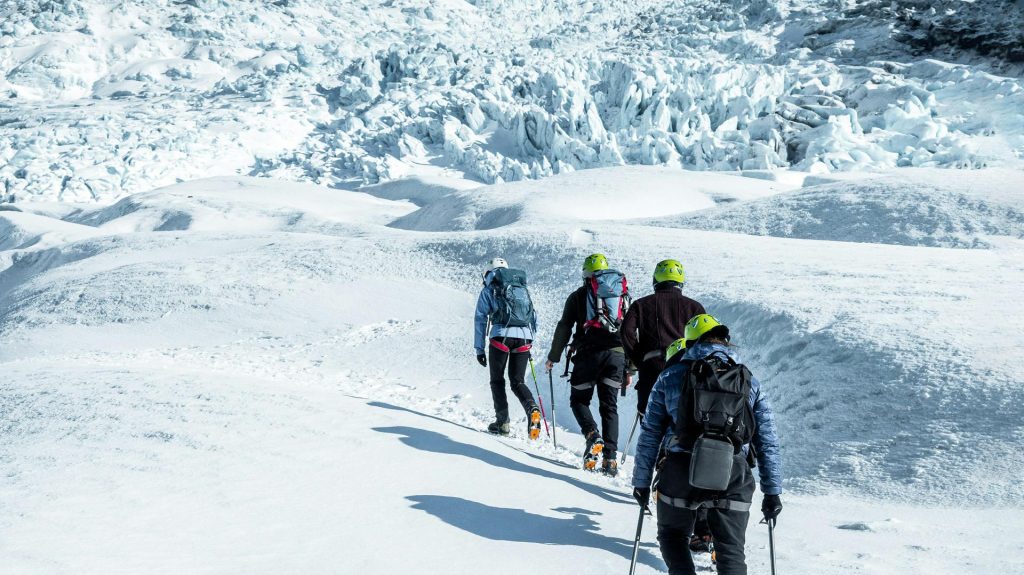
- Crampons: Provide traction on ice surfaces.
- Ice axes: Crucial for balance, self-arrest, and climbing.
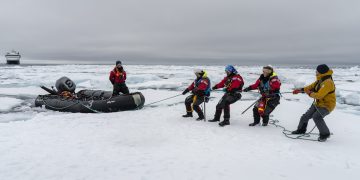
- Ropes and harnesses: Enable team safety in crevasse zones.
- Helmet: Protects against falling ice and debris.
- Appropriate clothing: Layering for insulation and moisture management.
2.2 Basic Techniques
- Self-arrest: Stopping a slide using an ice axe.
- Glissading: Controlled sliding on snow slopes with an ice axe for braking.
- Roped travel: Maintaining tension and communication in teams to prevent falls into crevasses.
- Route selection: Reading snow and ice formations to avoid weak points.
3. Ice Cave Exploration
3.1 Formation and Types
Ice caves can form through:
- Meltwater erosion: Channels carved beneath glaciers.
- Volcanic heat: Subglacial lava flows creating tunnels.
- Seasonal freezing: Temporary caves forming from winter accumulation.
Each type has distinct structural stability and aesthetic qualities, influencing safety and exploration strategies.
3.2 Navigation and Safety
- Assess ice thickness and stability.
- Avoid caves during high melt seasons to prevent collapse.
- Use helmets, headlamps, and reliable rope systems.
- Never explore alone; team coordination is critical.
3.3 Aesthetic and Scientific Value
Ice caves provide unique opportunities for:
- Observing internal ice structures, layers, and colors.
- Documenting climate change effects, as cave size and form are sensitive to temperature fluctuations.
- Capturing photographic or geological studies, offering insights into glacial evolution.
4. Environmental Considerations
4.1 Impact of Human Activity
Glaciers and ice caves are sensitive ecosystems:
- Foot traffic can accelerate ice melting.
- Improper waste disposal contaminates meltwater.
- Noise and light disturbance may affect microenvironments.
4.2 Sustainable Practices
- Follow Leave No Trace principles.
- Minimize contact with fragile ice formations.
- Educate participants about climate change impacts on glaciers.
4.3 Climate Change and Glacial Retreat
Global warming has accelerated glacier retreat:
- Many glaciers are losing ice mass at unprecedented rates.
- Ice caves may become unstable or vanish entirely.
- Expeditions must adapt to changing landscapes and increased hazards.
5. Planning and Preparation
5.1 Physical Conditioning
Glacier hiking and ice cave exploration demand:
- Cardiovascular endurance for long treks and altitude.
- Strength training for climbing and self-arrest maneuvers.
- Flexibility to navigate crevassed terrain and confined caves.
5.2 Expedition Planning
- Route reconnaissance using maps, satellite imagery, and local guides.
- Weather monitoring, as glacial conditions can shift rapidly.
- Emergency planning with evacuation strategies and communication devices.
5.3 Skill Development
- Mountaineering courses covering crevasse rescue and ice climbing.
- Navigation training using GPS, compass, and topographical maps.
- Team coordination exercises to manage rope teams and safety procedures.
6. Risk Management and Rescue
6.1 Common Injuries and Risks
- Frostbite and hypothermia from prolonged exposure.
- Falls or slips leading to fractures or sprains.
- Head injuries from falling ice or rocks.
- Water-related injuries from meltwater streams or hidden crevasses.
6.2 Preventive Measures
- Regular safety briefings and hazard assessments.
- Layered clothing, gloves, and protective gear for cold environments.
- Roped team movement across crevassed terrain.
- Pre-established emergency contacts and evacuation plans.
6.3 Crevasse Rescue Techniques
- Throw bag rescue: Reaching and pulling a fallen team member.
- Pulley systems: Mechanical advantage to extract climbers.
- Ice anchors and pickets: Stabilize ropes for secure extraction.
Regular drills and team practice are essential for efficiency and safety.
7. Psychological Challenges
- Isolation in vast, frozen landscapes can induce stress and fatigue.
- Constant vigilance against hidden dangers requires mental resilience.
- Ice cave exploration demands calmness and spatial awareness in low-light conditions.
Mental preparation through visualization, training, and team support enhances safety and performance.
8. Scientific and Educational Opportunities
8.1 Glaciology Studies
- Ice cores provide insights into historical climate patterns.
- Crevasse formations reveal ice movement dynamics.
- Meltwater channels demonstrate glacial hydrology.
8.2 Photography and Documentation
- Ice caves offer unparalleled opportunities for nature photography.
- Documenting expedition data contributes to climate research and conservation efforts.
8.3 Public Awareness and Advocacy
- Sharing expedition experiences educates the public about climate change impacts.
- Promotes ethical outdoor recreation and environmental stewardship.
9. Emerging Trends and Innovations
- Portable GPS mapping and drones for real-time terrain assessment.
- Advanced cold-weather gear with lightweight insulation and moisture management.
- Virtual reality simulations for training in ice navigation and hazard recognition.
- Collaborative expeditions with scientists and environmentalists for data collection.
10. Conclusion
Glacier hiking and ice cave exploration combine adventure, science, and environmental consciousness. These pursuits demand not only physical skill and technical proficiency but also mental resilience, teamwork, and an understanding of glacial dynamics. By adhering to safety protocols, employing sustainable practices, and preparing comprehensively, explorers can safely engage with these awe-inspiring frozen landscapes.
These frozen environments, while breathtakingly beautiful, are also fragile indicators of global climate change. Responsible exploration, continuous education, and scientific observation allow adventurers to experience glaciers and ice caves while contributing to broader understanding and conservation efforts.
Glacier expeditions embody the ultimate synthesis of challenge, discovery, and respect for nature, offering a profound connection to the planet’s ice-bound frontiers.