









Introduction: A Natural Wonder Beyond Compare
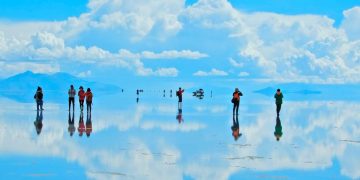
Located in southwest Bolivia, Salar de Uyuni is the world’s largest salt flat, stretching across an impressive 10,582 square kilometers (4,086 square miles). It is a place of haunting beauty, where the earth meets the sky in a seamless, reflective surface that has mesmerized travelers, photographers, and scientists alike. Often referred to as the “mirror of the sky,” Salar de Uyuni presents a surreal landscape where the horizon vanishes, and the sky above appears to stretch across the ground in a flawless reflection, creating an otherworldly scene.
This salt flat is a geological marvel and a natural wonder, formed by ancient lakes that evaporated long ago, leaving behind a thick crust of salt. In addition to its breathtaking aesthetics, Salar de Uyuni plays a significant role in the global ecosystem, geology, and industry, making it a site of both natural and economic importance. From being a major source of lithium to its pivotal role in climate research, Salar de Uyuni’s scientific relevance extends far beyond its visual appeal.
In this article, we will explore the unique features of Salar de Uyuni, the formation of its stunning mirror effect, its cultural significance, and its importance in both local and global contexts.
1. The Geological and Environmental Wonders of Salar de Uyuni
1.1 Formation and Geological History
The history of Salar de Uyuni is as vast and ancient as its landscape. The salt flat was once part of an enormous prehistoric lake, known as Lake Minchin, which existed more than 30,000 years ago during the Pleistocene Epoch. Over thousands of years, the lake began to evaporate, leaving behind salt deposits that now cover the entire region. The remnants of this ancient lake are still visible today in the form of salt crusts, saline lagoons, and the occasional rocky outcrop.
Over time, the salt flats transformed into what we see today: a flat, vast expanse of salt crust, speckled with hexagonal patterns that are a hallmark of the area. The salt crust can be several meters thick in places and covers a subterranean lithium-rich aquifer, which has made the Salar de Uyuni a crucial resource for global industries.
In addition to the salt crust, the Salar de Uyuni is also home to several lagoons and salt-encrusted islands, such as Isla Incahuasi, a volcanic island covered with giant cactus and offering panoramic views of the salt flat. The landscape’s stark, minimalistic beauty is accentuated by the light that dances across its surface, especially during the rainy season.
1.2 The “Mirror Effect” Sky
The most iconic feature of Salar de Uyuni is its extraordinary mirror effect, which occurs during the rainy season (typically from November to March). When shallow rains fall on the salt flats, the surface becomes a thin layer of water, creating a perfect reflective surface. This reflective layer transforms the flat, white salt expanse into a seamless mirror, where the sky above is duplicated in flawless symmetry on the ground below.
The horizon disappears entirely, as the salt flats and the sky become indistinguishable, creating the sensation of walking on an endless, ethereal surface. The effect is so striking that it blurs the boundary between earth and sky, making it difficult to determine where one begins and the other ends. This phenomenon has made Salar de Uyuni a popular subject for photographers and artists, who attempt to capture its otherworldly beauty.
In the dry season, the salt flat reverts to its bleached white surface, dotted with geometric patterns that emerge as the salt crystallizes. These patterns, combined with the stark, desolate landscape, create a different kind of visual marvel — one that feels both alien and breathtakingly serene.

2. The Importance of Salar de Uyuni: Economic, Scientific, and Cultural Impact
2.1 A Source of Lithium
Salar de Uyuni holds immense economic significance due to the presence of vast reserves of lithium, a critical component in batteries for electric vehicles, smartphones, and renewable energy storage. It is estimated that the Salar contains about 7% of the world’s known lithium reserves, making Bolivia a central player in the future of clean energy technology.
Lithium extraction in the region has become a multibillion-dollar industry, with several companies attempting to develop methods for mining the salt flats’ lithium-rich brine. As the demand for electric vehicles and solar energy grows, the importance of Salar de Uyuni in the global economy is expected to continue to rise. However, there are concerns about the environmental impact of lithium extraction, including the depletion of water resources and the effects on local ecosystems.
2.2 A Scientific Research Hub
Salar de Uyuni also plays a pivotal role in scientific research. As one of the flattest surfaces on Earth, the salt flat is an ideal site for testing and calibrating satellites and geodetic instruments. Its vast, uninterrupted expanse offers a perfect environment for precise measurements of Earth’s shape and satellite calibration.
In addition, the extreme conditions of Salar de Uyuni make it an important site for studying extremophiles — microorganisms that thrive in harsh environments. Some species of cyanobacteria and other microorganisms have adapted to the extreme salinity and arid conditions of the salt flats, providing valuable insights into the potential for life in similar extreme environments, both on Earth and on other planets like Mars.
Furthermore, the salt flat’s unique geological history is of interest to scientists studying the history of climate change and Earth’s geological processes. The salt crust, along with the ancient lakebed beneath, offers a rich archive of past climatic conditions, and studying these layers can help researchers understand more about past global warming events.
2.3 Cultural Significance and Tourism
Beyond its scientific and economic importance, Salar de Uyuni holds great cultural significance for the people of Bolivia, particularly the Indigenous communities that live in the region. The Aymara and Quechua people have long inhabited the high-altitude Andes and have deep spiritual connections to the land and the natural features of the region.
The salt flats have also become a significant tourist destination, attracting travelers from all over the world. Tourists visit Salar de Uyuni for its otherworldly beauty, the mirror effect during the rainy season, and its proximity to other unique natural features, such as the Eduardo Avaroa National Reserve and the Laguna Colorada, a red lagoon home to flamingos.
In recent years, eco-tourism has grown in importance, as more people seek to experience the natural wonders of the region while minimizing their environmental impact. Sustainable tourism practices, such as the use of electric vehicles for tours and the regulation of visitation to sensitive areas, have become critical in preserving the integrity of the salt flats for future generations.
3. The Mirror Effect: A Symbol of Perception and Reflection
3.1 Philosophical and Artistic Interpretations
The visual spectacle of Salar de Uyuni’s mirror effect transcends the realm of the natural world, providing a powerful metaphor for perception and self-reflection. The seamless blending of the earth and sky invites visitors to contemplate the relationship between humanity and nature and to reflect on their place in the world. The mirror creates an illusion of infinity, a boundless expanse that inspires deep thoughts about our own existence and the infinite possibilities of the universe.
Artists, photographers, and filmmakers have long been drawn to the unique characteristics of Salar de Uyuni, using its reflective surface to create surreal and thought-provoking works of art. Its ability to distort and challenge conventional perspectives has made it a popular site for creative expression.
The salt flats also offer a form of escape — a place where travelers can disconnect from the hustle and bustle of everyday life and immerse themselves in the quiet, vast beauty of nature. For many, the experience of standing on the salt flat during the mirror effect is a transcendent experience, a moment of awe and wonder that connects them to the natural world in a way that few other places on Earth can.
4. Environmental Concerns and the Future of Salar de Uyuni
4.1 Environmental Challenges
Despite its immense beauty and significance, Salar de Uyuni faces a range of environmental challenges, primarily related to the pressures of mining and tourism. The extraction of lithium from the salt flats requires large amounts of water, a valuable resource in this arid region. Local water supplies are already under strain, and the environmental impact of lithium mining is a growing concern for conservationists.
The influx of tourists, while beneficial to the local economy, also poses challenges. Increased vehicle traffic, waste disposal, and the degradation of sensitive areas all threaten the delicate ecosystem of the salt flats. If not carefully managed, these activities could harm the landscape, disrupt local wildlife, and negatively affect the surrounding communities.
4.2 Preserving the Mirror Effect and Ecological Balance
In response to these concerns, the Bolivian government and various environmental organizations are working to establish sustainable practices for lithium extraction and tourism. Efforts include regulating the number of visitors to the area, promoting eco-friendly tourism, and ensuring that the salt flats’ unique ecological features are preserved for future generations.
Additionally, research into more sustainable methods of lithium extraction, such as direct lithium extraction (DLE) technologies, could help reduce the environmental impact of mining activities and conserve water resources.
Conclusion: A Living Reflection of Earth’s Wonders
Salar de Uyuni is a natural masterpiece, where Earth’s geological history, ecological diversity, and cultural richness converge in one breathtaking landscape. From its formation millions of years ago to its status as a vital ecological and economic resource today, the salt flats are a living testament to the resilience of nature and the profound beauty of our planet. The mirror effect, in particular, remains a symbol of reflection—not only in the literal sense but also as a metaphor for our collective ability to connect with and appreciate the wonders of the world around us.
As we continue to study and protect this extraordinary place, Salar de Uyuni stands as a reminder of the fragile balance between human activity and nature, and the importance of preserving these natural wonders for future generations.