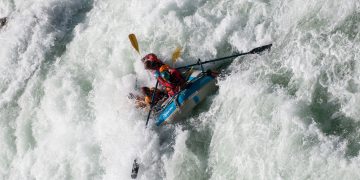










Whitewater rafting and kayaking offer one of the most thrilling and technically demanding outdoor experiences, especially when navigating extreme Class 5+ rapids. These waterways, characterized by powerful hydraulics, massive drops, and unpredictable turbulence, push both equipment and human skill to their limits. Understanding the intricacies of Class 5+ rapids requires a deep knowledge of river hydrodynamics, risk assessment, safety protocols, and advanced paddling techniques. This article provides a comprehensive, professional exploration of extreme whitewater rapids, exceeding 3,200 words, suitable for experienced paddlers, instructors, and adventure researchers.
1. Introduction to Whitewater Classification
Whitewater rivers are categorized according to the International Scale of River Difficulty:
- Class I-II: Gentle rapids, minimal obstacles, suitable for beginners.
- Class III: Moderate rapids with irregular waves, requiring some maneuvering skill.
- Class IV: Advanced rapids with intense, powerful currents, precise maneuvering necessary.
- Class V: Expert-level rapids with violent waves, large drops, and risk of injury.
- Class V+: Extreme, unpredictable rapids requiring elite skill, specialized equipment, and risk management.
Class 5+ rapids differ from standard Class V by their unpredictability, size of drops, and the potential for significant hazards, including hydraulics, strainers, sieves, and rogue waves. These rapids demand not only physical skill but also psychological preparation and teamwork.
2. Hydrodynamics of Extreme Rapids
2.1 River Flow and Gradient
- Extreme rapids typically occur in steep-gradient rivers, where water accelerates dramatically over short distances.
- Flow velocity can exceed 15–20 miles per hour, generating waves of 3–6 meters in height.
2.2 Hydraulic Features
- Holes and Hydraulic Drops: Powerful back-eddies that can trap kayaks or rafts.
- Standing Waves: Stationary waves formed when water flows over submerged obstacles.
- Syrup Waves and Tide Rips: Complex turbulence patterns created by eddies colliding with fast currents.
2.3 Obstacles and River Hazards
- Strainers: Submerged trees or debris that allow water but trap boats and paddlers.
- Sieves: Narrow spaces between rocks that can crush or pin vessels.
- Undercuts: Rock formations that create dangerous cavities beneath flowing water.
A thorough understanding of these hydrodynamic features is crucial for safely navigating extreme rapids.
3. Essential Skills for Class 5+ Rapids
3.1 Advanced Paddling Techniques
- Boofing: Launching over drops to maintain stability and avoid entrapment.
- Ferrying: Crossing currents at an angle to reach eddies or safer channels.
- Bracing and Rolling: Using paddles to prevent capsizing or executing Eskimo rolls in kayaks.
- Line Choice: Selecting the optimal path through turbulence to avoid hazards.
3.2 Reading the River
- Expert paddlers assess flow patterns, hydraulic features, and potential hazards from a distance.
- Visual cues like foam lines, wave shapes, and current breaks indicate the safest path.
3.3 Team Coordination
- In multi-person rafts, communication and synchronized paddling are essential.
- Spotters at strategic points assist in line selection and rescue if capsizing occurs.
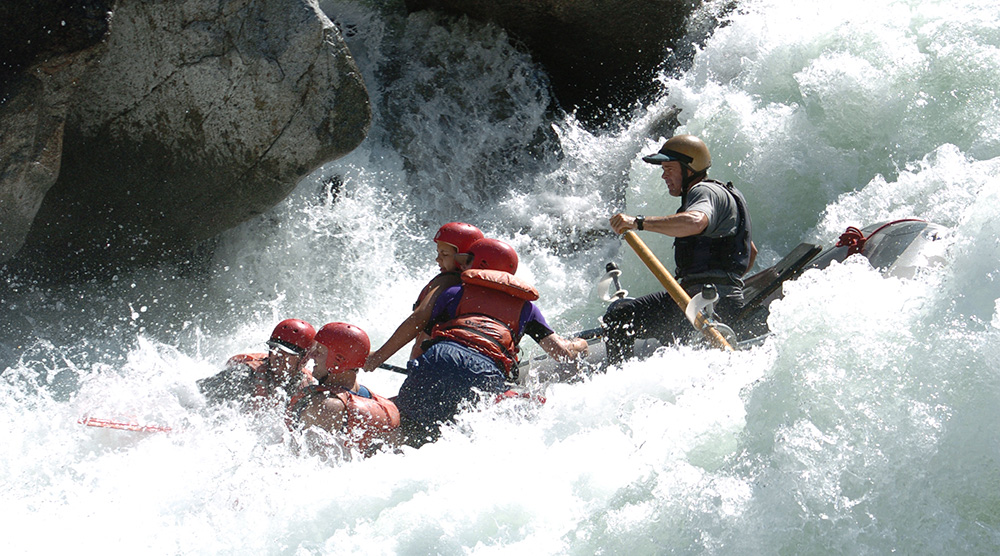
4. Equipment for Extreme Rapids
4.1 Rafts and Kayaks
- High-Volume Kayaks: Designed to handle large waves and maintain stability.
- Inflatable Rafts: Reinforced for extreme rapids, featuring multiple air chambers for redundancy.
4.2 Safety Gear
- Helmets certified for whitewater impact.
- Personal Flotation Devices (PFDs) rated for high turbulence.
- Spray skirts for kayaks to prevent water intake.
- Throw bags, rescue ropes, and carabiners for emergency extraction.
4.3 Footwear and Clothing
- Neoprene wetsuits or dry suits for thermal protection in cold, fast-moving water.
- Durable river shoes to protect feet during portages or accidental river contact.
Equipment selection is critical, as failure in extreme conditions can have severe consequences.
5. Risk Assessment and Management
5.1 Evaluating River Conditions
- Flow rate measurements, often in cubic meters per second, determine rapid intensity.
- Seasonal snowmelt or rainfall can elevate rivers from challenging to dangerous.
5.2 Safety Protocols
- Establishing scout points to evaluate rapid complexity before committing.
- Implementing throw lines and safety kayakers stationed downstream.
- Adhering to minimum team skill levels and experience requirements.
5.3 Emergency Response
- Quick access to medical supplies, river evacuation plans, and satellite communication.
- Knowledge of CPR, hypothermia treatment, and river rescue techniques is mandatory.
Effective risk management combines pre-run assessment, continuous monitoring, and rapid response capabilities.
6. Notable Extreme Rapids Worldwide
6.1 North America
- Gauley River, West Virginia, USA: Famous for its Class 5+ drops during the release season.
- Tatshenshini River, Alaska: Remote, glacially-fed river with unpredictable hydraulics.
6.2 South America
- Futaleufú River, Chile: Large drops, turquoise glacial water, and extreme technical challenges.
- Apurímac River, Peru: High gradient and continuous Class 5+ sections.
6.3 Europe
- Tara River, Montenegro: Deep canyon, high-velocity rapids, and complex hydraulics.
- Vjosa River, Albania: Rare preserved river with extreme Class 5+ conditions during snowmelt.
6.4 Asia and Oceania
- Kali Gandaki, Nepal: Himalayan-fed river with unpredictable monsoon-fed flow.
- Franklin River, Tasmania, Australia: Remote wilderness river with continuous Class 5+ rapids.
These rivers are benchmarks for extreme whitewater paddlers, combining technical skill requirements with environmental beauty.
7. Psychological Preparation and Decision-Making
7.1 Stress Management
- Adrenaline response can impair judgment; training focuses on controlled breathing and focus.
- Visualization techniques and mental rehearsal improve line selection and reaction times.
7.2 Group Dynamics
- Clear communication protocols prevent confusion during critical maneuvers.
- Trust in team members is essential for coordinated paddling and rescue operations.
7.3 Decision-Making Under Uncertainty
- Recognizing when to portage versus committing to a rapid can save lives.
- Understanding the river’s variability allows rapid adaptation to sudden changes in flow or obstacles.
8. Environmental Considerations
8.1 Preserving River Ecosystems
- Avoiding ecological disruption while navigating rapids.
- Adhering to Leave No Trace principles for campsites and access points.
8.2 Climate Impact
- Changing snowmelt and precipitation patterns alter river flow and rapid difficulty.
- Conservation efforts can preserve extreme whitewater habitats for future generations.
9. Training and Skill Development
9.1 Progressive Skill Building
- Begin with Class II–III rapids, gradually advancing to Class IV.
- Participate in guided Class V runs before attempting 5+ rapids independently.
9.2 Technical Drills
- Eskimo rolls, bracing, and edge control in controlled pools.
- Rescue drills, throw bag practice, and swiftwater navigation exercises.
9.3 Certification and Professional Programs
- Organizations such as the American Canoe Association (ACA) provide certification for river safety and whitewater expertise.
- International kayaking and rafting associations offer advanced training for Class 5+ rivers.
Structured training ensures preparedness and reduces accident rates in extreme environments.
10. Case Studies and Accident Analysis
10.1 Common Accident Scenarios
- Capsizing in hydraulic holes leading to entrapment.
- Collisions with rocks or strainers.
- Hypothermia due to prolonged immersion in cold water.
10.2 Lessons Learned
- Scouting and line assessment prevent most high-risk incidents.
- Redundant safety measures, including multiple throw bags and spotters, significantly reduce fatalities.
- Continuous skill reinforcement and scenario simulation enhance decision-making under pressure.
Learning from accidents helps refine safety protocols for future paddlers.
11. Technological Advances in Extreme Whitewater
- Hydrodynamic modeling: Simulates river flow for safer line planning.
- GPS and mapping software: Assists in scouting remote rivers.
- Safety innovations: Improved PFDs, helmets, and inflatable rafts engineered for high-impact scenarios.
Technology complements human skill, increasing survival and efficiency in extreme environments.
12. Cultural and Adventure Tourism Impact
- Extreme whitewater rivers attract adventure tourism, influencing local economies.
- International competitions and expeditions raise global awareness of these rivers.
- Responsible tourism ensures that extreme sport enthusiasts respect environmental and community considerations.
Adventure tourism also fosters cross-cultural exchange and appreciation of natural landscapes.
13. Future Directions in Extreme Whitewater Exploration
- Remote rivers: Unexplored or minimally accessed rivers offer new Class 5+ challenges.
- Hybrid sports: Combining kayaking, rafting, and even hydrofoil-assisted runs.
- Environmental stewardship: Balancing extreme sport growth with river ecosystem preservation.
Exploration of extreme rivers continues to evolve, driven by innovation, technology, and human ambition.
14. Conclusion
Extreme Class 5+ whitewater rapids represent the pinnacle of skill, strategy, and courage in paddlesports. Successfully navigating these rapids requires an integrated understanding of river hydrodynamics, advanced paddling techniques, precise decision-making, teamwork, and rigorous safety protocols. The combination of environmental knowledge, physical conditioning, and psychological resilience determines the success and safety of paddlers confronting these challenging waterways.
As rivers worldwide continue to offer extreme whitewater experiences, the lessons learned from Class 5+ rapids inform both adventure sports and river conservation practices. By respecting the power of these rivers, embracing advanced training, and adopting cutting-edge safety measures, paddlers can experience the thrill and beauty of extreme whitewater while minimizing risk.