










Introduction
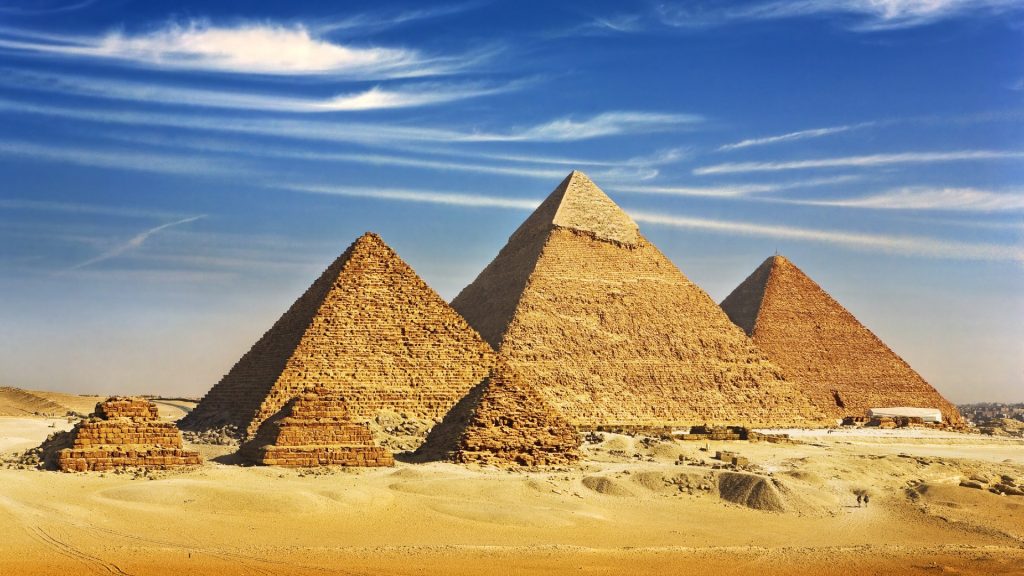
The Egyptian pyramids, particularly those on the Giza Plateau, are widely regarded as architectural and astronomical masterpieces. Beyond their monumental scale and historical significance, these structures exhibit astonishing engineering precision, manifesting in their ability to moderate internal temperatures and align accurately with celestial bodies. For millennia, these pyramids have inspired questions about how ancient civilizations achieved such feats without modern technology.
This article delves into the scientific, architectural, and astronomical aspects of pyramid construction, emphasizing the mechanisms of internal temperature regulation, the precision of celestial alignments, and the underlying cultural and technological knowledge. By integrating insights from archaeology, thermodynamics, and astronomy, this exploration reveals the depth of ancient Egyptian ingenuity.
1. Historical Context and Architectural Overview
1.1 Chronology and Purpose
- The Great Pyramid of Khufu (circa 2580–2560 BCE) exemplifies the zenith of pyramid engineering.
- Pyramids primarily served as royal tombs, but also as cosmological instruments reflecting Egyptian beliefs about the afterlife and the cosmos.
1.2 Structural Design
- Pyramids consist of millions of limestone and granite blocks, with intricate internal passageways, chambers, and ventilation shafts.
- Key internal structures include:
- King’s Chamber: Constructed from granite, exhibiting thermal stability.
- Queen’s Chamber: Featuring complex airflow dynamics.
- Grand Gallery: A long, inclined passage that may influence internal air circulation.
2. Pyramid Temperature Regulation
2.1 Observed Thermal Phenomena
- Internal temperatures of the Great Pyramid remain remarkably constant, around 20–22°C, despite extreme desert fluctuations.
- Scholars attribute this to:
- Thermal inertia of massive stone blocks
- Air circulation through strategic ventilation shafts
- Subterranean chambers acting as heat sinks
2.2 Materials and Thermal Properties
- Limestone and granite have high thermal mass, absorbing heat slowly during the day and releasing it gradually at night.
- The granite King’s Chamber is insulated from external temperature swings by surrounding limestone, creating a naturally stable environment.
- Research using infrared thermography confirms minimal thermal variation across chamber surfaces.
2.3 Ventilation and Airflow
- Narrow shafts leading from the King’s Chamber to the exterior are angled to facilitate convection currents, promoting air circulation.
- Computational fluid dynamics (CFD) models suggest these shafts regulate humidity and temperature, preventing internal condensation and structural stress.
- Such passive airflow systems reflect a sophisticated understanding of microclimate engineering.
2.4 Implications for Ancient Knowledge
- The consistency of internal temperature suggests Egyptians intentionally designed their pyramids for thermal stability, not merely structural durability.
- The combination of geometry, orientation, and material selection indicates empirical knowledge of heat transfer and environmental control.
3. Astronomical Alignment of Pyramids
3.1 Cardinal Orientation
- The Great Pyramid is aligned with remarkable precision to the cardinal points: deviation is less than 4 arcminutes from true north.
- Alignment techniques may have included:
- Observing circumpolar stars (e.g., Kochab and Mizar)
- Using solar shadows during equinoxes
3.2 Celestial Significance
- Alignment reflects religious and cosmological principles:
- The pyramid’s axes may represent connections between the pharaoh and the stars, particularly Orion (associated with Osiris) and Sirius (linked to fertility and the Nile cycle).
- Certain internal shafts point toward specific stars, suggesting ritualistic or navigational purposes.
3.3 Solar and Lunar Correlations
- Some passages align with sunrise on solstices, allowing sunlight to penetrate chambers.
- Such alignments could function as timekeeping mechanisms for ritual or agricultural purposes.
- Lunar and stellar alignments may have guided burial timing or ceremonial activities.
4. Engineering Techniques Enabling Alignment
4.1 Surveying Methods
- Use of plumb bobs, leveling instruments, and sighting rods enabled precise orientation.
- Triangulation with distant reference points may have allowed large-scale site alignment across the plateau.
4.2 Block Placement and Orientation
- Each limestone block’s placement followed strict angular tolerances, minimizing cumulative errors.
- Correlation between internal passageways and external orientation suggests integration of architectural and astronomical planning.
4.3 Hypotheses on Construction
- Theories include:
- Ramp systems (straight, zigzagging, or spiral) for moving blocks
- Levers and counterweights to adjust alignment during placement
- Observational astronomy to calibrate each stage of construction
5. Thermodynamics and Celestial Synergy
5.1 Integrating Temperature Control and Orientation
- Orientation toward cardinal points affects sunlight exposure, influencing heat gain and internal stability.
- Airflow systems may leverage diurnal temperature cycles to maintain steady chamber conditions.
- The combined approach reflects a holistic understanding of environmental physics.
5.2 Structural Geometry and Heat Management
- Pyramid slope angles (~51°) optimize solar radiation deflection while maintaining stability.
- Internal chamber spacing reduces thermal conductivity stress, preventing cracking.
- Symmetry ensures even distribution of heat and air movement, maintaining microclimate equilibrium.
6. Evidence from Modern Research
6.1 Temperature Monitoring
- Sensors inside the Great Pyramid record remarkable temperature constancy throughout the year.
- Thermal imaging reveals heat retention patterns within granite and limestone blocks.
6.2 Astronomical Alignment Verification
- Satellite imagery confirms precise alignment with cardinal points and key stars.
- Laser scanning and 3D modeling allow reconstruction of ancient sightlines.
6.3 Implications for Ancient Science
- Research demonstrates that Egyptians possessed:
- Empirical observational skills for star tracking
- Understanding of heat transfer and stone properties
- Capability to coordinate large-scale projects with precise engineering objectives
7. Cultural and Ritual Context
7.1 Cosmology and Afterlife Beliefs
- Pyramid design reflects beliefs about the pharaoh’s journey to the afterlife:
- Stars served as guides for the soul
- Internal chambers may have represented cosmic realms
7.2 Ritual Timing
- Astronomical alignments may have enabled ritual synchronization with celestial events.
- Seasonal solar penetration could mark sacred times for ceremonies or offerings.
7.3 Integration of Science and Religion
- The pyramids illustrate how scientific observation was embedded in spiritual practice.
- Engineering solutions served both functional and symbolic purposes, highlighting holistic Egyptian thinking.
8. Contemporary Applications and Lessons
8.1 Passive Climate Control in Modern Architecture
- Principles from pyramid design inspire energy-efficient buildings:
- Use of high thermal mass
- Orientation for solar gain and wind ventilation
- Symmetry for even heat distribution
8.2 Astronomical Observatories
- Studying pyramid alignments informs modern celestial navigation and architecture, demonstrating practical applications of geometric precision in construction.
8.3 Preservation and Tourism
- Understanding thermal dynamics aids in conservation of internal chambers.
- Proper management preserves archaeological integrity while enhancing visitor safety and experience.
9. Ongoing Debates and Research Directions
9.1 Alternative Theories
- Some scholars propose advanced ancient technology or lost knowledge explanations.
- Others emphasize rigorous observation, experience, and trial-and-error engineering as sufficient explanations.
9.2 Interdisciplinary Approaches
- Integration of archaeology, physics, astronomy, and materials science provides a comprehensive understanding.
- Future studies focus on microclimate simulation, 3D structural modeling, and celestial alignment verification.
10. Conclusion
The Egyptian pyramids are not merely monumental tombs; they represent the apex of ancient engineering, astronomy, and environmental science. Their temperature regulation systems demonstrate sophisticated knowledge of heat transfer, airflow, and material properties, while precise astronomical alignments reveal a deep understanding of the cosmos. Together, these features underscore a civilization that merged practical engineering with spiritual and cosmological insight.
Studying pyramid temperature regulation and celestial alignment highlights the intellectual achievements of ancient Egyptians, offering lessons for modern architecture, energy efficiency, and sustainable design. These structures stand as enduring evidence that human ingenuity, observation, and creativity can achieve remarkable harmony between built environments and natural forces.
By analyzing these phenomena through modern scientific lenses, we not only uncover the secrets of ancient construction but also gain inspiration for integrating science, culture, and engineering in contemporary practice.