








The idea of humans navigating across vast oceans long before the Age of Discovery is a subject that has fascinated historians, archaeologists, and maritime enthusiasts for centuries. While the European explorations of the 15th and 16th centuries are often celebrated as the dawn of transoceanic voyages, growing evidence suggests that ancient civilizations may have possessed remarkable seafaring skills, capable of traversing extensive stretches of open water. From the Polynesians navigating thousands of miles across the Pacific to early maritime trade networks linking distant continents, the question of whether ancient mariners had already crossed oceans challenges traditional historical narratives and expands our understanding of human ingenuity.
This article delves deeply into the history, evidence, and theories surrounding ancient ocean navigation. It examines archaeological findings, linguistic studies, navigational methods, and oceanic trade patterns that suggest early civilizations may have reached far beyond their local waters. By exploring the capabilities of ancient ships, the skills of mariners, and the potential routes of early explorers, we can better appreciate the sophistication of early seafaring and reconsider what is possible in pre-modern navigation.
1. Introduction: The Mystery of Ancient Ocean Voyages
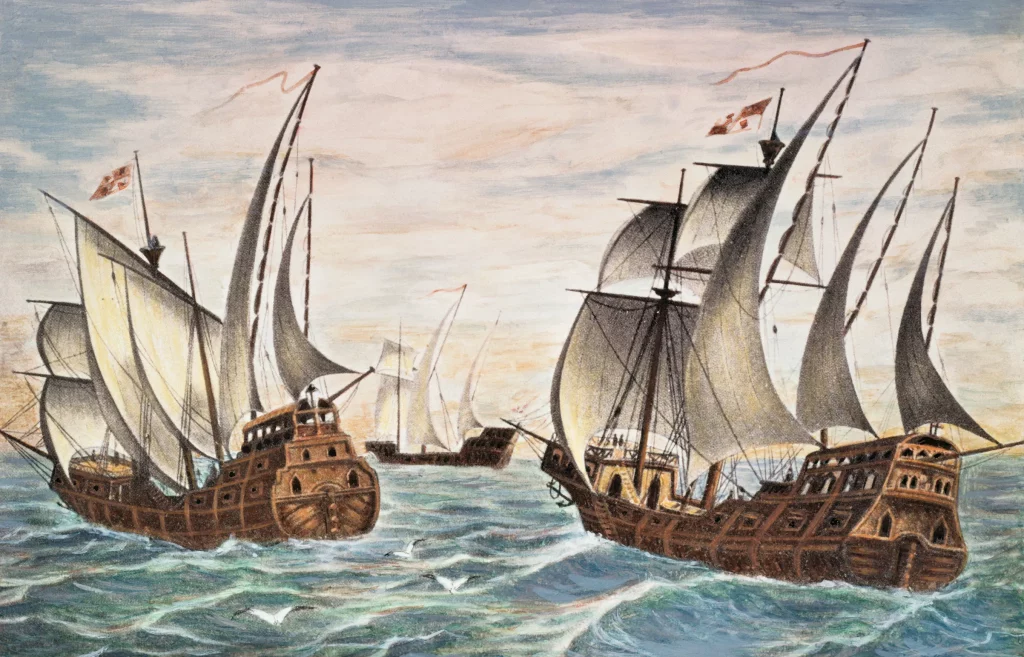
For centuries, historians assumed that large-scale oceanic navigation was a relatively recent human achievement, pioneered by figures like Christopher Columbus, Ferdinand Magellan, and Vasco da Gama. However, a growing body of evidence challenges this Eurocentric narrative, suggesting that civilizations from the Pacific Islands, the Mediterranean, and even the Americas may have undertaken long-distance sea voyages far earlier than previously thought.
The question is not merely academic; it touches on fundamental aspects of human capability, culture, and curiosity. Early oceanic exploration would have required advanced shipbuilding techniques, sophisticated navigation skills, and a deep understanding of weather, currents, and celestial patterns. The possibility that ancient peoples were capable of such feats illuminates a history of innovation and interconnectedness that often goes unrecognized.
2. Ancient Mariners of the Pacific: Masters of Ocean Navigation
Among the most compelling evidence for early transoceanic travel comes from the Pacific Ocean, where the Polynesians developed an extraordinary tradition of long-distance navigation. Polynesians are credited with colonizing nearly every habitable island in the vast Pacific Ocean, covering distances of thousands of miles without the aid of modern instruments.
2.1 Polynesian Navigation Techniques
Polynesian navigators used a combination of natural indicators to guide their voyages. These included:
- Stars and Celestial Navigation: Navigators memorized the rising and setting points of stars to maintain course at night. The star compass was a critical tool for orientation, allowing sailors to keep track of direction across hundreds of miles of open ocean.
- Ocean Swells and Wave Patterns: Experienced sailors read the patterns of ocean swells, noting how waves interact with islands and coastlines. Subtle changes in swell direction or intensity could indicate the presence of land hundreds of miles away.
- Bird Behavior: Observing the flight paths of seabirds, which often feed near land during the day, allowed navigators to estimate the proximity of islands.
- Cloud Formations and Ocean Color: Polynesians also interpreted cloud shapes and colors reflected on the ocean surface to identify islands from a distance.
2.2 Colonization of Remote Islands
Between 1000 BCE and 1300 CE, Polynesians settled nearly every island in the central and eastern Pacific, including Hawaii, Easter Island (Rapa Nui), and New Zealand. The precision with which they navigated across such vast expanses, often in double-hulled canoes with limited supplies, demonstrates a sophisticated understanding of maritime science and the natural world.
Archaeological findings, such as tools, pottery, and linguistic connections, support the theory that these settlers maintained consistent routes and trade networks, enabling them to travel thousands of miles with relative safety and reliability.
3. Early Transoceanic Voyages in the Atlantic and Indian Oceans
Beyond the Pacific, evidence suggests that other ancient civilizations may have conducted long-distance sea travel across the Atlantic and Indian Oceans.
3.1 Phoenician Voyages
The Phoenicians, a seafaring civilization of the Eastern Mediterranean (circa 1500–300 BCE), are renowned for their extensive maritime trade networks. They established colonies along the Mediterranean coast and may have ventured further into the Atlantic, possibly reaching the coast of West Africa and even Britain.
Phoenician ships, typically long, sturdy vessels, were designed for both cargo and exploration. Historical records and classical texts suggest that Phoenician mariners were adept at navigating by the stars and coastal landmarks, allowing them to traverse unfamiliar waters with a high degree of skill.
3.2 Indian Ocean Trade Networks
In the Indian Ocean, maritime trade flourished long before the arrival of Europeans. Ancient civilizations in India, Arabia, and East Africa engaged in regular voyages, transporting goods such as spices, textiles, and precious metals. Mariners used monsoon winds to plan their routes, timing departures to take advantage of predictable seasonal winds. These voyages demonstrate a high degree of planning, knowledge of oceanography, and seafaring proficiency.
4. The Americas and Possible Pre-Columbian Ocean Crossings
The question of whether ancient peoples from the Americas crossed oceans before European contact is highly debated but intriguing. Evidence and theories suggest several possibilities:
4.1 The Solutrean Hypothesis
Some researchers propose that Paleolithic peoples from Europe, particularly the Solutrean culture in Iberia and France, may have crossed the North Atlantic to reach North America approximately 20,000 years ago. This theory is based on similarities between Solutrean and Clovis stone tools found in North America. While controversial, it raises the possibility that early transatlantic crossings occurred far earlier than traditionally believed.
4.2 Polynesian Contact with South America
There is also evidence suggesting Polynesians may have reached South America before European contact. Sweet potatoes, native to South America, were found throughout Polynesia long before European explorers arrived. Linguistic and genetic studies support the theory that Polynesian voyagers made contact with the western coast of South America, bringing agricultural knowledge and crops across the Pacific.
5. Technologies Enabling Ancient Oceanic Voyages
Understanding the capabilities of ancient mariners requires examining the technologies and techniques that enabled oceanic travel.
5.1 Shipbuilding
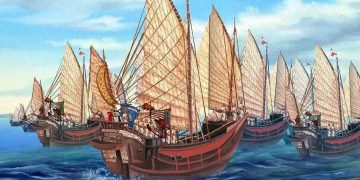
Ancient vessels were remarkably advanced, adapted to their respective environments. Polynesian double-hulled canoes, Phoenician cargo ships, and Indian Ocean dhows demonstrate sophisticated understanding of hull design, buoyancy, and seaworthiness. These vessels could withstand storms, carry supplies for long voyages, and remain stable in open water.
5.2 Navigational Knowledge
Even without modern instruments, ancient mariners used celestial navigation, wind patterns, ocean currents, and wildlife behavior to guide their journeys. Knowledge of tides, coastal landmarks, and seasonal weather patterns was passed down orally, forming a rich tradition of seafaring expertise.
5.3 Trade and Cultural Exchange
Maritime trade networks provided both motivation and opportunity for transoceanic exploration. Exchange of goods, technologies, and ideas required reliable navigation and encouraged innovation in shipbuilding and route planning.
6. The Challenges of Ancient Ocean Voyages
Despite their skills, ancient mariners faced formidable challenges:
- Weather and Storms: Sudden storms and unpredictable currents could easily sink poorly equipped vessels.
- Navigation Without Instruments: Accurate navigation relied on memory, observation, and experience. Miscalculations could lead to weeks lost at sea.
- Provisioning and Sustainability: Long voyages required careful planning for food, water, and shelter, often limiting the range and duration of expeditions.
- Isolation and Risk: Crossing hundreds or thousands of miles without the possibility of rescue demanded courage and resilience.
7. Evidence Supporting Ancient Transoceanic Crossings
Multiple lines of evidence support the hypothesis that ancient peoples navigated across oceans:
- Archaeological Artifacts: Tools, pottery, and cultural artifacts show remarkable similarities between distant regions, suggesting contact or migration.
- Linguistic Connections: Shared words, symbols, and oral traditions hint at early communication across oceans.
- Genetic Studies: DNA evidence shows intermingling of populations previously thought to be isolated.
- Botanical Evidence: The distribution of crops like sweet potatoes and bananas indicates deliberate long-distance transport.
8. Conclusion: Rethinking Ancient Human Capabilities
The question of whether ancient mariners had already crossed oceans is not simply a curiosity; it reshapes our understanding of human history, ingenuity, and the spirit of exploration. Evidence from the Pacific, Atlantic, and Indian Oceans, along with archaeological, linguistic, and botanical data, suggests that humans may have been capable of remarkable feats of navigation long before the modern era. Ancient civilizations demonstrated ingenuity in shipbuilding, navigation, and maritime planning, revealing a deep connection between humans and the vast, unpredictable oceans.
While debates continue, one thing is clear: ancient humans were far more capable, adventurous, and resourceful than often credited. The story of early transoceanic voyages reminds us that the oceans, once seen as insurmountable barriers, were conquered not just by explorers like Columbus or Magellan, but by generations of mariners who trusted their knowledge, skill, and courage to traverse the world’s greatest waters.