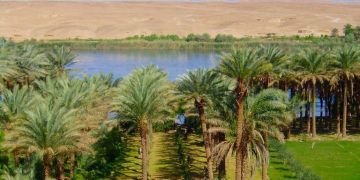










Water has always been central to the survival and development of human civilizations. From the earliest settlements along rivers to sprawling urban centers, the ability to control, store, and distribute water has shaped societies economically, politically, and culturally. Ancient hydraulic engineering—the science and technology of managing water—demonstrates not only practical ingenuity but also remarkable scientific understanding. Across Mesopotamia, Egypt, India, China, Rome, and pre-Columbian America, civilizations developed sophisticated systems of canals, aqueducts, dams, reservoirs, and water-lifting devices that rival many modern techniques in efficiency and design principles.
This article explores the scientific and technological sophistication of ancient hydraulic engineering, examining historical case studies, construction techniques, hydrodynamics, materials science, and social organization. It highlights the integration of observation, mathematics, and experimentation in creating systems that balanced engineering feasibility, environmental constraints, and societal needs.
1. Introduction to Ancient Hydraulic Engineering
1.1 Definition and Scope
- Hydraulic engineering involves the design, construction, and management of water systems for domestic, agricultural, and industrial purposes.
- Ancient hydraulic projects often included aqueducts, irrigation canals, dams, reservoirs, wells, cisterns, and water-lifting devices such as shadufs and Archimedean screws.
1.2 Importance in Civilizations
- Ensured agricultural productivity and food security.
- Enabled urbanization by supplying drinking water and sanitation.
- Supported industry, including textile production, mining, and milling.
- Played a crucial role in ritual and religious practices, often associated with sacred water bodies.
2. Hydraulic Engineering in Early Civilizations
2.1 Mesopotamia: The Cradle of Irrigation
- Settlements along the Tigris and Euphrates Rivers (c. 4000 BCE) relied on extensive canal networks.
- Canals were designed to manage seasonal flooding and ensure continuous crop irrigation.
- Techniques: Levees, basin irrigation, diversion channels, and water gates.
- Scientific principles: Slope calculation, flow control, and sediment management.
2.2 Ancient Egypt: Harnessing the Nile
- The annual inundation of the Nile provided fertile soil and water.
- Egyptians built shadufs and nilometers to measure water levels, facilitating agricultural planning.
- Canal networks allowed transportation, irrigation, and drainage.
- Integration with astronomy: Seasonal flooding aligned with the solar calendar to optimize planting cycles.
2.3 Indus Valley Civilization
- Mohenjo-Daro and Harappa (c. 2600–1900 BCE) featured advanced urban water systems.
- Brick-lined drains, wells, and reservoirs ensured clean water supply and efficient drainage.
- Bathing and sewage systems demonstrate early public health awareness and hydraulic knowledge.
3. Hydraulic Engineering in Classical Civilizations
3.1 Roman Aqueducts
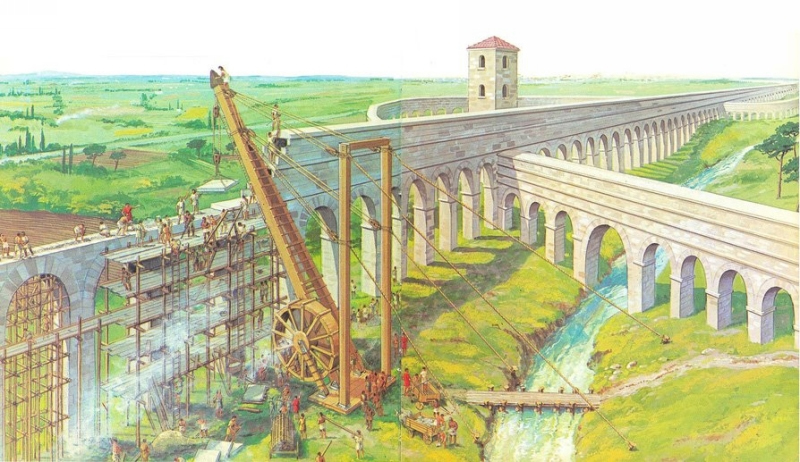
- Roman engineers constructed extensive aqueduct networks delivering millions of liters of water daily to cities.
- Techniques: Arches, siphons, settling tanks, lead pipes, and inverted siphons.
- Scientific insight: Gravity-fed systems, precise gradient calculations (~0.15–0.3%), and hydraulic conductivity of materials.
- Examples: Pont du Gard in France, Aqua Appia in Rome, and Segovia Aqueduct in Spain.
3.2 Greek Contributions
- Greeks advanced hydrodynamic theory, designing fountains, cisterns, and public baths.
- Philosophers such as Archimedes and Hero contributed to understanding fluid mechanics and screw pumps.
3.3 China: Canals and Water Control
- Grand Canal (initiated c. 5th century BCE) connected major rivers for transport and irrigation.
- Hydraulic expertise included levees, sluices, locks, and river diversion.
- Engineers applied mathematical precision to gradient, channel width, and sediment deposition management.
4. Water-Lifting and Distribution Technologies
4.1 Archimedean Screw
- Invented by Archimedes in the 3rd century BCE to lift water efficiently.
- Principles: Helical screw rotates within a cylinder, lifting water against gravity.
- Applications: Irrigation, drainage, and mine dewatering.
4.2 Shaduf and Saqiya
- Simple lever-and-counterweight system (shaduf) in Egypt and Mesopotamia.
- Saqiya: Animal-driven water wheel enabling continuous lifting and irrigation.
- Demonstrates early understanding of mechanical advantage and rotational mechanics.
4.3 Cisterns and Reservoirs
- Romans, Indus Valley, and Maya civilizations built massive storage structures.
- Design incorporated filtration, sedimentation, and overflow control.
- Material science: waterproof mortar, masonry, and terracotta linings.
5. Engineering Principles Applied in Antiquity
5.1 Hydrodynamics and Flow Control
- Ancient engineers observed principles of laminar vs. turbulent flow, water pressure, and velocity.
- Structures such as weirs, sluices, and spillways regulated flow rates.
5.2 Gradient and Topography
- Precise slope calculations ensured gravity-driven water movement.
- Surveying techniques: groma, chorobates, and leveling instruments in Roman and Egyptian engineering.
5.3 Material Innovation
- Hydraulic cement in Rome (pozzolana) allowed durable, waterproof constructions.
- Bamboo, stone, clay, and metal pipes demonstrate resource adaptation.
5.4 Structural Mechanics
- Arches, vaults, and buttresses in aqueducts resisted hydrostatic and environmental pressures.
- Load distribution and seismic resilience were considered in construction.
6. Case Studies of Remarkable Ancient Hydraulic Projects
6.1 Roman Aqua Marcia
- Length: ~91 km, supplying Rome with high-quality water.
- Features: Settling tanks, arches, tunnels, and siphons.
- Insight: Engineering precision, including gradient of ~0.15%, enabled continuous flow over long distances.
6.2 Qanat Systems of Persia
- Underground channels tapping aquifers to provide irrigation in arid regions.
- Design minimized evaporation, sedimentation, and thermal effects.
- Demonstrates environmental adaptation and sustainable water management.
6.3 Dujiangyan Irrigation System (China)
- Built c. 256 BCE, still operational today.
- Diverts river flow for irrigation without dams, using levees and channels to control sediment.
- Scientific principles: Hydrodynamics, sediment transport, and adaptive flood control.
6.4 Maya Hydraulic Engineering
- Reservoirs, canals, and terraces in Tikal and Caracol supported dense urban populations.
- Techniques: Rainwater capture, storage in cisterns, and channel networks in karst terrain.
- Integration of astronomy: Seasonal rainfall prediction guided construction and water allocation.
7. Integration of Science and Society
7.1 Urban Planning
- Hydraulic infrastructure dictated city layout, residential placement, and public spaces.
- Efficient water distribution improved public health, sanitation, and social stability.
7.2 Agriculture and Economy
- Irrigation supported intensive agriculture, enabling surplus and trade.
- Hydraulic networks allowed cultivation of previously marginal lands, expanding civilization footprints.
7.3 Religious and Ritual Significance
- Water management linked to spiritual beliefs: Nile floods, sacred canals, and ritual pools.
- Hydraulic monuments often symbolized divine favor, reflecting integration of science and culture.
8. Lessons from Ancient Hydraulic Engineering
8.1 Sustainable Design
- Minimizing environmental disruption, maximizing local resource utilization, and adapting to terrain.
- Emphasizes harmony between engineering, ecology, and society.
8.2 Scientific Observation and Experimentation
- Engineers relied on empirical observation, repeated trials, and incremental improvements.
- Modern engineering principles often parallel ancient methodologies in gradient, pressure management, and structural stability.
8.3 Interdisciplinary Knowledge
- Combined geometry, materials science, fluid mechanics, and project management.
- Demonstrates early integration of science and engineering with social organization.
9. Modern Relevance and Inspiration
9.1 Archaeological Insights
- Understanding ancient hydraulics informs water conservation, heritage preservation, and archaeological interpretation.
9.2 Engineering Education
- Case studies of ancient systems enrich modern engineering curricula, illustrating practical problem-solving and creativity.
9.3 Sustainable Practices
- Lessons from qanats, Roman aqueducts, and Chinese canals inform contemporary water management in arid and flood-prone regions.
10. Conclusion
The study of ancient hydraulic engineering reveals the remarkable scientific knowledge and technological innovation of past civilizations. From the canals of Mesopotamia to Roman aqueducts, Chinese irrigation systems, and Maya reservoirs, engineers demonstrated a sophisticated understanding of water behavior, structural mechanics, materials science, and environmental adaptation. These systems were not only functional but also culturally and spiritually significant, reflecting the intricate relationship between human societies and natural resources.
Ancient hydraulic engineering exemplifies the enduring legacy of scientific observation, experimentation, and problem-solving. By examining these marvels, modern engineers, scholars, and policymakers gain insight into sustainable design, resource management, and interdisciplinary innovation. The ingenuity of our ancestors continues to inspire, reminding us that the solutions to today’s water challenges often lie in understanding the lessons embedded in history.