






Introduction
The phenomena of the auroras, both in the Northern and Southern Hemispheres, as well as the intriguing magnetic storms, are among Earth’s most captivating natural occurrences. These atmospheric phenomena have fascinated humanity for centuries, often inspiring myths, legends, and scientific exploration. The auroras—known as the Northern and Southern Lights—are vivid displays of light that occur in high-latitude regions, while magnetic storms, often linked to solar activity, can influence both the auroras and the technology that supports our modern world. Understanding these phenomena requires an interdisciplinary approach, involving elements of physics, astronomy, meteorology, and environmental science. This article delves into the scientific basis of auroras, their stunning visual effects, the underlying causes of magnetic storms, and their broader implications.
1. What Are Auroras?
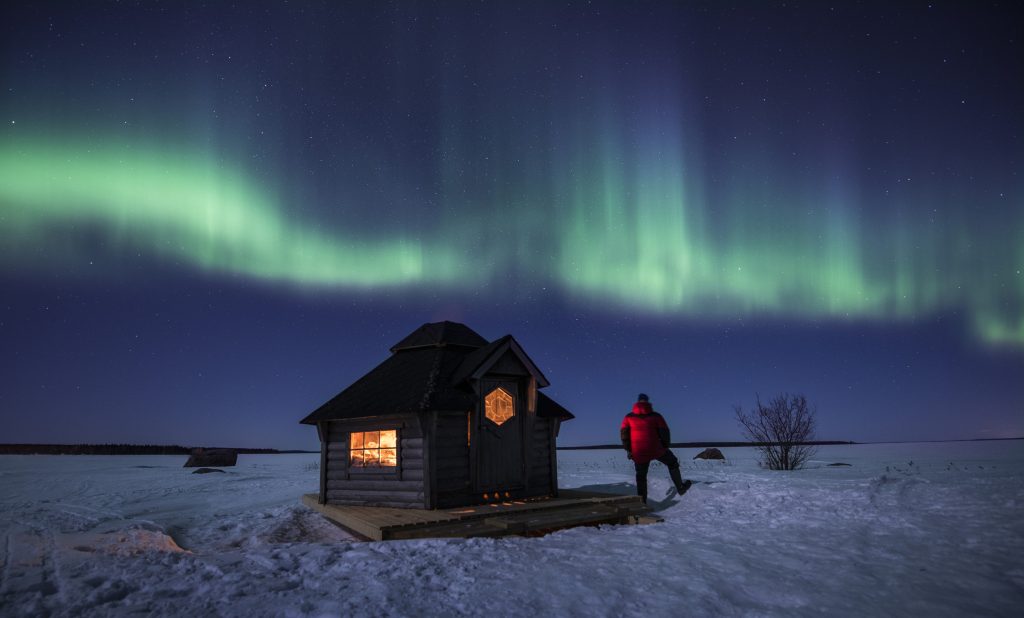
Auroras, also known as the Northern Lights (Aurora Borealis) and Southern Lights (Aurora Australis), are natural light displays that occur in the polar regions of Earth. These spectacular light shows occur when charged particles from the Sun interact with Earth’s magnetic field and atmosphere. Although auroras can occur at any time of the year, they are most frequently visible during the winter months, when the nights are longest and skies are darkest.
The Physics Behind Auroras
Auroras are the result of the interaction between solar wind, Earth’s magnetic field, and the gases in our atmosphere. The Sun continuously emits a stream of charged particles, known as the solar wind. These particles, which include electrons and protons, travel through space at high speeds and eventually reach Earth’s magnetosphere—the protective magnetic shield surrounding our planet.
When these charged particles collide with atoms and molecules in Earth’s upper atmosphere, such as oxygen and nitrogen, they transfer energy to these particles, exciting them to higher energy states. When these excited atoms return to their normal energy states, they release photons (light). The color of the light emitted depends on the type of gas and the altitude at which the collisions occur. Oxygen at high altitudes (above 150 km) can produce red and green auroras, while nitrogen can contribute blue and purple hues.
Northern Lights vs. Southern Lights
Although auroras occur in both the Northern and Southern Hemispheres, they are more commonly associated with the Northern Hemisphere. The Northern Lights, or Aurora Borealis, are visible in high-latitude regions such as Norway, Sweden, Finland, Canada, and Alaska. In the Southern Hemisphere, the Southern Lights, or Aurora Australis, are best seen in southern regions of Australia, New Zealand, and Antarctica.
The occurrence of auroras is primarily influenced by Earth’s magnetic field, which is not perfectly symmetrical. This asymmetry leads to differences in the intensity and frequency of auroral displays between the two hemispheres. In general, the aurora borealis tends to be more vibrant and widely observed than the aurora australis, due to the greater landmass and accessibility of the northern polar regions.
2. Magnetic Storms: The Catalyst for Auroras
Magnetic storms, also known as geomagnetic storms, are disturbances in Earth’s magnetic field caused by the interaction between solar wind and the Earth’s magnetosphere. These storms are closely linked to solar activity, particularly solar flares and coronal mass ejections (CMEs). A solar flare is a sudden and intense burst of energy from the Sun, while a CME is a massive ejection of solar material into space. Both of these events can significantly disturb Earth’s magnetic environment.
How Solar Activity Affects Earth’s Magnetosphere
When solar wind particles, especially those from a CME, reach Earth, they can compress and distort the planet’s magnetic field. This disturbance causes the magnetosphere to become “unstable,” leading to an influx of charged particles into the upper atmosphere. As these particles interact with atmospheric gases, they create the colorful lights of the aurora. A stronger geomagnetic storm results in more intense and widespread auroral displays, often visible at lower latitudes than usual.
While auroras are the most visually striking effect of a geomagnetic storm, these storms can also disrupt satellite operations, GPS systems, and communication networks. In extreme cases, magnetic storms can even damage electrical grids. The largest geomagnetic storms in history, such as the 1859 Carrington Event, have been linked to solar flares that caused widespread disruption on Earth. Modern society, with its reliance on technology and infrastructure, is increasingly vulnerable to the effects of these storms.
3. The Science of Geomagnetic Storms
Geomagnetic storms are classified based on their intensity, which is typically measured by the “K-index”—a scale that ranges from 0 (calm) to 9 (extremely disturbed). A K-index of 5 or greater is indicative of a geomagnetic storm, which can lead to widespread auroral displays and other consequences.
The formation of a geomagnetic storm involves a sequence of events that begins with a solar flare or CME. As the charged particles reach Earth, they are funneled toward the polar regions by the planet’s magnetic field. This is why auroras are most often seen near the magnetic poles. During a major geomagnetic storm, auroras can be visible much further south or north than usual. For example, during the 1989 geomagnetic storm, auroras were visible as far south as Texas in the United States.
Impact on Technology
While auroras are beautiful, geomagnetic storms can have serious consequences for modern technology. For example, when charged particles interact with satellite systems, they can cause damage to electronics or disrupt communication signals. Geomagnetic storms also pose a threat to power grids, as the induced electric currents can overload transformers and cause widespread blackouts. The 1989 Quebec blackout is a prime example of the potential impact of a geomagnetic storm on infrastructure.
The space weather research community closely monitors solar activity and geomagnetic storm forecasts to prepare for these events. Advances in satellite technology and atmospheric modeling allow for more accurate predictions of geomagnetic storms and their potential impacts on Earth’s technology-dependent systems.
4. The Role of the Magnetosphere in Protecting Life on Earth
Earth’s magnetosphere plays a crucial role in shielding life on our planet from the harmful effects of solar and cosmic radiation. Without this protective magnetic shield, the Sun’s radiation could strip away the atmosphere over time, rendering Earth uninhabitable. The magnetosphere not only deflects harmful radiation but also directs charged particles towards the poles, where they interact with the atmosphere to create the auroras.
Interestingly, this shield is not static. The magnetosphere can shift, expand, and contract depending on the level of solar activity. During times of high solar activity, such as during a solar maximum, the magnetosphere is more vulnerable to disturbances from solar wind and CMEs. Conversely, during periods of low solar activity (solar minimum), the magnetosphere is less affected, leading to fewer geomagnetic storms and auroral displays.
5. Cultural Significance of the Auroras
Throughout history, the auroras have held cultural significance for indigenous peoples living in high-latitude regions. Many cultures have woven the auroras into their mythology and beliefs. For example, in Finnish folklore, the aurora borealis was believed to be the “fire fox” running across the sky, igniting the northern lights with the brush of its tail. In Inuit culture, the auroras were often associated with the spirits of ancestors or celestial beings. The Norse considered the northern lights to be the glimmer of the armor of the Valkyries, mythical figures who guided fallen warriors to Valhalla.
In modern times, the auroras have become a subject of scientific study and public fascination. The beauty and mystery of the lights continue to inspire artists, photographers, and travelers from around the world, making the auroras one of the most sought-after natural phenomena to witness.
Conclusion
The auroras, both in the northern and southern polar regions, are a breathtaking manifestation of the complex interactions between solar wind, Earth’s magnetic field, and atmospheric gases. These colorful light displays offer a glimpse into the dynamic processes at work in our planet’s magnetosphere. Magnetic storms, while a significant contributor to auroral intensity, also serve as a reminder of the power of solar activity and its potential impacts on modern technology. As our understanding of these phenomena deepens, the study of auroras and geomagnetic storms continues to be an area of great scientific interest, with implications for space weather forecasting and global technological systems.