










Megalithic stone circles, with their imposing monolithic structures and precise arrangements, have captured the imagination of people for centuries. These ancient structures, often found scattered across Europe and other parts of the world, were not simply monuments of ritual or cultural significance—they also served as observatories, calendars, and celestial markers for the ancient societies that built them. Among the most famous of these stone circles is Stonehenge in England, but there are many other sites, such as the Callanish Stones in Scotland, the Carnac Stones in France, and the Ring of Brodgar in the Orkney Islands, that exhibit similar astronomical characteristics.
This article delves into the astronomical importance of these megalithic structures, examining how ancient peoples used them to track celestial movements, mark seasonal changes, and establish calendars. By exploring the alignment of these structures with the sun, moon, and stars, we gain insights into the ways in which early societies understood their relationship with the cosmos and used that knowledge in their daily lives.
Introduction: The Mystery and Majesty of Megalithic Structures
Megalithic stone circles date back to the Neolithic and Bronze Age, and their construction is often attributed to societies with sophisticated knowledge of the natural world. The term “megalith” comes from the Greek words “mega,” meaning “large,” and “lithos,” meaning “stone,” reflecting the awe-inspiring size and weight of the stones used in their construction. These monumental stones, often weighing several tons, were carefully arranged in geometric patterns, suggesting that their placement was no accident.
The most prominent feature of many megalithic structures is their alignment with celestial events. These alignments suggest that ancient peoples not only used the stones for ceremonial purposes but also as instruments for observing and predicting astronomical phenomena. Some of the most notable alignments include the solstices, equinoxes, and lunar cycles—events that were essential to the agricultural, religious, and social lives of ancient communities.
As we explore the astronomical significance of these structures, it becomes clear that these megalithic sites were much more than primitive constructions; they were early observatories that embodied a deep understanding of the heavens, timekeeping, and the cycles of nature.
The Role of Stone Circles in Astronomical Observation
The alignment of megalithic stone circles with celestial bodies is one of the most intriguing aspects of these structures. These alignments were not random but were purposefully designed to track the movements of the sun, moon, and stars. Let us examine some of the key astronomical features that these stone circles often corresponded to:
1. Solar Alignments: The Summer and Winter Solstices
One of the most significant astronomical events tracked by megalithic societies was the solstices—the points in the year when the sun is at its highest or lowest point in the sky. The summer solstice, occurring around June 21st, marks the longest day of the year when the sun reaches its northernmost point in the sky. Conversely, the winter solstice, around December 21st, marks the shortest day of the year when the sun is at its southernmost point.
Many megalithic sites, including Stonehenge, are aligned with the sunrise or sunset on the solstices. At Stonehenge, for example, the stones are arranged in such a way that the Heel Stone, a large upright stone outside the main circle, aligns with the rising sun on the summer solstice. This alignment suggests that the ancient builders of Stonehenge not only understood the cycle of the sun but also used this knowledge to mark important moments in the year, which may have had agricultural and ceremonial significance.
Similarly, the Ring of Brodgar in Orkney, Scotland, is aligned with both the summer and winter solstices, further indicating that these solar events played a central role in the lives of the people who built the stone circles.
2. Lunar Alignments: Tracking the Moon’s Cycles
In addition to the solar alignments, many megalithic stone circles also align with the moon and its cycles. Unlike the sun, which follows a predictable annual cycle, the moon’s cycle is more complex, with phases that repeat roughly every 29.5 days. The ancient societies that constructed stone circles were keenly aware of the moon’s regular movements, which they used to mark important events such as tides, agricultural seasons, and religious festivals.
Some stone circles, including those at Newgrange in Ireland, are thought to be aligned with the lunar standstill—a phenomenon that occurs every 18.6 years when the moon reaches its most extreme positions in the sky. The alignment at Newgrange allows sunlight to enter the tomb’s passage during the winter solstice, suggesting that the lunar cycles were just as important as the solar cycles for the people who built these structures.
In many cases, the placement of stones in these circles reflects an understanding of the metonic cycle—a period of 19 years in which the sun and the moon return to nearly the same positions in the sky. This cycle, which combines solar and lunar years, would have been critical for developing early calendars.
3. Star and Planetary Alignments
While solar and lunar alignments were the primary focus of many stone circles, some structures were also aligned with specific stars or constellations. The Pleiades (also known as the Seven Sisters), for example, was a prominent star cluster in many ancient cultures and was often used for timekeeping and seasonal marking.
At Newgrange, there is evidence to suggest that the alignment of the structure is not just with the sun and moon but also with specific stars. This reflects the broader importance of the night sky in the cosmology of ancient societies. The Orkney Islands in Scotland, home to several megalithic sites, are also thought to have been used to track the movement of the stars, particularly the Polaris or North Star, which served as a guiding point for navigation and orientation.
4. Eclipses: The Celestial Events of Great Importance
The occurrences of solar and lunar eclipses, when the sun or moon is momentarily obscured by another celestial body, were important astronomical events in ancient societies. These rare occurrences were often seen as omens or markers of significant change. Some megalithic structures, including those at Carnac in France, show signs of alignment with eclipses, suggesting that early astronomers were not only able to predict these events but also used them to mark crucial points in the agricultural or ceremonial calendar.
Eclipses are particularly interesting because they are relatively rare events, occurring in cycles, and their predictability would have been a remarkable achievement for ancient civilizations. The ability to track these events would have given these societies an incredible level of precision in their timekeeping and a profound understanding of celestial cycles.
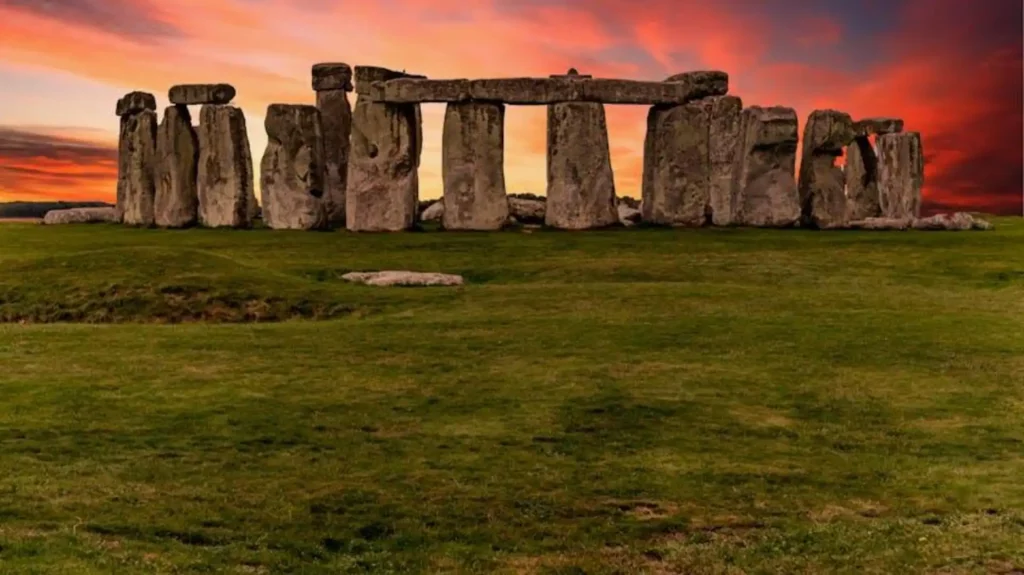
The Engineering Feats of Megalithic Builders
Constructing megalithic stone circles required a high level of skill in both engineering and astronomy. The precise placement of the stones in relation to the sun, moon, and stars is not just a reflection of the builders’ astronomical knowledge but also their ability to manipulate and transport massive stones.
The stones used in these constructions were often quarried from distant locations, requiring advanced techniques for transportation. At Stonehenge, for example, the bluestones were transported from the Preseli Hills in Wales, more than 150 miles away, a feat that would have been an incredible logistical challenge for the people of the time. The method by which these stones were moved remains one of archaeology’s greatest mysteries.
In addition to their knowledge of astronomy, the builders of these megalithic structures demonstrated a deep understanding of geometry and mathematics. The circular design of these structures, with their precise alignments, shows an advanced knowledge of spatial relationships and celestial patterns. The alignment with the sun and moon, often occurring at specific times of year, required a keen sense of observation and an understanding of celestial movements across seasons.
The Cultural and Religious Context of Megalithic Astronomy
The astronomical alignments of these stone circles were not simply practical; they were also deeply connected to the religious and cultural practices of the societies that built them. For many of these cultures, the sky was seen as a divine realm, and celestial events were interpreted as messages from the gods.
The solstices and equinoxes, for example, were often associated with birth, death, and rebirth, representing cycles of life and nature. The alignment of these stone circles with celestial events likely had spiritual significance, marking the passage of time and the relationship between the earth and the heavens. In some cases, the stones may have been used as markers for burial sites, linking the cycle of life and death to the cosmos.
The construction of megalithic stone circles was a communal effort, and the astronomical knowledge embedded in these structures would have been shared among the members of society, helping to unify the community around common cultural and religious beliefs. These stone circles served not only as timekeepers but also as places of social gathering, ceremonial events, and religious observance.
The Legacy of Megalithic Astronomy
The astronomical significance of megalithic stone circles continues to be a subject of fascination and study. Modern astronomers, archaeologists, and historians continue to explore these ancient structures to better understand the depth of the astronomical knowledge possessed by early societies.
These stone circles, while ancient, are far from irrelevant. They remain a testament to the ingenuity and creativity of the people who built them, and they continue to inspire awe and wonder in those who visit them today. Whether used to mark the solstices, predict eclipses, or track the movements of the stars, the megalithic stone circles of ancient times are powerful symbols of humanity’s enduring curiosity about the cosmos.
Conclusion: A Monument to Ancient Astronomical Knowledge
Megalithic stone circles are more than just ancient relics; they are monuments to the remarkable astronomical knowledge of early societies. Through careful observation of the heavens, these ancient peoples were able to create sophisticated structures that tracked the movements of the sun, moon, and stars. These structures were not only used for ceremonial and religious purposes but also served as tools for timekeeping, navigation, and predicting important celestial events.
The alignment of these stone circles with key astronomical events demonstrates a profound understanding of the cycles of nature and the cosmos. The engineering feats involved in their construction further highlight the advanced skills of the builders. Today, as we study these ancient monuments, we gain not only insight into the history of astronomy but also a deeper appreciation for the ways in which humanity has always sought to connect with the cosmos.
In a world that continues to marvel at the vastness of the universe, the megalithic stone circles remain as enduring symbols of humanity’s timeless curiosity and its desire to understand the stars.